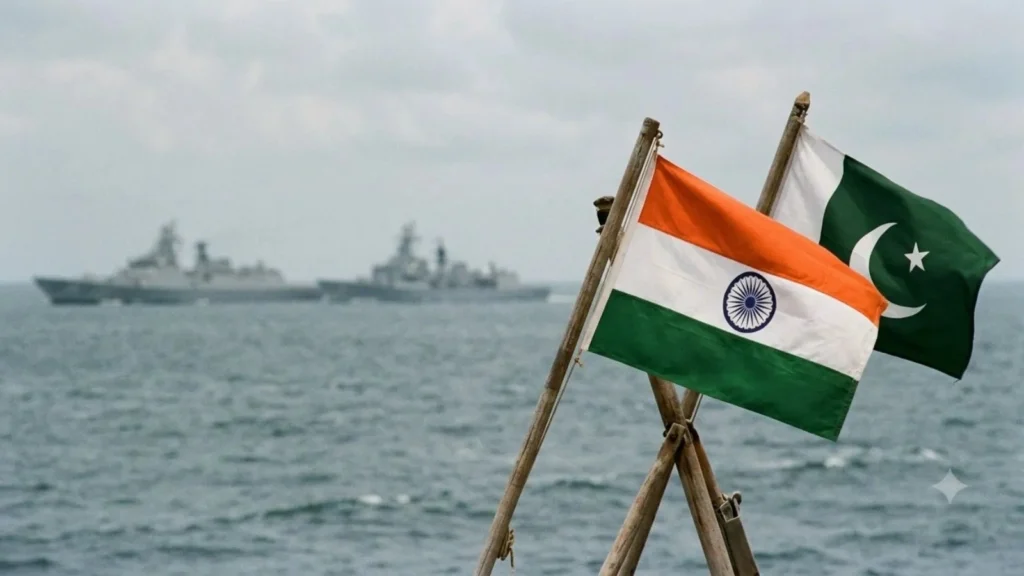
India and Pakistan held fresh rounds of informal Track 2 talks in Colombo and Bangkok this week. Neither government has acknowledged the meetings. Both sides are coming back. This is exactly the distance between India and Pakistan today, just enough to prevent the worst, but not enough to fix it.
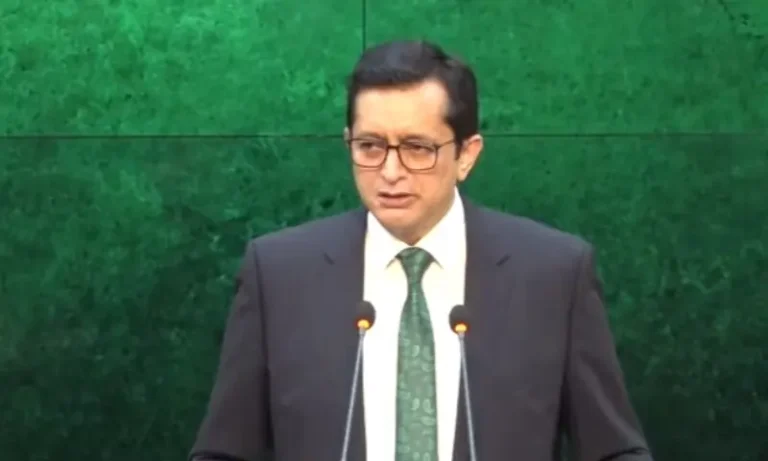
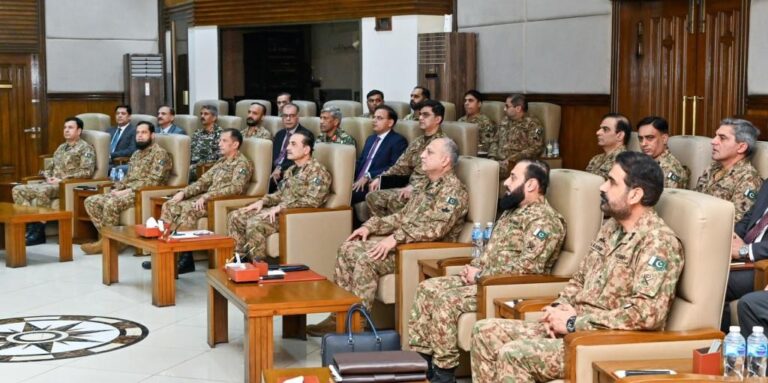
Retired military officers, former diplomats, and policy experts from both countries participated in the meetings. Participants exchanged positions on crisis management, terrorism, and water. The purpose, according to those familiar with the format, was to contribute to the eventual government-level Track 1 dialogue with inputs from these informal discussions. These are not the first such meetings since May of 2025. Four backchannel sessions have been conducted since the ceasefire, two of which were Track 1.5 sessions with serving government officials in their personal capacity. Prior rounds took place in London (July 2025), Muscat (October 2025), Bangkok (December 2025), and Doha (February 2026).
The pattern is consistent with every previous attempt. Track 2 meetings between India and Pakistan have been running for over two decades. They have brought together retired generals with diplomatic experience, journalists, and businessmen from both sides. Those who have taken part in these conversations for years know that these meetings are useful channels for informal exchange, but they rarely lead to policy change unless governments are willing to act. The cycle of talks, collapse, and renewed hostility has repeated itself under every combination of leadership in both capitals.
What Makes This Round Different
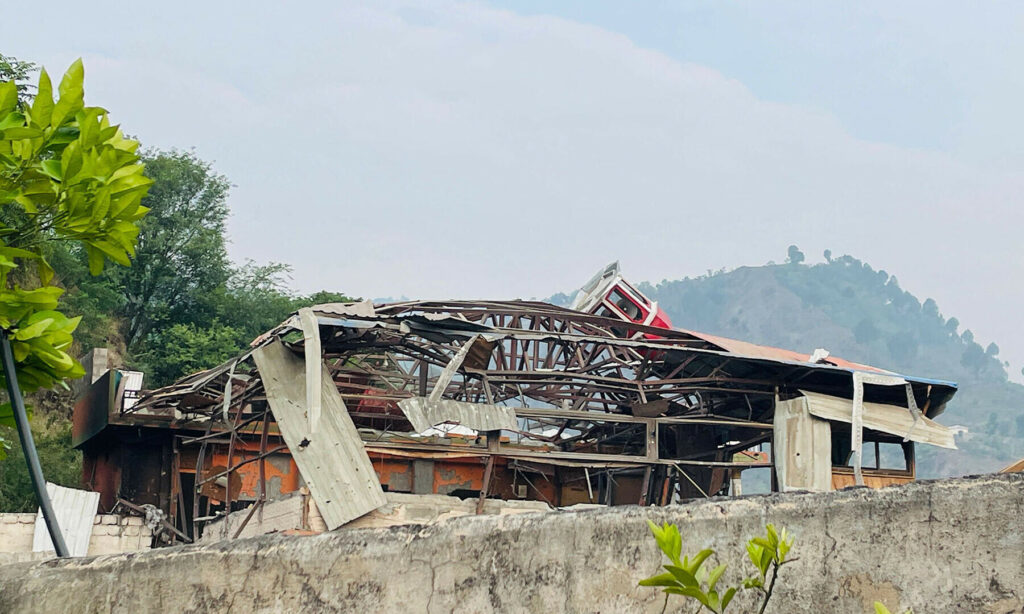
The May 2025 conflict changed the baseline. On 7th May, India began Operation Sindoor against targets within Pakistan. Pakistan responded. A ceasefire held from May 10. When the bullets ceased firing, what remained was not a post-Pahalgam status quo. It was a new and more dangerous configuration.
Within days of the Pahalgam attack, India suspended the Indus Waters Treaty. The suspension, which New Delhi calls placing the treaty “in abeyance,” is not legally justifiable by the treaty itself or by the Vienna Convention on the Law of Treaties. In April 2026, Pakistan formally protested about the illegal suspension before the UN Security Council. The Court of Arbitration ruled that the contract is binding. The Court’s competence was rejected by India.
The water issue is not a side matter in the current Track 2 discussions. It is the center. In April 2025, Pakistan shut down its airspace to Indian carriers, and this ban has cost Air India an estimated $600 million in extra routing fees. The current informal diplomacy is testing whether a swap is possible, i.e., IWT restoration in exchange for reopening Pakistani airspace to Indian flights. Regional observers familiar with the talks suggest this exchange is under active discussion, though neither side has confirmed it.
This week, the British High Commissioner, Jane Marriott, made a public statement of the UK’s backing for resumed dialogue between India and Pakistan, thus reinforcing the view of Western capitals that the back-channel process is worthy of continuation.
The Hard Problem the Talks Have Not Touched
As delegates meet in Colombo, the situation on the Chenab River is taking an increasingly difficult turn and may make any diplomatic settlement increasingly difficult to accomplish.
India is fast-tracking at least four major hydroelectric projects on the upper Chenab: Pakal Dul, Kiru, Kwar, Ratle, and the Sawalkote project. Tenders have been issued. Private contractors are hired in. India’s water minister has publicly stated that “not a single drop of water will go to Pakistan in the coming years.” India’s prime minister directly tied water to the conflict, saying that “blood and water cannot flow together. Neither statement has been recalled or corrected by India’s foreign ministry or the Prime Minister’s Office.
In times of armed conflict, dams and water systems are generally considered protected according to international humanitarian law, in particular Article 56 of Additional Protocol I of the Geneva Conventions. Legal analysis now suggests that protection is voided when the infrastructure is being constructed with stated belligerent intent against a downstream state. Pakistan’s defense minister has already stated that construction of such a dam would constitute an act of war. India has itself framed the construction of dams as a part of its pressure campaign, and that in and of itself removes the usual legal protection provided to dams.
India has maintained its post-2019 position: formal dialogue cannot resume while cross-border terrorism continues. Pakistan’s stance is that any real conversation on other issues must be preceded by the restoration of IWT. Track 2 participants have explored whether these positions are reconcilable. So far, they are not.
Diplomatic missions on both sides operate at reduced strength. The bilateral trade is minimal. People-to-people contact is close to zero. The backchannel process is doing the job that used to be done by formal diplomacy, that is, holding the two sides from losing the capacity to communicate altogether.
India and Pakistan have been through this configuration before. Vajpayee and Nawaz met in Lahore. Musharraf and Manmohan came close to a framework on Kashmir. The backchannel contacts made by the previous army chiefs were later confirmed to have progressed to an advanced stage before failing. In each case, the structure of the relationship eventually reasserted itself, and the progress was lost.
The Colombo and Bangkok meetings indicate that both sides recognize the dangers of complete communication failure. They’re not indicators of either side finding a way to get out of the positions that caused the breakdown in the first place. Water is the current pressure point. The dams on the Chenab are still under construction. Airspace remains closed. The Track 2 channel is open. None of those three facts has yet been resolved into a single coherent direction.

Our Editorial Desk is the intellectual engine of Digital Debate, responsible for the rigorous research that anchors every conversation. Our team deep-dives into data, checks every source, and consults academic literature to move beyond headlines and identify the questions behind the questions.