Every 20 November marks the 1989 adoption of the Convention on the Rights of the Child. In 2026, that promise faces the test of bombed classrooms, displaced families and girls forbidden to learn.
In Minab, the school day ended beneath a strike. UNICEF reported that 168 girls were killed when their elementary school was hit on 28 February. Most were reportedly between 7 and 12 years of age. They had come to class, carrying the ordinary expectations of childhood.
War had other plans.
Elsewhere, children survive the bombardment only to lose their homes, their education or access to treatment. In Afghanistan, a girl can reach secondary-school age and find that the authorities have closed the classroom to her.
Children’s rights are being destroyed through military violence, institutional collapse and deliberate state policy. This World Children’s Day demands an answer to all three.
The global ledger
In 2025, the United Nations verified 38,558 grave violations affecting 24,174 children, the highest number of children affected since its children-and-armed-conflict mandate began. These are verified cases; they are not a complete measure of suffering in places investigators cannot reach.
The record includes 6,266 children killed and 7,958 maimed,14,224 children, approximately 39 each day. Government forces were identified as the leading perpetrators for the first time. The UN also verified 8,322 incidents of denied humanitarian access.
The strategic consequence extends beyond immediate casualties. Destroying schools, healthcare and family livelihoods damages the institutions through which societies recover. A child denied education today faces fewer choices tomorrow; a generation deprived of protection inherits instability it did not create.
Where childhood breaks
- Ukraine: By its July 2026 update, the UN human rights office had verified 803 children killed and 2,960 injured since February 2022. These are documented minimums, rather than a complete toll.
- Iran: UNICEF reported approximately 180 children killed in early March, including the 168 girls at Minab’s school. A classroom’s civilian protection cannot disappear because fighting expands around it.
- Sudan: UNICEF estimated 17.3 million children needed humanitarian assistance in 2026. Conflict has made access to food, healthcare, and education a daily struggle.
Gaza’s shattered childhoods
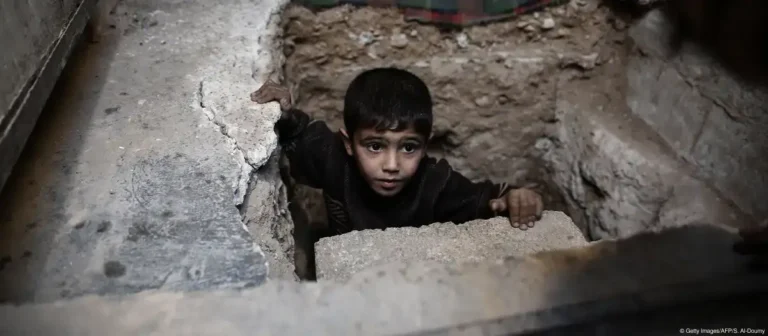
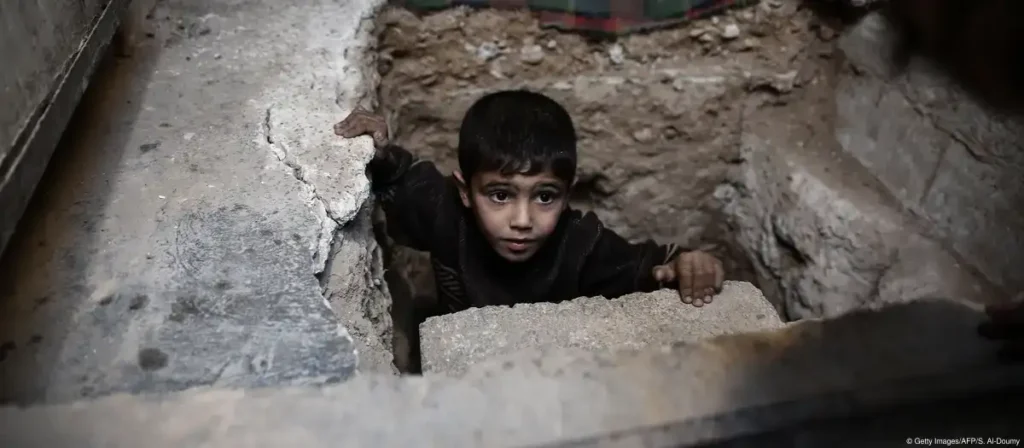
In Gaza, surviving a strike does not mean reaching safety. UNICEF’s February 2026 appeal recorded at least 21,289 children reportedly killed and 44,500 injured, including more than 11,000 with life-changing injuries. Behind those figures are children facing rehabilitation while their families struggle with displacement and damaged services.
The October 2025 ceasefire did not end the losses. By October 2026, UNICEF reported 351 children killed since its announcement. Its account included fourteen-year-old Mohamed, reportedly killed by a drone strike while walking home from a learning centre. His school bag remained beside him.
Displacement brings further dangers. In November, UNICEF reported three children killed when rain caused a dune to collapse onto their family’s tent. It estimated that approximately 950,000 displaced people lived in flood-exposed areas.
Protection must therefore extend beyond stopping attacks: children need safe shelter, medical evacuation, clean water and functioning classrooms. A ceasefire’s credibility rests on whether those conditions reach them.
Afghanistan’s closed doors
A joint UNESCO-UNICEF report released on 4 November found 53% of primary-school-age children outside formal general education. More than 2.6 million girls have been denied secondary education since 2021. It exposes a protection failure that cannot be explained by battlefield damage alone. Its de facto authorities prohibit girls from studying beyond primary school. Education is withheld through policy.
UNICEF warns that exclusion increases girls’ exposure to child labour, abuse, early marriage and gender-based violence. Restricting education also weakens the future supply of women teachers and health workers, undermining services that other children will need.
Afghan boys also face educational deprivation, as the primary-school figures demonstrate. The response must combine humanitarian support with sustained pressure to reverse discriminatory restrictions. Assistance should reach children without treating the denial of their rights as a permanent administrative arrangement.
A state’s responsibility begins with protecting children within its own borders. Political control supplies no exemption.
Kashmir’s interrupted childhoods
In Indian-occupied Jammu and Kashmir, children’s protection also demands scrutiny. The UN Secretary-General’s report covering 2020 recorded nine children killed and 30 maimed, including casualties from pellet weapons, armed violence and shelling across the Line of Control. It urged India to end pellet use against children.
Pakistan’s responsibility
Pakistan knows the consequences of children becoming casualties. In May 2025, its military reported 40 civilians killed, including 15 children, in Indian attacks. Those figures remain Pakistan’s official account.
Its advocacy should apply the same protection standard across Gaza, Ukraine, Afghanistan and Kashmir: credible documentation, access for independent monitoring and accountability for violations. Where verification is obstructed, the answer is to seek access and preserve evidence.
That standard must also govern domestic policy. Protecting schools, preventing recruitment and exploitation, and supporting children affected by terrorism are essential to a credible international position.
Close the gap
Five priorities should guide policy:
- Protect civilian institutions: Ceasefire arrangements should include monitored protection for schools, hospitals, water systems, and humanitarian access.
- Preserve education: Reopening classrooms must accompany reconstruction. Afghanistan’s restrictions on girls require reversal.
- Reduce civilian harm: States should strengthen precautions around explosive weapons and require meaningful human control over targeting decisions.
- Enable verification: Independent investigators need access, resources and safeguards against political interference.
- Fund recovery: Medical treatment, disability support, family reunification and psychological care must continue after fighting subsides.
The promise survives
Children cannot negotiate a ceasefire, reopen a border or overturn an education ban. Governments and armed actors make those decisions.
World Children’s Day should therefore measure compliance: classrooms reopened, assistance delivered, discriminatory restrictions removed and violations investigated.
The promise made in 1989 remains clear. Its survival depends on whether those with power allow children to have a future.
Read More: Iran Turns Gulf War Risk Into a Market Warning at the GECF Summit
A World Remade: Four Years of War in Ukraine

Our News Desk represents a rapidly expanding frontier in contemporary journalism, focusing on the intersection of technological advancement, geopolitical narratives, and the shifting dynamics of public information.