At a glance
- The development: Ishaq Dar addressed 35 senior Bangladeshi civil servants on 18 November, during their executive training programme at Pakistan’s National School of Public Policy.
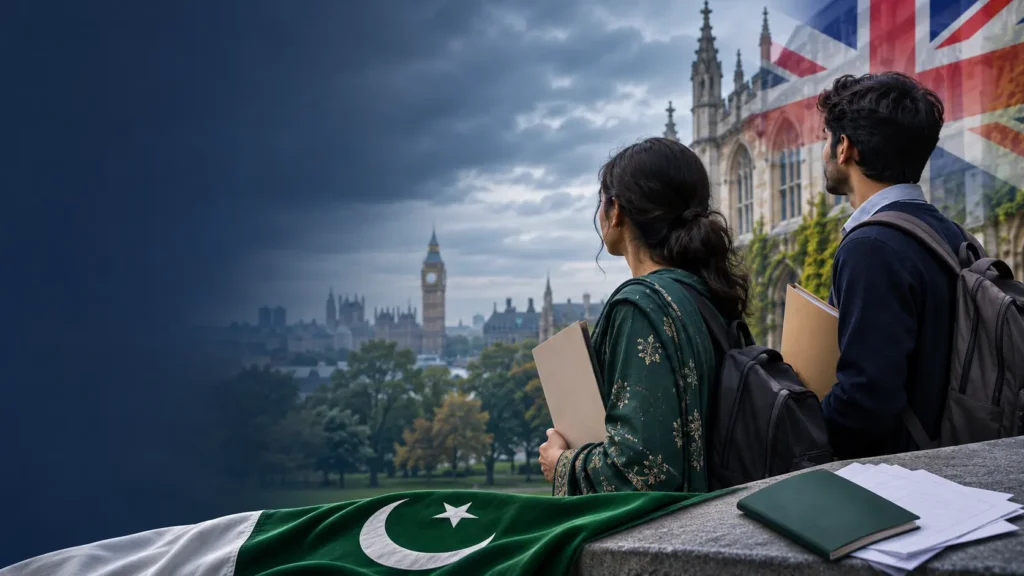
- The scale: The Knowledge Corridor includes 500 fully funded scholarships over five years. Officials reported 170 Bangladeshi students joining Pakistani universities in 2026, alongside an earlier training cohort of 12 officers.
- The next step: Turn institutional contacts into follow-up on the banking arrangements, certification requirements and trade barriers raised by participants.
What Happened
The Executive Development Institute at NSPP launched the HEC-sponsored programme on 9 November, with its conclusion scheduled for 23 November. It combines governance training with institutional visits in Lahore, Islamabad and Karachi. The programme remained underway on 20 November.
Ishaq Dar met the delegation on 18 November, resolving the conflicting date in an earlier photograph caption. It identifies education, professional training and institutional exchange as the Knowledge Corridor’s purposes.
Key figures
| Indicator | Confirmed or reported position |
|---|---|
| Current cohort | 35 officers in the 18 November government readout; an earlier official departure release recorded 34. |
| Previous cohort | 12 senior officers completed training earlier in 2026. |
| Scholarship commitment | 500 fully funded places over five years. |
| Student enrolments | 170 Bangladeshi students had joined Pakistani universities in 2026. |
| Further arrivals | Another 20 were expected, according to the 8 November official release—not confirmed enrolments. |
| Programme dates | 9-23 November, according to the opening report. |
Who Said What
Recent engagements “reflect our shared desire to open a new chapter in Pakistan-Bangladesh relations.”
Scholarships will be “fully funded covering international travel, living stipends, book allowance and tuition fee.”
Participants raised “tariff and non-tariff barriers, pharmaceutical certification, banking arrangements, export competitiveness, anti-dumping measures and investment facilitation.”
Government Readout, Islamabad
The Context
This is the second civil-service cohort this year, following 12 officers trained earlier. Alongside 170 Bangladeshi student enrolments in 2026 and a five-year pledge of 500 funded scholarships, it shows the bilateral thaw expanding into sustained educational and institutional cooperation.
Reading the development
Institutional Continuity: A second cohort creates repeated contact between officials, giving cooperation a channel beyond leadership visits.
Practical Obstacles: Delegates identified specific commercial problems. Raising them does not establish that either government has resolved them.
Banking Follow-up: In a separate 18 November meeting, the Commerce Ministry agreed to support HBL’s trade-related banking links with Bangladesh and other partners. That provides a follow-up channel, rather than proof of operational changes.
Why It Matters
- For Pakistan: Training and scholarships strengthen institutional relationships; commercial gains depend on removing the barriers participants identified.
- For Bangladesh: Officials gain access to administrative experience and professional networks, while students receive additional educational opportunities.
What to Watch
Action Plans
Whether the programme concludes with a short list of joint projects, responsible institutions and delivery dates.
Scholarship Outcomes
Whether HEC publishes awards, funded arrivals and student progression, distinguishing them from total enrolments.
Payment Solutions
Whether banking follow-up produces usable trade-finance arrangements and clearer transaction procedures for businesses.
Regulatory Progress
Whether pharmaceutical authorities establish technical meetings, clarify certification requirements and publish application timelines.
Pakistan, Bangladesh Vow to Strengthen Bilateral Ties ↗
Our News Desk represents a rapidly expanding frontier in contemporary journalism, focusing on the intersection of technological advancement, geopolitical narratives, and the shifting dynamics of public information.