“Mindless.” “Deficient in intellect.” That’s how a Taliban regional governor described the women of his own province, on camera, in the BBC documentary The Taliban: Coming Out of the Shadows. He said it the way you’d mention the weather; flat, unbothered, certain nobody would ever make him answer for it.
Five years into Taliban rule, that certainty is the story. Not the beard length or the flag on the wall, the certainty that whatever they do to their own people, nobody is coming to collect a receipt.
Take the schools. When Kabul fell in August 2021, girls were mid-semester. The Taliban didn’t expel them outright, they just closed the door and said, wait, reforms are coming. That was five years ago. According to UNESCO, 2.4 million Afghan girls and women are still locked out of secondary school and university, roughly 80 per cent of all school-age girls in the country. Female literacy sits at 27 per cent, against 52 per cent for men. That gap is far from statistics; it is now generational. And when men like Matiullah Wesa go door to door trying to close it, the way his charity PenPath was doing before he was arrested in Kabul in March 2023, the state’s answer isn’t reform; it’s a cell. Ismail Mashal tore up his own university degrees on live television rather than watch women’s education die quietly. He was picked up too.
Here’s what makes the “Sharia” justification collapse the moment you press on it: Islam never barred women from learning. Fourteen centuries of Islamic scholarship say otherwise. What the Taliban enforce isn’t Sharia; it’s a rewritten constitution wearing Sharia’s name, and a fair number of religiously literate Afghans know the difference even if they can’t say so out loud.
They can’t say much out loud, actually, not if it isn’t Hanafi. The Taliban have criminalised the preaching of other Sunni schools of thought entirely, something unheard of among Sunni Muslims, who have historically coexisted across Hanafi, Salafi, Maliki, and Hanbali lines with mutual respect intact. Since 2021, thousands of Salafi teachers and students have reportedly been detained, seminaries in Nangarhar and Kunar shuttered, and scholars, Shaykh Abu Obaidullah Mutawakil among them, abducted and killed. Kitab al-Tawhid, a foundational Islamic text, was banned outright. A government that polices which Muslims are Muslim enough isn’t practising religious governance. It’s practising control.
The same instinct shows up in who actually runs the country. Pashtuns hold roughly 90 per cent of Taliban leadership, ministerial, and military command posts. Tajiks, a quarter of the population, hold about 5 per cent. Hazaras hold less than 1 per cent. The one Hazara minister appointed in 2021 was widely read as exactly what it looked like: a seat at the table with no chair underneath it.
And the amnesty, the one thing the Taliban promised the world and their own soldiers-turned-civilians on day one, never really held. UNAMA has documented at least 218 verified extrajudicial killings and over 400 arbitrary detentions of former security personnel who surrendered under that promise. Alia Azizi, who once ran the women’s prison in Herat, was told to report back to work in October 2021. She has not been seen since.
Add an economy running a trade deficit north of $8 billion a year, propped up by nothing, and you start to understand why Afghans – Pashtun, Tajik, Hazara, Sunni of every maslak – are not sitting quietly. Resistance fronts like the NRF and AFF carried out over a hundred documented attacks in just the first half of 2025. In July 2026, fighters briefly captured a district centre in Badakhshan, the first time that’s happened since the takeover. This is not the profile of a government that has won its people. It’s a government holding territory by force while the territory pushes back.
None of this stays inside Afghanistan’s borders, and that’s where it becomes Pakistan’s problem too. UN Security Council monitoring reports from earlier this year put TTP strength inside Afghanistan at 6,000 to 6,500 fighters, sheltered in the east and south with NATO-grade weapons left behind in 2021. Al-Qaeda’s regional leadership operates out of Kabul and Herat, reportedly holding official Afghan identity documents that let them move, bank, and organise freely. Every cross-border attack on Pakistani soil traces back to sanctuary the Taliban either can’t or won’t deny them. The visa restrictions, the suspicion Afghan refugees now face across the region, those didn’t come from nowhere. They came from a government that let its territory become a launchpad.
That’s the real cost of Taliban rule: not one crisis but a pattern, repeated against every group that doesn’t fit their mold: women, Salafis, Tajiks, Hazaras, former soldiers, and now an entire neighbouring country. A government this narrow was never going to be able to secure a region this wide. Afghans deserve a state that answers to them. Until they get one, their neighbours will keep paying for the one that doesn’t.
Muniba Abdul Khaliq Bhatti
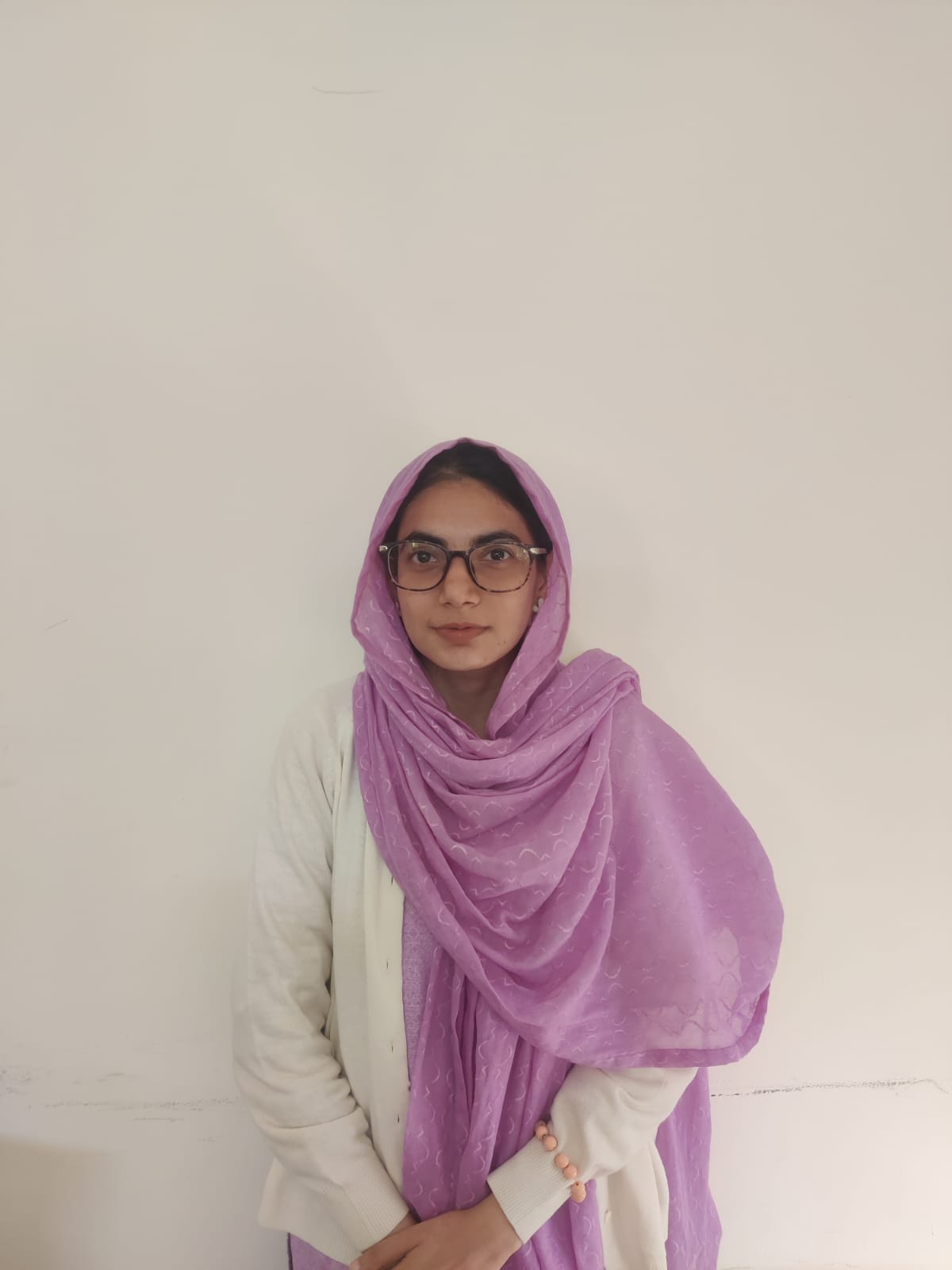
Holds a BS in Medical Technology and is currently pursuing a Postgraduate Diploma (PGD) in Strategic Studies at the National Defence University (NDU). A researcher with a keen interest in militancy and Pakistan–Afghanistan affairs.