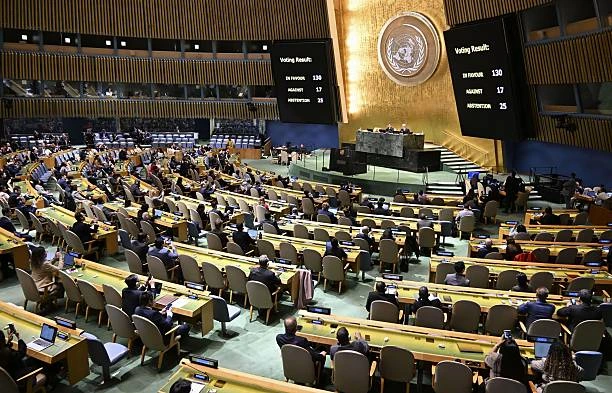
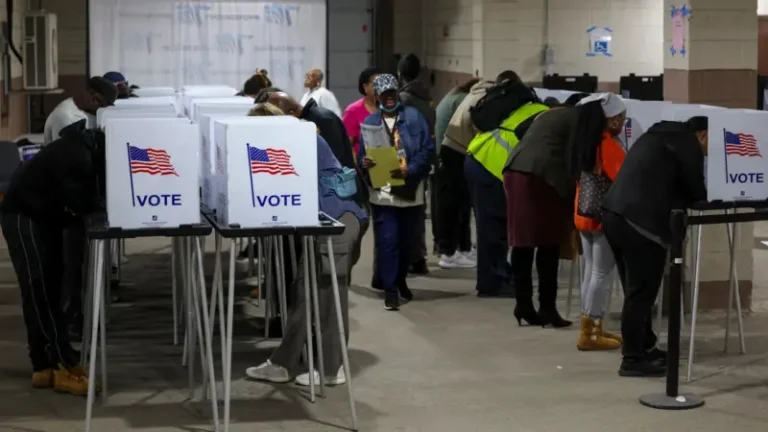
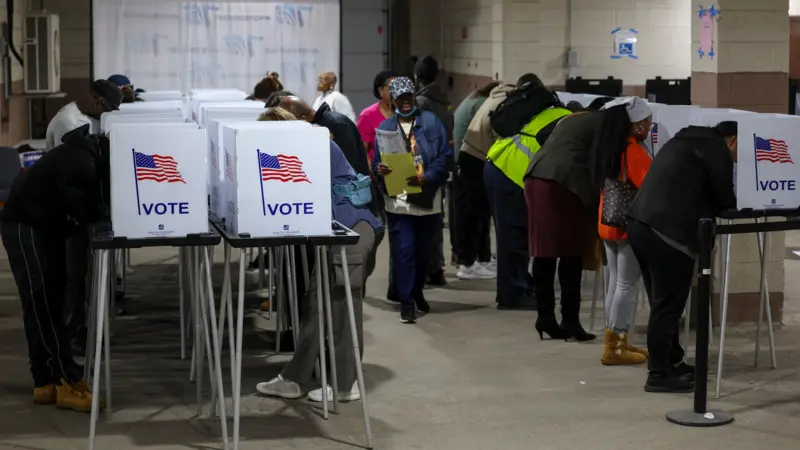
On November 3, 2026, Americans vote in midterm elections that will decide control of Congress for the rest of Trump’s term. All 435 House seats are contested alongside 35 Senate seats, and Republicans, who hold narrow majorities, face Democrats seeking enough seats to flip one or both chambers.
A November 2 Reuters-Ipsos poll measured Trump’s approval at 32%, with Democrats leading the congressional ballot, 46 to 38%. That survey covered 1,765 American adults and carried a two-point margin of error, so it reflects opinion, not results. Other final polls put his approval near 38%, and polls have historically overestimated Democrats and underestimated Trump. Democrats are not popular either, as an NBC poll found only 29% of voters view the party positively.
Electoral Stakes
Living costs are the leading concern, and the Iran war is a major reason prices have risen. Diesel cost $3.75 a gallon before the war began in February and hit a record $6.52 in September, while inflation has climbed from 3% when Trump took office to 3.7% today. Trump has urged rally crowds to act as if he were on the ballot, and Republicans are spending heavily to defend traditionally safe seats such as Kansas. Democrats need a net gain of four Senate seats, with Michigan, Texas, Ohio, Iowa, Maine, Alaska and North Carolina the key races.
These elections will determine committee leadership, investigations, government funding, arms policy, sanctions and the administration’s ability to secure congressional cooperation.
If Democrats gain the House, they could intensify hearings, demand documents and scrutinise military spending, and Defence Secretary Pete Hegseth is seen as a likely target of any impeachment push because of the war. If they also gain the Senate, confirmations and legislation could become harder, although presidential veto powers would remain.
If Republicans retain Congress, Trump may face fewer obstacles, but lawmakers could still resist costly or risky escalation. Congress cannot simply order an end to every military operation, but it can shape funding, oversight and legal authorisation. The 1973 War Powers Resolution reflects concern about presidents sustaining operations without clear approval, and recent Iran disputes show that congressional opposition creates political pressure, although binding limits remain difficult. Trump has also tried to bypass Congress through executive orders, which limits how far a change in control would constrain him.
The Middle East consequences depend not only on election results but also on diplomacy, military choices, and regional responses. As of November 3, the Iran conflict remains unresolved after 8 months of fighting that began with US-Israeli strikes on February 28. On Monday, the US carried out limited strikes on Iran’s Qeshm Island, which officials described as defensive, and they said it was not a resumption of major combat operations. US officials also told the Wall Street Journal that smaller strikes have continued for several weeks, yet Vice President JD Vance said the two sides had made some progress toward an off-ramp.
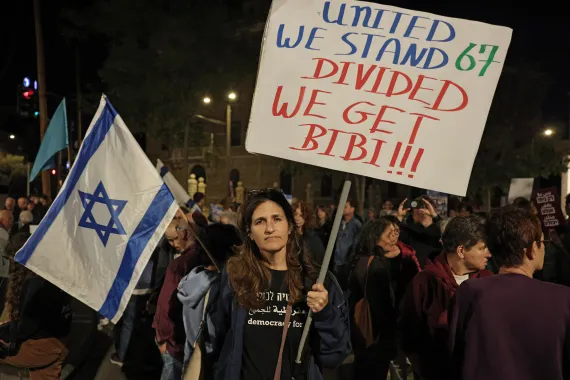
On November 2, Tehran said mediated contacts with Washington continued, although Qatari talks produced no breakthrough. The proposals reportedly link reopening the Strait of Hormuz with changes to America’s blockade, sanctions and future nuclear negotiations, and the sides still disagree over nuclear issues, maritime security and the sequence of any settlement. Reuters reported Iranian sources considered renewed American attacks more likely than a deal, while AP reported Vance described recent conversations positively but stressed that any agreement must address Iran’s nuclear programme. Israeli Prime Minister Benjamin Netanyahu has pushed for renewed strikes, including before Israel’s election last week, but Trump has not publicly committed to that course.
Historical Lessons
Historical experience shows elections influence wartime choices, although political timing rarely explains military policy by itself.
Vietnam shows how domestic politics, credibility concerns, and military calculations became closely connected during prolonged American involvement. President Lyndon Johnson expanded involvement during 1964 and 1965, fearing communist gains and damage to American credibility, and his administration weighed election politics, South Vietnamese stability, military advice, and the risk of appearing weak.
Escalation failed to deliver a decisive settlement; the Tet Offensive in 1968 deepened public doubts about official claims, and Johnson did not seek re-election that year. His experience shows leaders may continue costly strategies when withdrawal appears damaging, even without a simple electoral motive.
Iraq offers a direct academic case linking election calendars with military decisions. Republicans lost both chambers in the 2006 midterms amid anger over the war, and Bush announced the troop surge weeks later. Political scientist Andrew Payne argues in a peer-reviewed study that electoral constraints shaped Bush’s 2007 surge and Obama’s 2011 withdrawal, suggesting presidents sometimes delay unpopular choices or soften controversial strategies to reduce expected backlash. This does not prove either president prolonged war solely to protect political office. It shows domestic calendars influence when leaders escalate, maintain, revise, or withdraw commitments.
The Korean War offers a similar lesson: Truman faced congressional conflict and public dissatisfaction as stalemate persisted and armistice talks continued, and he did not seek re-election in 1952. Together, these cases suggest electoral incentives affect the pace of war, but battlefield realities and diplomacy also matter.
Regional Outlook
After the midterms, three broad paths remain possible: renewed limited strikes, an uneasy pause, or progress toward a negotiated settlement.
Renewed strikes could trigger Iranian retaliation, threaten Gulf infrastructure, endanger shipping, and draw regional armed groups into a wider confrontation; oil prices rose in early Asian trading after news of the Qeshm strike, showing how quickly markets react.
An uneasy pause could reduce immediate violence while leaving sanctions, nuclear disputes, maritime restrictions and regional rivalries unresolved.
A negotiated settlement could stabilise shipping and energy markets, but it requires difficult compromises and credible guarantees from both governments.
Pakistan has led this diplomacy since April, brokering a ceasefire and hosting the first direct US-Iran talks in decades. A prolonged war would expose its energy supplies and its border with Iran, while a settlement would vindicate its diplomacy. Whichever party controls Congress, the test is whether Washington’s politics lets Pakistan’s diplomacy finish the job. The midterms may shift leverage in Washington, but Pakistan remains central to any road to peace.

Our News Desk represents a rapidly expanding frontier in contemporary journalism, focusing on the intersection of technological advancement, geopolitical narratives, and the shifting dynamics of public information.