In seven decades of tension between Pakistan and Afghanistan, one question haunts our shared border: have we learned anything from the past, or are we merely watching the same tragedy unfold with different actors on an unchanging stage?
Crisis in the Taliban 2.0 administration
The numbers in the Taliban post-2021 tell a grim story overall. In 2024 alone, Pakistan witnessed 482 terrorist attacks, claiming over 550 lives. By February 2025, 147 attacks occurred in a single month. The first quarter of this year saw an 81% surge in violence, and 2025 served as the deadliest year in the history of Pakistan in terms of fatalities. These aren’t just statistics; they represent families shattered, communities traumatized, and a nation grappling with threats that were supposed to diminish, not to multiply, after the Taliban’s return to power in 2021.
The Weight of History
The root of this crisis stretches back to 1893, when the Durand Agreement drew a line across tribal lands that has never healed. What the British conceived as a border, Afghanistan has consistently rejected. In 1949, the Afghan Parliament declared it “unacceptable”, the first time a Muslim neighbor questioned the territorial legitimacy of the newly founded Islamic state of Pakistan. That wound has festered ever since.
Why the Past Doesn’t Repeat, but It Evolves
Today’s conflict, however, cannot simply be understood through historical parallels. Those who claim we’re reliving the past overlook fundamental shifts in the global landscape. The first phase of the Afghan conflict unfolded in a unipolar world. The post-2001 War on Terror brought coalitions, regime changes, and new power dynamics. Now, as global alliances reconfigure once more, Afghanistan remains what it has always been: a chessboard for great-power competition, where local aspirations are sacrificed to international agendas.
The Illusion of Taliban Cooperation
The painful reality is that expecting the Afghan Taliban to act against the Tehreek-e-Taliban Pakistan (TTP) is fundamentally unrealistic. We speak of “the Taliban” as a monolithic entity, but the Emirate is actually a constellation of ideologically aligned groups. They recently announced their state as a model to be replicated worldwide, essentially positioning themselves as a franchise operation for similar movements elsewhere.
Asking them to suppress the TTP is like asking them to act against themselves. Remember, they refused to hand over Osama bin Laden even at the cost of their entire government, enduring a twenty-year war rather than betray that alliance. How can they now turn against fighters who share their tribal bonds, their ideological convictions, and their battlefield history?
Border Clashes and Calculated Silence
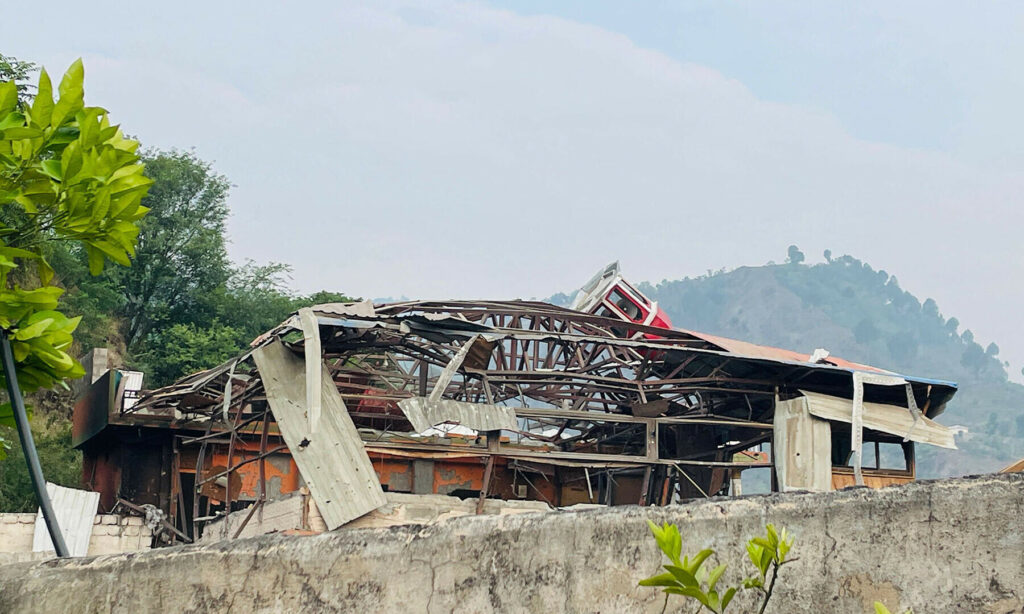
The border clashes at Torkham and Chaman have become routine occurrences. In March 2025, Torkham remained closed for an entire month. October’s confrontations resulted in 23 Pakistani soldiers martyred and nearly 200 militants killed. Trade remains suspended. Yes, border coordination mechanisms do exist, but hotlines were established, and verifiable monitoring systems were proposed with Qatari and Turkish oversight, but couldn’t be applied due to Taliban hostilities. Recently, when Pakistan attempted contact during clashes, silence was the answer from the other side. The design was already set.
Here’s what’s particularly clever about the Afghan Taliban’s strategy: when Pakistan struck TTP targets inside Afghanistan, the response was framed purely as a border sovereignty issue. The TTP problem was deliberately buried under nationalist rhetoric about international boundaries. This isn’t just about refusing to recognize Pakistan’s concerns, but it’s about systematically avoiding any mechanism that would require them to address those concerns.
The Unraveling of Economic Ties
Economically, the relationship is unraveling just as deliberately. Afghanistan conducts roughly 40% of its imports through Pakistan, yet bilateral trade has dropped 35% since 2023. The Taliban are actively pursuing alternatives: pushing China to connect the Wakhan Corridor directly to Xinjiang, increasing imports through Iran’s Chabahar and Bandar Abbas ports. The goal seems clear to reduce dependence on Pakistani routes to the point of irrelevance.
This strategy will hurt Afghan citizens the most. Alternative routes avoiding Pakistan will be prohibitively expensive, pushing basic goods beyond the reach of ordinary people. But the Taliban, as an unelected system, seems unconcerned with such consequences. The theoretical benefits of interdependence and connectivity that dominated discourse from 2016 to early 2024 have been sacrificed to political calculation.
The ultimate target of this may well be China. Disrupting CPEC, undermining the Belt and Road Initiative’s Central Asian ambitions, these consequences extend far beyond bilateral Pakistan-Afghanistan tensions. But let’s be clear: Pakistan won’t collapse from losing Afghan trade. The burden will fall on the Afghan people, who can least afford it.
India’s Quiet Return
Meanwhile, India’s quiet restoration of influence in Kabul through humanitarian aid, infrastructure projects, and educational cooperation adds another dimension. For Afghanistan, India offers economic and diplomatic balance. For Pakistan, it raises the specter of strategic encirclement. India’s rising interest in Afghanistan symbolizes not bilateral cooperation as their trade agreements cannot be cost-effective to both governments and their people also but the only motive is to encircle Pakistan from the western side, and this is a matter of grave concern for us.
Nationalism Disguised as Ideology
What’s emerging is not an ideological state based on Islamic governance, despite the Emirate’s rhetoric. Since 2023, the Taliban’s narrative has been increasingly nationalistic, even ethnic. The Durand Line dispute has existed since partition, but no previous Afghan government has weaponized it as violently as the current one. This suggests we’re witnessing a nationalist agenda dressed in religious language.
Have We Learned Anything?
The question returns that in seven decades, have we learned anything? The honest answer is sobering. Afghanistan remains trapped in patterns that serve external interests more than its own people. It continues to be used as a playground for great-power competition. Pakistan continues to face security threats from groups sheltered across a border that one side refuses to recognize.
What we desperately need is honesty about what’s possible and what isn’t. Expecting the Afghan Taliban to suppress ideologically aligned militants isn’t a realistic policy, but it’s wishful thinking. Believing economic interdependence will automatically improve relations ignores the deliberate choices being made to dismantle those connections.
Real progress requires acknowledging hard truths that the Taliban’s ideological framework makes certain cooperation impossible; nationalist agendas are driving policy as much as religious ones; and external powers will continue using Afghan territory for proxy competition as long as the space exists.
Until both countries and the region confront these realities rather than recycling old assumptions, we’ll remain stuck. The characters change, the stage remains the same, and ordinary people on both sides continue paying the price for a conflict that serves everyone’s interests except their own.

Iftikhar Firdous is a specialist in militant ideologies and the founder of The Khorasan Diary, a digital platform dedicated to mapping conflict in the greater Khorasan region.