No country holds a place as unstable and at the same time a strategic necessity as Pakistan in the intricate web of 21st-century geopolitics. The country has emerged not just as a geographic pivot, but as a versatile middle power capable of facilitating global peace while simultaneously managing internal security crises. This two-pronged policy, walking the fine line between the rival superpowers and the talk and fight policy along its borders, characterizes the contemporary Pakistan strategic policy.
The Facilitator of the Iran Crisis
The Iran crisis is a major illustration of the diplomatic unique advantage of Pakistan. While geographical proximity is a factor, the real strength lies in Pakistan’s multi-directional relationships. It balances the Iranian, the Arab world, and the United States in a very delicate way. Unlike a traditional mediator, Pakistan acts as a facilitator. When a superpower is directly involved in a conflict, traditional mediation is often impossible; instead, facilitation provides the necessary trust-building bridge.
The stakes are globally significant. With 21 to 22 million barrels of oil and massive LNG shipments passing through the Strait of Hormuz daily, the economic stability of Asia, specifically Japan, South Korea, China, and India, depends on the de-escalation of the Iran conflict. The reasons why Pakistan has been involved are a combination of economic need and ideological fraternity. The formation of a regional diplomatic bloc between Saudi Arabia, Turkey, Egypt, and Qatar, with Pakistan at its core, has succeeded in creating a niche that has, in a sense, left other major powers such as India with a diplomatic blowback.
The Nuclear Umbrella and the Saudi-Pakistan Pact
The 2025 defense pact between Pakistan and Saudi Arabia has sparked global speculation. While the specific details remain confidential, the general impression is that Pakistan has extended a nuclear umbrella to the Kingdom. Crucially, this strategic alignment is not necessarily directed against Iran but rather serves as a broader deterrent against specific regional threats. This underscores Pakistan’s role as a security provider in the Muslim world, reinforcing its status as a middle power that cannot be ignored by global players.
The Talk and Fight Doctrine
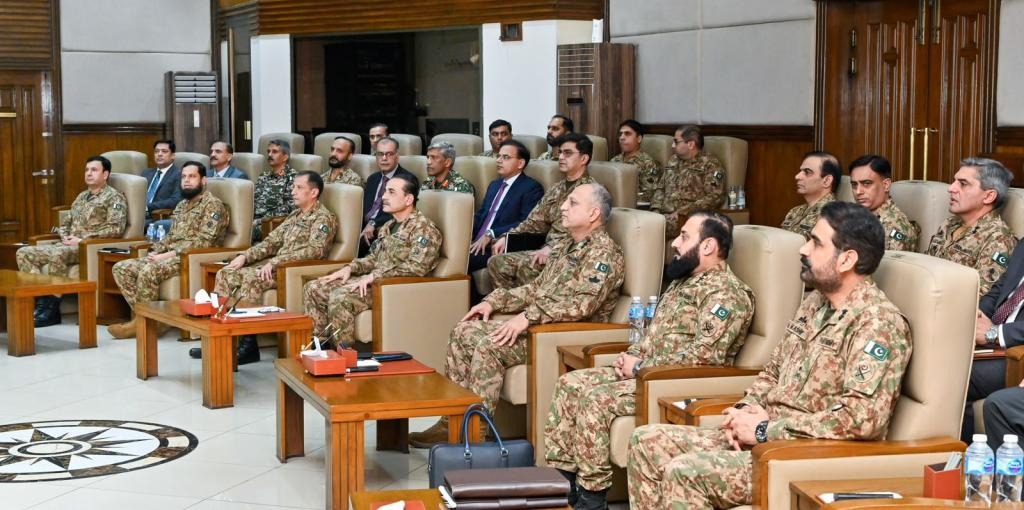
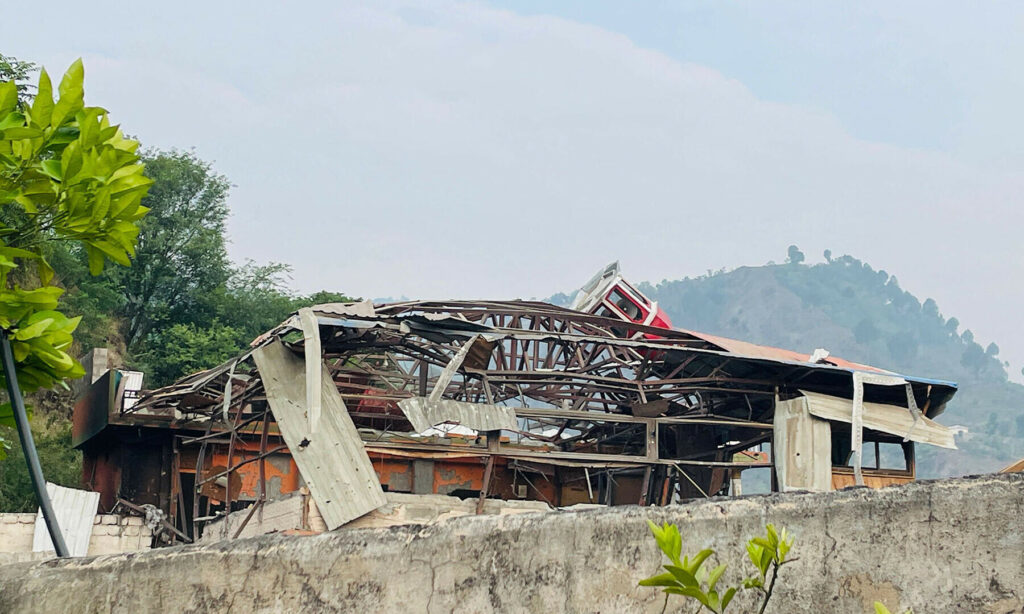
Perhaps the most noticeable aspect of the present strategy in Pakistan is its versatility- the capability of high-end diplomacy and, at the same time, the kinetic military engagements. In the case of Afghanistan, it is obvious that legitimacy has been earned on the international front due to the enormous restraint exercised by Pakistan. But, in times of insecurity, military force is regarded as a justified requirement.
The issue of the Tehrik-i-Taliban Pakistan (TTP) remains a complex bone stuck in the throat for the Afghan administration, specifically the Haqqani network. The internal politics of Afghanistan show a divide; the Kandahar side might be able to cut off ties to the TTP, but Haqqanis in Paktia and Khost provide them with a possible third party to use domestically as leverage. The solution of the conflict is bilateral. The demand by Pakistan to provide verifiable guarantees while providing the possibility of financial assistance for the relocation and dispersal of these groups away from the border. Until a change of heart occurs in Kabul, Pakistan’s policy of intelligence-based strikes is expected to continue.
The China Factor
The growing presence of China in the facilitation process in the region, namely the Urumqi forum, underscores a synergy that exists between Islamabad and Beijing. China’s interests are primarily economic and energy-driven. As an energy-hungry nation, China seeks to protect its investments in Iran and the China-Pakistan Economic Corridor (CPEC). The recent five-point joint peace proposal is seen as a viable roadmap that even the United States could consider seriously. However, a key takeaway is the limit of Chinese involvement: while Beijing will mediate and invest, it is unlikely to participate militarily, preferring a stable environment to secure rare earth elements and mineral mines like Aynik in Afghanistan.
Balancing Superpowers
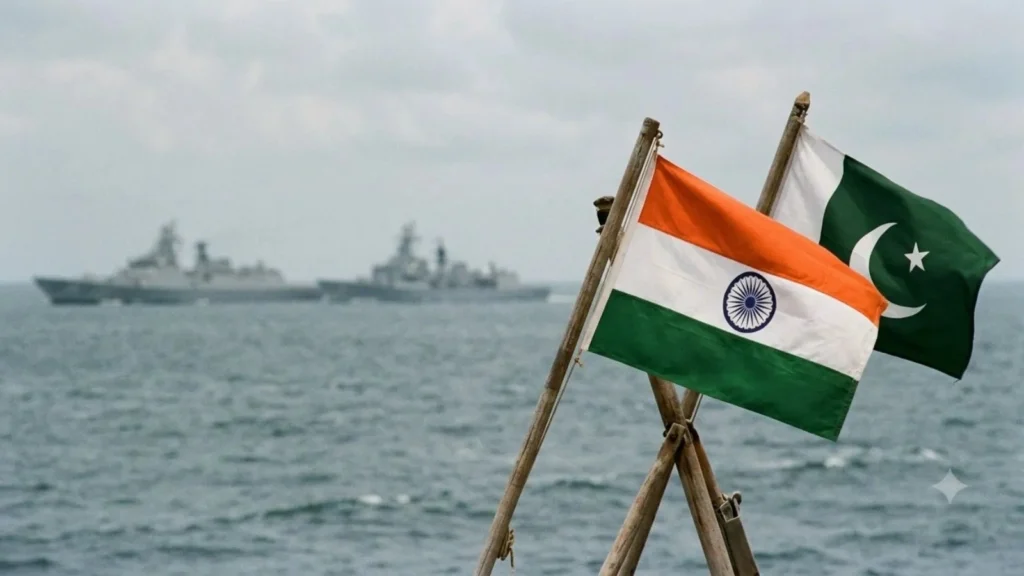
Pakistan’s long-term diplomatic success lies in its rejection of a hedging policy in favor of a calibrated balance. Unlike India’s historical claim of being non-aligned, Pakistan has always been part of alliances (from SEATO/CENTO to the war on terror). Today, Pakistan has been able to maintain strong military and economic relations with China and the United States at the same time. It is a rare accomplishment, this non-binary diplomacy, of saying you too rather than either/or. Pakistan has shown its diplomacy as a regional stabilizing device by softening the hardline statements in Riyadh and ensuring that the Iran-Saudi rift is not transformed into a sectarian eruption.
Proxies and Counterintelligence
Another alarming fact is the concept of forward defense that is employed by Iran through the proxies of Hamas, Hezbollah, and the Houthis. This concept is problematic for Pakistan, as it risks sacrificing internal unity for external interests. The presence of Zionist operatives or agents within these proxy networks is a real threat, aimed at destabilizing the country from within. The demand to increase efforts in counterespionage is a reaction to the advanced approach of such agencies as Mossad, which may not have a formal structure, but are searching for loopholes in local sentiment and informants.
The Rise of a Middle Power
Despite the narrative of disappointment often found on social media, the outlook for Pakistan over the next 15 years is prosperous and strong. This optimism has three main pillars that indicate a change in the country. The first is the demographic dividend; a rapidly growing young generation between 20 and 30 is quickly embracing Artificial Intelligence and information technology skills, even in the most remote villages. This is the digital literacy that is a silent revolution of the younger generation.
Also, there is the ongoing revolution of energy, where about 30 percent of the national energy mix is moving towards solar energy. This transformation is accompanied by a distinctive vision of global connectivity and brain drain. Rather than a loss, the outward migration of talent is viewed as an opportunity for Pakistanis to master new technologies abroad and eventually return or support the homeland, similar to the Chinese development model. Although the economic situation is not perfect yet, it is stabilizing, and the fact that the country can cope with global disasters such as the pandemic in a more efficient way than its neighbors does indicate that the country is becoming a star in the region.
Pakistan stands at a critical juncture as it has for 70 years, but with a newfound diplomatic maturity. Through peace-making in the Middle East, countering terrorism in a talk and fight manner, and balancing the two largest superpowers in the world, Pakistan is moving out of a state of its problems, to a state of its strategic usefulness as a middle power.
Major General (R) Inam ul Haque is a retired military officer, author, and strategic analyst. Known for his weekly columns on global conflict and regional security, he served for 37 years in the Pakistan Army, notably in counter-terrorism operations. Currently, he chairs several corporate boards and contributes regular expertise to national security debates and international policy forums.