Balochistan has endured insurgency for decades, but 2026 has distinguished itself not by the persistence of violence but by its pace, scale, and the expanding cast of actors sustaining it. From coordinated urban blitzes in January to drone strikes launched from Afghan territory in late June, Pakistan’s largest province has become the theatre of a multi-front conflict that is costing the lives of its citizens, and whose information battlefield is as contested as the physical one.
The year opened with a warning. On January 25, 2026, based on credible information, security forces conducted an intelligence-based operation in Panjgur District. Eleven militants were eliminated. Looted money from a bank robbery carried out in Panjgur on December 15, 2025, was recovered from the bodies. Four days later, in Harnai, a separate IBO eliminated 30 more. On January 29, ISPR confirmed the deaths of 41 militants in two operations, and the destruction of weapons, ammunition, and explosives at the site. The security forces in Pakistan got the intelligence right. What came two days later was still without precedent.
January 31: Operation Herof 2.0
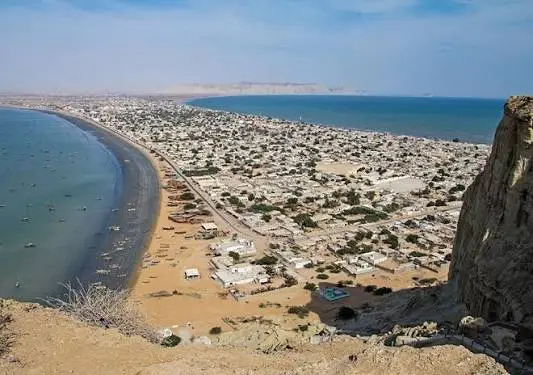
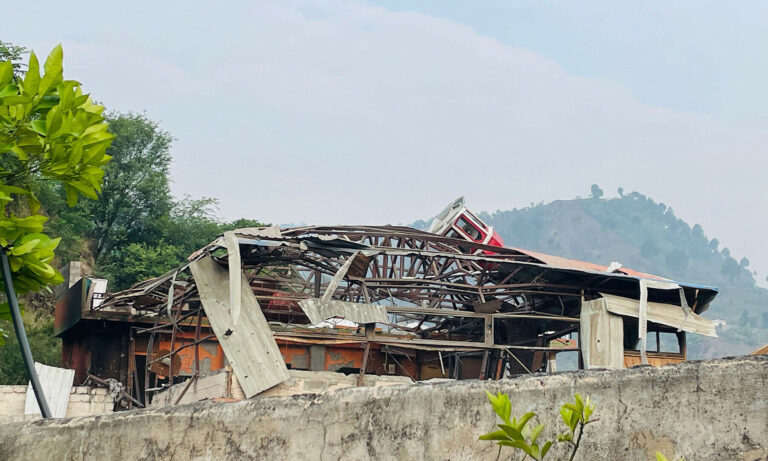
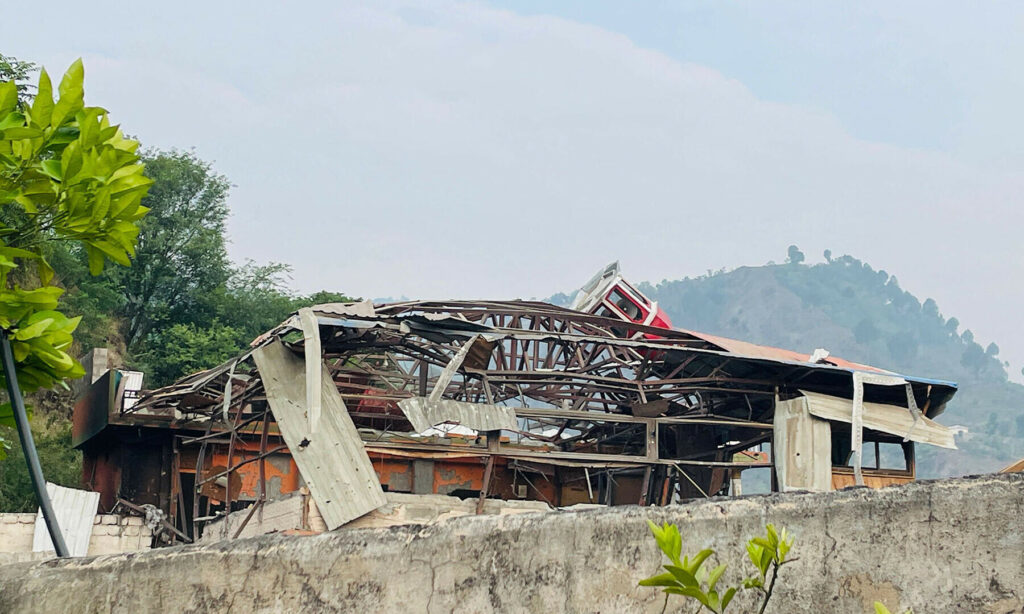
The Balochistan Liberation Army (BLA) staged over 12 coordinated simultaneous attacks in at least 10 cities on the night of January 30-31, including Quetta, Gwadar, Mastung, Nushki, Dalbandin, Kharan, Panjgur, Tump, and Pasni. The targets were military facilities, police stations, banks, and a prison in Mastung, from where around 30 prisoners were released. The BLA’s suicide wing, the Majeed Brigade, deployed suicide bombers. Road blockades were established. Railway tracks were destroyed.
ISPR’s initial count confirmed 58 terrorists killed and 10 security personnel martyred as attacks were foiled across the province. As clearance operations expanded by day two, 92 more terrorists had been killed, and 15 more security personnel martyred. Defence Minister Khawaja Asif linked the attacks directly to Indian funding, stating the BLA sought to “maintain its visibility to get foreign funding from India.” Meanwhile, the security sources said that Indian media and social media accounts affiliated with the Indian government had boosted the BLA’s messages during the attacks, which they termed a coordinated hostile information operation.
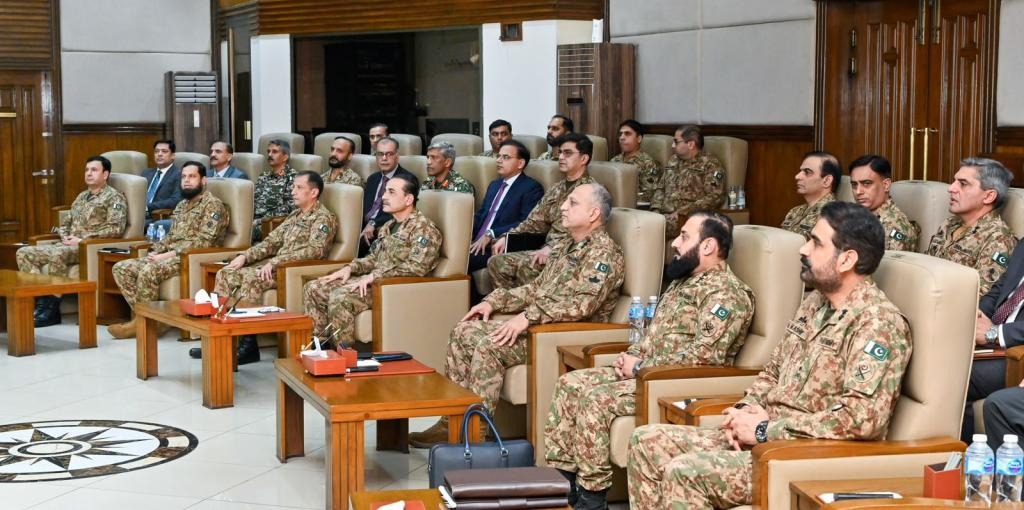
Pakistan’s response was systematic. On January 29, Operation Radd-ul-Fitna-1 was officially launched by the Pakistan Armed Forces, Frontier Corps, law enforcement bodies and intelligence agencies. Helicopter and drone assets were deployed in the operation to target terrorist hideouts and sleeper cells at Panjgur and Harnai. ISPR said the operation was concluded on February 5 with 216 militants killed, a large stockpile of foreign-made weapons, ammunition and other equipment recovered, and the terrorist leadership and command structures were significantly neutralized. The preliminary analysis confirmed systematic external facilitation and logistical support to the fighters, said ISRP’s statement. Over 100 suspects were arrested.
The Proxy Network: Fitna al Hindustan and the Afghan Corridor
In May 2025, Pakistan officially labeled all terrorist groups operating in Balochistan under the name “Fitna al Hindustan”. The designation reflected a documented assessment: that multiple armed groups, including the BLA and its affiliated factions, were operating under Indian intelligence direction and funding.
Balochistan Chief Minister Sarfaraz Bugti has explicitly said that the Research and Analysis Wing of India was funding Fitna al Hindustan to destabilize Pakistan, and these groups had no connection with Baloch people and Balochistan; they were “purely terrorist” tools of foreign statecraft. DG ISPR Lt Gen Ahmed Sharif Chaudhry presented specific evidence of Indian intelligence involvement, pointing to the October 2024 attack on the Chinese envoy in Karachi, where RAW-linked social media accounts had posted about the attack beforehand. The same pattern of pre-attack signaling was observed in the case of the hijacking of the Jaffar Express in March 2025, before a warning was issued on Twitter to followers to “keep an eye on Pakistan today and tomorrow” by Indian related accounts.
Surrendered militants who came before the state confirmed the Indian operational hand. DG ISPR cited the case of Adeela Baloch, a former militant who surrendered and revealed she had been “exploited and blackmailed” by Fitna al Hindustan into becoming a suicide bomber. Young women from Balochistan were being systematically targeted for recruitment by the Majeed Brigade, with the BLA focusing recruitment on educated, middle-class women in universities and hospitals.
The Afghan dimension is parallel to the Indian one. ISPR has repeatedly reported that the Afghan Taliban regime gives operational freedom and support to the TTP and its affiliated groups, known as Fitna al Khawarij. Most fighters engaged in recent Balochistan operations turned out to be Afghan nationals. Staging areas, training centers and crossing points in the Afghan border regions enable the movement of Afghan fighters and weapons across the border into Balochistan and the Khyber Pakhtunkhwa province. DG ISPR described the Afghan Taliban government directly as a “mother organization” that is “organizing, training, guiding, and directing” militant groups in line with its own structure. The US abandonment of $7 billion worth of military equipment in Afghanistan in 2021, much of which was later recovered by the Taliban and has since appeared in Pakistani counter-terrorism operations, has materially contributed to militants’ firepower inside Pakistan.
May and June: The Campaign Continues
The security situation did not stabilize after February’s Operation Radd-ul-Fitna-1. On May 13, security forces in the Nosham area of Barkhan District conducted a sanitization operation in which seven terrorists were killed and five security personnel, including an Army Major, were martyred. The same day, BLA fighters ambushed an army checkpoint in the Kardgah area of Mastung, killing five more soldiers.
The most devastating single attack of 2026 came on May 24. A BLA suicide bomber drove an explosives-laden vehicle into a shuttle train near Chaman Phatak in Quetta, killing at least 47 people and injuring 98. The attack targeted a train on which security personnel were travelling. Reportedly, at least 30 were dead, with 20 of the injured in critical condition. The UN Secretary-General condemned the attack. Saudi Arabia, Qatar and China all issued condemnations. This attack came on the day before Prime Minister Shehbaz Sharif met President Xi Jinping in Beijing, which security analysts said was a “precise” attempt to target the diplomatic ties between the two countries.
July: The Latest Wave
From 4th to 8th July, Balochistan was again the epicenter of three coordinated attacks. On the night of July 4 to 5, Fitna al Khawarij terrorists attacked the local population in Hanna Urak on the outskirts of Quetta, killing four civilians and injuring six before residents fought back and forced the attackers to withdraw. On July 6, militants attacked a police post near Mangi Dam in Ziarat, taking officers hostage. On July 8, a BLA ambush hit an army convoy on the N-25 highway near Bela-Winder, martyring 11 soldiers, including one junior commissioned officer and ten jawaans. Fourteen BLA terrorists were killed at the site. Security forces simultaneously conducted operations in Kharan and Dalbandin, killing six and eight terrorists respectively.
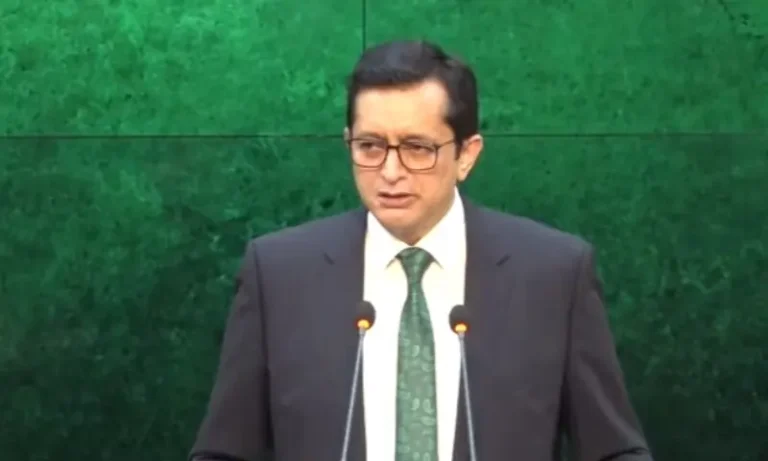
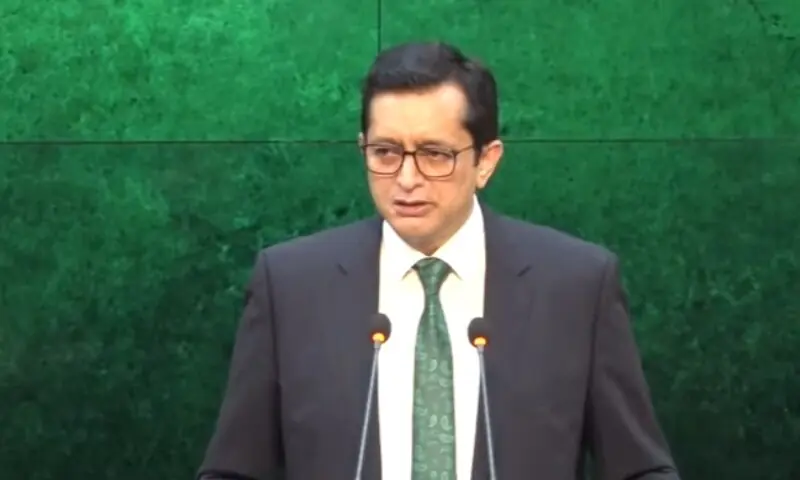
DG ISPR, on July 8, held a press conference where he revealed that 42 martyrs and 54 terrorists were killed during the four days. He reiterated that India was behind the recent wave of violence and that Afghan Taliban territory was being used as a base of operations. “There is a scheme, a mastermind, intent, logistics and an operational sequence behind it,” he said.
The security forces’ resolve was stated without ambiguity. “We will take on each and every terrorist, their facilitator, those who harbor them, those who furnish them, those who provide them bases, wherever they are, without any distinction,” DG ISPR said. “Don’t expect any sort of rationality and proportionality from us.”
In 2025, ISPR conducted 58,778 intelligence-based operations in Balochistan alone, resulting in the killing of thousands of militants. 2026 is running along a similar course. The weapons recovered in operation after operation are foreign in origin. The planning, per documented intelligence, is external. The fighters, per casualty assessments, are increasingly Afghan nationals. What is being fought in Balochistan is not a province’s internal crisis. It’s a proxy campaign, funded from outside Pakistan, orchestrated across an international border, and targeting the strategic assets, the people, and the future of Pakistan’s biggest province.

Our Editorial Desk is the intellectual engine of Digital Debate, responsible for the rigorous research that anchors every conversation. Our team deep-dives into data, checks every source, and consults academic literature to move beyond headlines and identify the questions behind the questions.