Each State has a pressure point. Pakistan’s external forces had already determined decades ago to make Balochistan theirs. The province accounts for 44 percent of Pakistan’s total land area and holds the largest deposits of natural gas, gold, copper, and coal. It supports the economic lane connecting China and Pakistan, the China-Pakistan Economic Corridor (CPEC), and it borders Iran and Afghanistan and is at the mouth of the Arabian Sea. Anyone who wants to divide Pakistan, delay CPEC, and upset the balance of emerging connectivity in the region has every reason to keep Balochistan ungovernable, and Balochistan’s story is told on their terms. That is the context missing from nearly every Western report on the province.
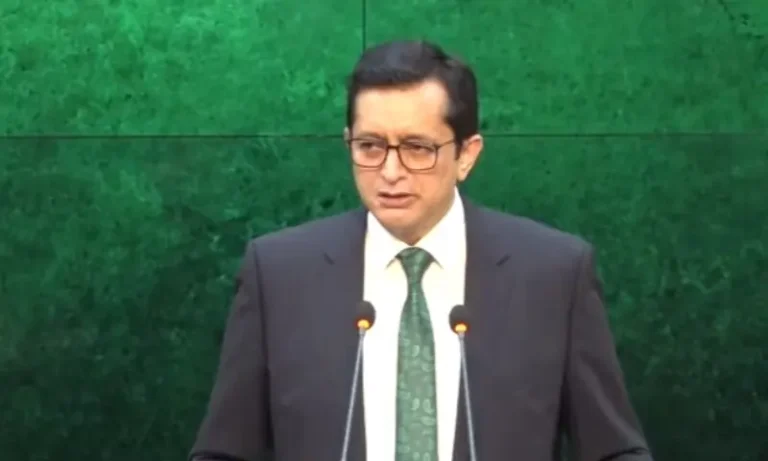
The dominant international narrative of Balochistan is a story of state repression against a restive population. Enforced disappearances, military operations and underdevelopment are a large part of the picture. Sources of the violence, funding of separatist groups and the well-documented foreign intelligence involvement in sustaining the insurgency are missing. Pakistan’s Permanent Representative to the United Nations delivered a dossier on India’s interference and terrorism in Pakistan, containing proof of RAW involvement, particularly in Balochistan. The Kulbhushan Jadhav case settled that question for anyone willing to look at the evidence. Jadhav, an alleged RAW agent, was arrested in a counter-intelligence operation in Balochistan’s Mashkel area for his involvement in espionage and sabotage activities against Pakistan. India did not appeal to the International Court of Justice to prove that the espionage was bogus, but to request access to consular posts. ISPR confirmed that Jadhav’s goal was to disrupt the development of CPEC, with Gwadar port as a special target, describing it as nothing short of state-sponsored terrorism.
The main tool of this external project is the Balochistan Liberation Army (BLA). The US State Department labeled the BLA and its Majeed Brigade, a suicide wing of the BLA, on the list of Foreign Terrorist Organizations in 2025, in the wake of the hijacking of the Jaffar Express train by the BLA on March 20, 2025, which killed 31 civilians and security personnel and took over 300 passengers as hostages. Its financial networks pass through Afghanistan and into European capitals where Afghan exiled leaders operate freely, trying to influence Western governments to pressure Islamabad. A BNA commander who surrendered to Pakistani authorities revealed that India had been covertly providing financial support to separatist elements in the region and encouraging acts of terrorism within Balochistan. The Afghan connection became more direct after 2021, with Pakistani security officials documenting cross-border facilitation of BLA operatives from Afghan soil.
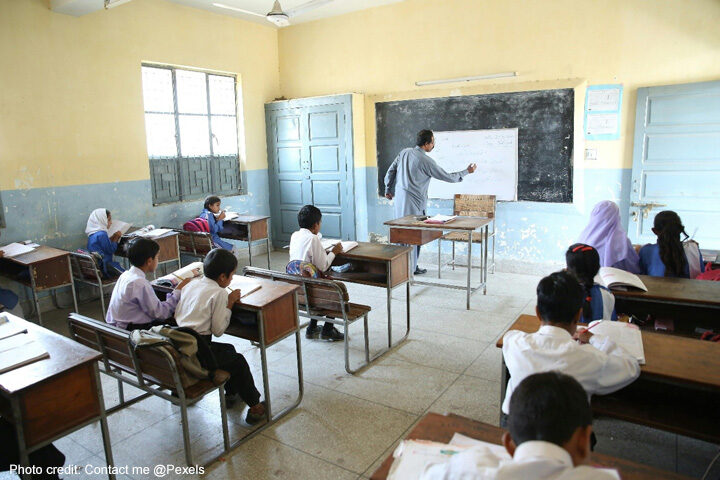
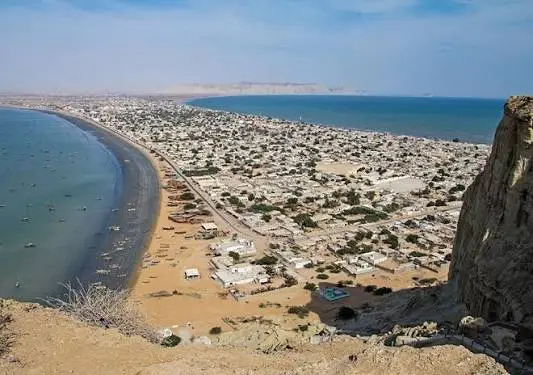
None of this mitigates the actual development gap Balochistan is facing. Balochistan is Pakistan’s largest province, home to immense natural wealth, yet it has the lowest literacy rate and ranks second worst in multi-dimensional poverty among the country’s four provinces, according to the UNDP. Acknowledging that is not a concession to the separatist narrative. It is a fair reading of a province that successive Pakistani governments for decades have underprioritized. The federal government’s efforts on CPEC are combating some of the deficit. Gwadar Port is becoming a modern deep-sea port, the New Gwadar International Airport is completed with $230 million, and roads such as the M-8 motorway connecting Gwadar to Ratodero have enhanced road connectivity in the province. In June 2025, the World Bank granted $194 million for education and water security initiatives in Balochistan aimed at addressing education poverty and climate resilience. But development alone does not win a narrative war being fought in London, Brussels, and Washington.
Pakistan’s communications failure on Balochistan is striking. The country has a proven example: a foreign intelligence, foreign spy, designated terrorist group with proven foreign funding and a CPEC project that brought roads, ports and energy to a previously remote region. No instance of that has been put together as a coherent, sustained, international, credible counter-narrative. In response to any news coverage of Pakistan’s Balochistan affair in the foreign media, Pakistan’s reaction has been reactive, defensive and late. By the time Islamabad responds, the original framing has already set. At Marka-e-Haq, Pakistan proved that it could fight and win an information war if it chooses to do so. That same commitment has not been applied to Balochistan.
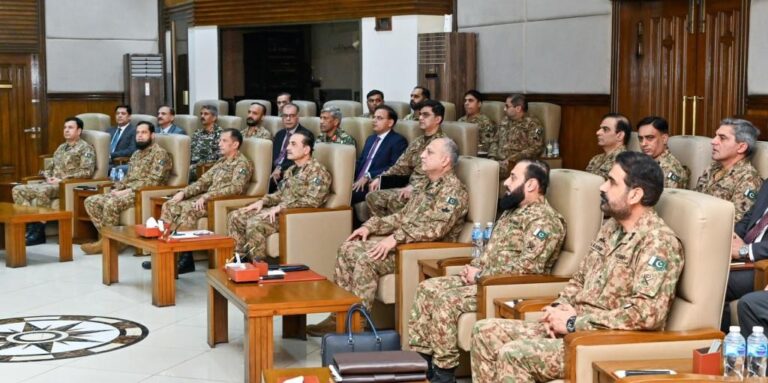
The separatist project has only one feasible objective, i.e., to keep Balochistan ungovernable for long enough to make CPEC unviable, to chip away at the territorial integrity of Pakistan in the eyes of the world, and to provide India with a permanent pressure point on Pakistan’s western border. The military response to BLA terrorism is necessary. Pakistan has broken networks, removed commanders, and secured CPEC corridors with a sustained campaign. However, a military campaign without an equally parallel narrative campaign does leave the information space open to those who are funding the violence.
Balochistan is not Pakistan’s wound to confess. It is Pakistan’s target to defend, on the ground and in the global information space. The two battles are linked together. To win one and concede the other is to deliver the external project what it intended to accomplish.

Fakeha Laique is a Bachelor's graduate in International Relations from BUITEMS, Quetta and a young researcher with a growing focus on international relations, regional dynamics, and security issues in South Asia.