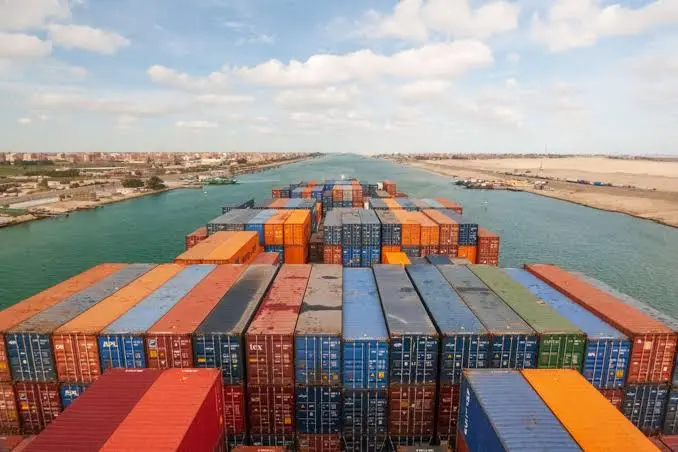
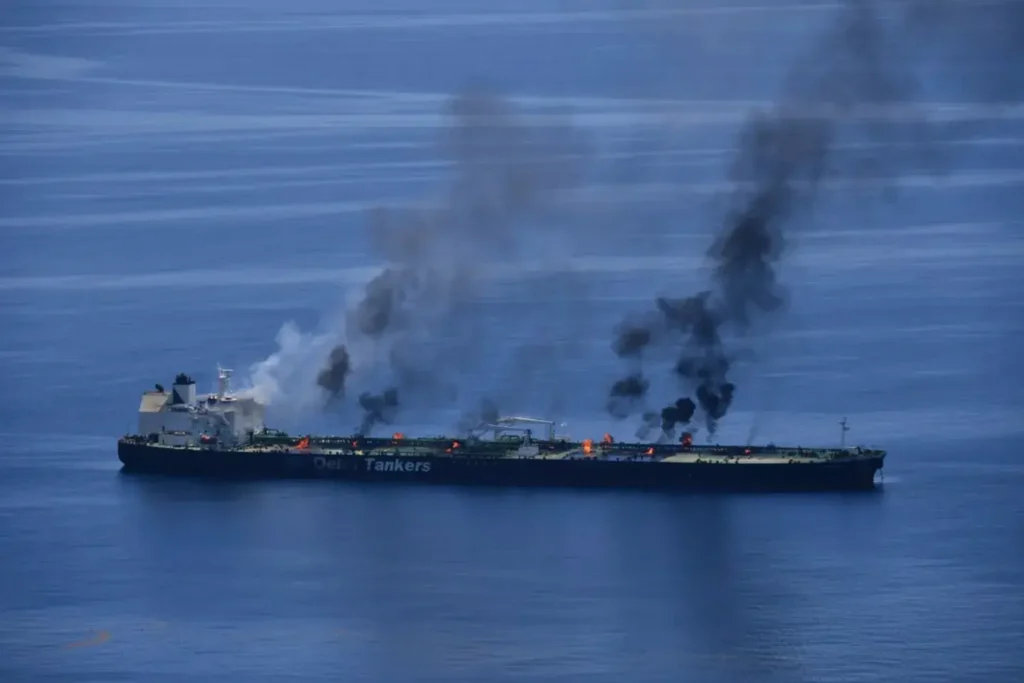
Not every conflict only affects the country where it begins. Some of them spread beyond the national borders and create instability in politics, security and economy of the whole region. Like that the ongoing tension between Houthis in Yemen and Saudi Arabia have become part of a higher security crisis in the Red Sea that is affecting Maritime routes as well as international trade. This raises an important question: How has a conflict in Yemen become a threat to regional security and international trade? The answer can be seen in the Red Sea where Houthi attacks, regional tensions and concerns about Saudi Arabia’s security are creating consequences that go far beyond the Arabian Peninsula. The Bab el-Mandeb Strait connects the Red Sea with the Gulf of Aden and the Arabian Sea, making important links between Europe, Asia and the Middle East.
The Red Sea Is very important because of its link to the Suez Canal. Ships moving from Asia to Europe can navigate the Red Sea and Suez Canal rather than taking the longer route around the southern tip of Africa. This route saves both time as well fuel. According to the United Nations Trade and Development (UNCTAD), more than 80% of global trade by volume is transported by the sea (UNCTAD, 2024).
The Bab el-Mandeb strait is another critical waterway for global energy supplies. According to US Energy Information Administration 2026, Approximately 9.3 million barrels per day of crude oil, condensates and petroleum products passed through the strait in 2023, but this figure dropped to about 4.1 million barrels per day in 2024 when vessels avoided the area because of security risks.
The Houthis have been fighting the civil war in Yemen since they took control of Sana’a in 2014. In 2015, Saudi Arabia led a coalition of countries to support Yemen’s internationally recognized government against the Houthis. As the conflict between Saudi Arabia and the Houthis later decreased and led to the reduction in large-scale violence. But still Yemen’s division in politics and conflict remained unresolved.
Again the situation changed in late 2023. When the war in Gaza began, the Houthis started attacking commercial and other ships in and around the Red Sea. Their argument is that it’s all linked to the Gaza conflict. As a result the issue has been viewed at the regional level, this makes a wider international maritime security concern. The International Maritime Organization (IMO) 2024, noted numerous dangerous attacks on ships and called for an end to attacks against commercial vessels and seafarers.
One of the most significant effects on the economy is the redirection of ships. Instead of passing from Bab el-Mandeb strait or through the Suez Canal, they have chosen to travel around the Cape of Good Hope at the southern tip of Africa.
This alternative route takes longer. According to UNCTAD 2024, the ships diverted from the Red Sea to the Cape of Good Hope could face around a 12 day delay on an Asia Europe journey that would increase transit times by approximately 30% more. Longer journeys demand greater fuel consumption, more time for crews at sea and higher insurance and operating costs. They can also reduce the number of trips that ships can make within a specific period.
The effect was also evident in the shipping numbers. UNCTAD 2024, noted that Suez Canal transits declined especially during the Red Sea crisis, but the amount of vessel tonnage passage around the Cape of Good Hope increased. The EIA 2026, observed that oil flows around the Cape increased from about 6.0 million barrels per day in 2023 to 9.3 million barrels per day in 2024.
The Red Sea crisis is relatively connected to energy security. The Bab el-Mandeb Strait, Suez Canal and SUMED pipeline are important routes for transporting oil and natural gas between the Persian Gulf, Europe and other global markets. In 2023, about 9.3 million barrels per day of oil and petroleum products passed through the Bab el-Mandeb. In 2024, this amount fell by more than half when vessels changed their routes.
Saudi Arabia has particular reasons to pay attention to these routes. Because it is one of the world’s major oil producers and is located close to the Red Sea and Bab el-Mandeb region. Saudi Arabia can reduce some of its dependence on the maritime route through its East-West pipeline which transports crude oil from the Persian Gulf region to ports on the Red Sea. It is used to convey Persian Gulf crude oil to Red Sea ports. According to the EIA, the pipeline has a capacity of around 5 million barrels per day and can temporarily be increased to about 7 million barrels per day.
So, a disruption in the Red Sea would not stop Saudi Arabia’s oil exports. It could force Saudi Arabia and other energy producers to rely more heavily on alternative routes and infrastructure that increases the transportation, operational and security costs.
The attacks have triggered an international military and diplomatic reaction. The US and its allies have carried out maritime security operations, and the European Union launched Operation Aspides to protect freedom of navigation and commercial shipping in the Red Sea region. International organizations have also called for the protection of commercial vessels and their crews.
However, protecting ships does not solve the political problems behind the crisis. Now in 2026, the broader Yemen conflict will continue without a resolution as well as the Red Sea situation connected to broader tensions in the Middle East. According to the Congressional Research Service, the pattern of Houthi maritime attacks has changed by time, including periods when attacks were suspended and later resumed against specific vessels.
The Red Sea crisis shows how a localized conflict can affect the world economy. A missile or drone strike near Yemen can lead a shipping company to change its route. That can extend a journey by days, increase fuel and insurance costs, reduce shipping capacity as well affect the prices and availability of consumer goods.
According to the UNCTAD (2024), disruptions at one or more of the world’s major maritime chokepoints can increase shipping costs and put additional pressure on global supply chains, food security and energy supplies. The Red Sea’s concern is not only for Yemen, Saudi Arabia and other Middle Eastern countries but also for those who rely on global shipping.
The crisis exposes the fragility of modern global trade. Because international trade relies heavily on a limited number of important maritime chokepoints. When security deteriorates around one them shops can be redirected but the alternative is longer and costly. So, The Red Sea crisis demonstrates how regional conflict becomes connected to maritime security, energy security and the global economy.