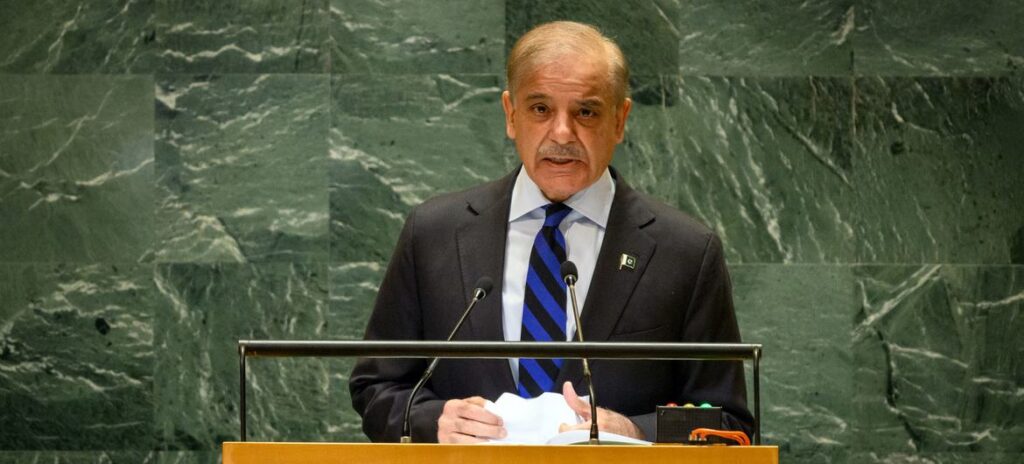

Prime Minister Shehbaz Sharif said Thursday that Iranian President Masoud Pezeshkian told him the Islamabad Memorandum of Understanding remains “fully acceptable” to Tehran, and that Iran is ready to move the agreement forward.
Shehbaz made the remark after a meeting with Pezeshkian on the sidelines of the 81st UN General Assembly session in New York, where Pakistan pushed to revive the stalled US–Iran peace framework.
The Islamabad MoU is a 14-point interim deal signed in June 2026, with Pakistan as mediator. It laid out a roadmap to end the 2026 US–Iran war: an immediate halt to military operations, reopening the Strait of Hormuz to commercial traffic, and lifting the US naval blockade of Iranian ports within 30 days.
It also set a 60-day window for negotiations on sanctions relief and Iran’s nuclear programme. The ceasefire window expired in August and fighting resumed, but diplomatic sources now report renewed contacts between Washington and Tehran in New York. Qatar is handling shuttle diplomacy, while Pakistan keeps a parallel channel open with Tehran.
Shehbaz said Pakistan’s political and military leadership are united behind efforts to speed up peace under the Islamabad MoU. He warned that provocative activity in the Strait of Hormuz and Bab al-Mandab requires friendly countries to work together to ease tensions.
Pakistan, he said, would keep working with Iran, a neighbouring and brotherly country, to promote regional peace. He confirmed that Tehran had been briefed on the Makkah Defence Alliance. Defence Minister Khawaja Asif added that Iran could join the alliance later, though it hasn’t formally committed since the secretariat is still being set up.
A joint statement from both sides reaffirmed close Pakistan–Iran ties and agreed to keep regular consultations going to address regional challenges and support peace, security, and prosperity.
Our News Desk represents a rapidly expanding frontier in contemporary journalism, focusing on the intersection of technological advancement, geopolitical narratives, and the shifting dynamics of public information.