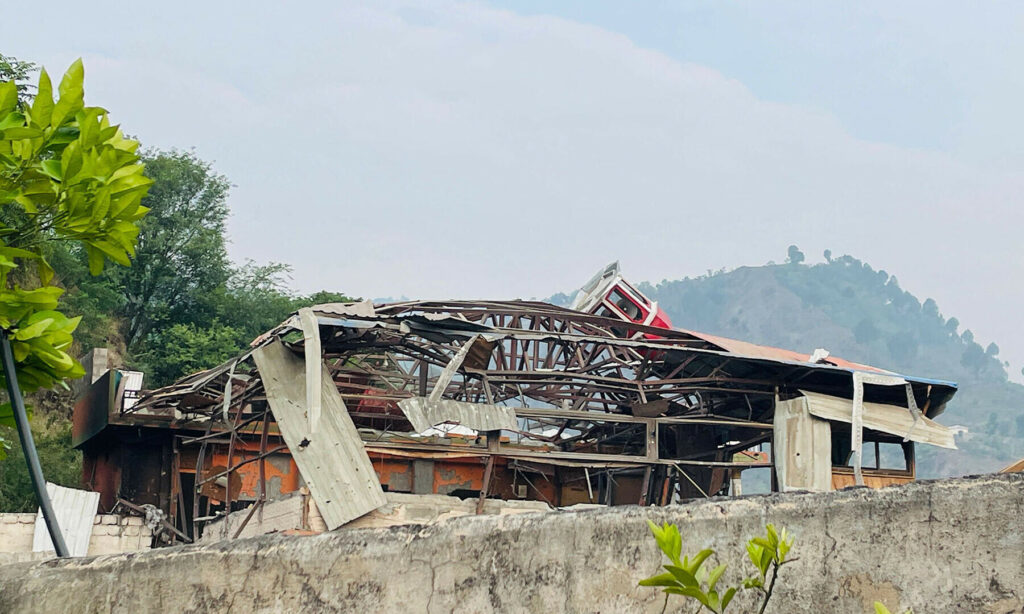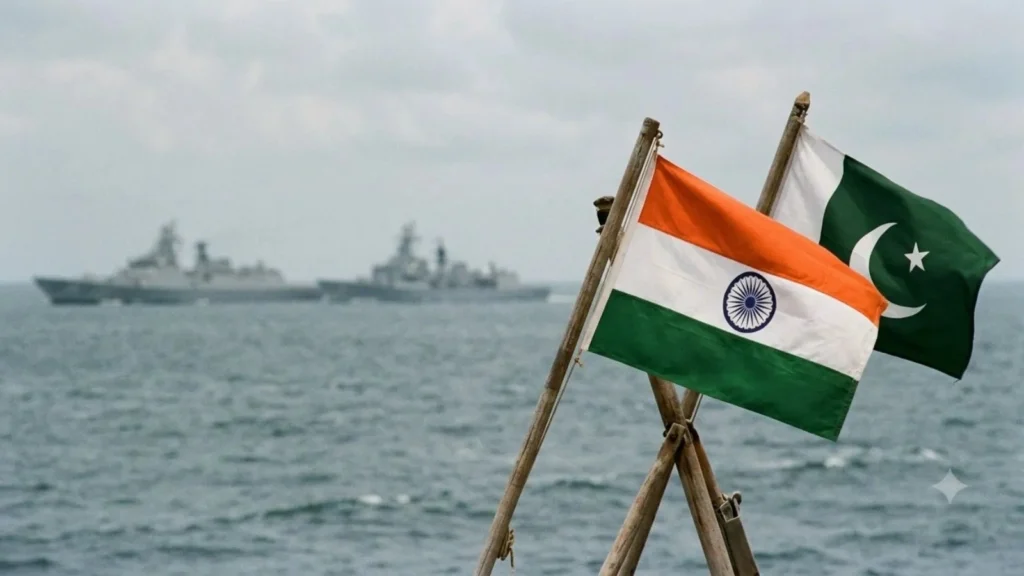
In April 1991, India and Pakistan met at New Delhi and signed two accords to ensure that accidents did not turn into a war. One covered advance notice on military exercises, manoeuvres, and troop movements. The other addressed the prevention of airspace violations and the rules for permitting overflights and landings by military aircraft. In December 1994, both were registered with the United Nations. They both came into force on 19 August 1992, following the exchange of instruments of ratification. Thirty-four years later, the 2025 conflict between the two countries rendered their core provisions meaningless within days.
The 1991 Agreement on Advance Notice on Military Exercises, Manoeuvres and Troop Movements was built on a precise framework of timelines and thresholds. The two parties reached an agreement not to carry out significant military drills near one another. In areas where drills were conducted along the border, the strategic direction of the main force could not face the other side. The minimum advance notice requirements were 15 days in the case of air exercises at the Regional Command level, 30 days in the case of divisional and major naval exercises, 60 days in the case of corps-level exercises, and 90 days in the case of army-level exercises. Movement of the troops within 150 kilometres of the border had to be notified at least two days in advance, or through the military hotline.
The airspace regulations were also precise. Fighters, bombers, reconnaissance aircraft, and armed helicopters were not allowed to fly within 10 kilometres of each other, as well as within Air Defence Identification Zones. The minimum distance was shortened to 5 kilometres near border airbases on the Pakistani side, like Lahore, Pasrur, Vehari, and Rahimyar Khan, and on the Indian side, like Jammu, Pathankot, Amritsar, and Suratgarh. Ships were not allowed within 3 nautical miles of one another. In international waters, aircraft were prohibited from flying over surface units of the other nation.
These were the Confidence Building Measures (CBMs) in their formal sense. They were aimed at minimizing the risk of misreading, so that an exercise on the border seemed like a routine exercise, rather than training towards an attack. This is explicitly mentioned in the preamble to the agreement, which says that it was meant to help avoid any crisis that could occur because of misunderstanding the intentions of the other side. The logic was sound for the era in which it was written.
When the Framework Met Reality
The agreement’s limitations became apparent as the nature of regional engagement evolved. By 2019, the Balakot airstrikes demonstrated that the airspace provisions were increasingly sidelined by political and security imperatives. But it was the crisis in 2025 that arguably completed the task. After a build-up in April 2025, both countries were quickly on the path towards kinetic actions that disregarded the 1991 procedures. In May 2025, in what was termed as one of the largest Beyond Visual Range (BVR) battles in the history of the region, it was reported that more than 114 aircraft took part in the warfare.
The 10-kilometre airspace buffer mandated in 1991 held no relevance in a conflict where engagement occurred at distances of over 100 kilometres. Even though a ceasefire was declared on both sides by the middle of May 2025, the pace and magnitude of the escalation emphasized that the 1991 framework was no longer able to hold modern military action.
What the 1991 Agreement Tells Today
The agreements of 1991 were the result of a certain diplomatic situation. Both nations were interested in sending a message of moderation to one another and the global community. These CBMs are a reflection of the optimism at the time, where formal structures seemed able to handle bilateral risk by being transparent.
The agreements did not fail because their text was badly written. They collapsed as the two sides assumed that they would be working in a traditional military context and respect the transparency that the agreements demanded. The 1991 framework is now a historical document. It tells you what two governments thought was possible at a particular moment in South Asian history. It does not reveal much about the way India and Pakistan cope with military risk in the present, since the arrangements to do so, as far as they exist, are based on crisis hotlines, back-channel diplomacy, and international mediation instead of the advance warning periods written into a UN-registered treaty thirty years ago.

Our Editorial Desk is the intellectual engine of Digital Debate, responsible for the rigorous research that anchors every conversation. Our team deep-dives into data, checks every source, and consults academic literature to move beyond headlines and identify the questions behind the questions.