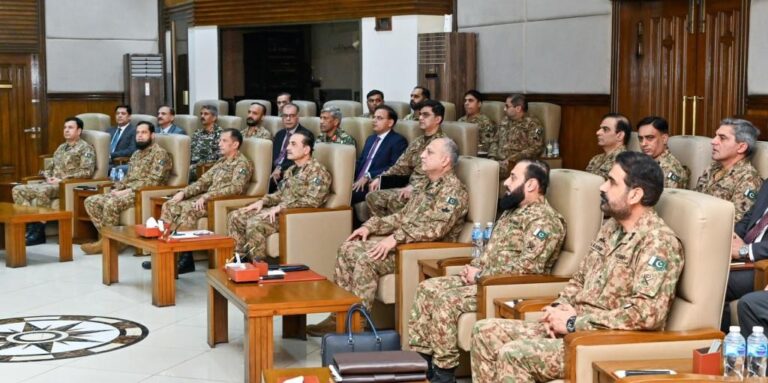

As the world’s cameras were focused on the missile trails over the Persian Gulf, a silently extraordinary change was taking place in the power corridors in Islamabad. When the war between Iran, Israel, and the United States was about to trigger a global conflagration, the foreign ministers of Saudi Arabia, Turkey, and Egypt did not meet in Riyadh, Ankara, or Cairo. Instead, they flew to Islamabad. The Quad summit of the four nations was not only a meeting; it was also a sign that Pakistan was back on the world chessboard.
The Geopolitical Destiny
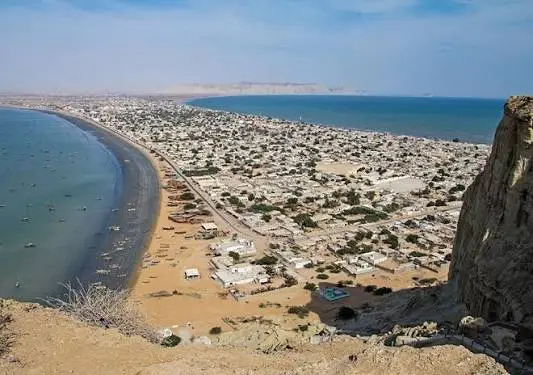
“Geography is destiny,” a phrase often attributed to Napoleon, finds its ultimate modern expression in Pakistan. To understand why the world has once again turned to Islamabad, one must look at the map. Pakistan is at the exact crossroads of South Asia, Central Asia, and the Middle East. It shares a 900-kilometer border to the west with an embattled Iran, meaning that any war in Tehran is a domestic security issue for Islamabad. On its southern side, the Arabian Sea offers access to the Strait of Hormuz- a maritime chokehold that passes 20 percent of all the oil in the world.
This geography is no longer a challenge, but now a special diplomatic asset in the present crisis. As Western powers are effectively sidelined by Tehran and regional competitors such as Saudi Arabia continue to be regarded with distrust, Pakistan is left to be the interlocutor of last resort. It is the sole country capable of both having an effective military and diplomatic relationship with the Pentagon and, at the same time, experiencing brotherly, elite dialogue with the Iranian leadership.
The Architecture of Backchannels
The recent mediation role of Pakistan is not a historical accident, but a continuation of an old tradition of shuttle diplomacy. The critics who perceived Pakistan as a peripheral player over the last few years overlooked the institutional memory of the Foreign Office and military leadership.
Traditionally, Pakistan has been the silent mastermind of some of the biggest geopolitical transformations of the 20 th and 21 st centuries. It was a Pakistani plane that transported Henry Kissinger on his secret trip to Beijing in 1971, to the rapprochement between the United States and China, which changed the Cold War fundamentally. Pakistan was the driving force behind the 1988 Geneva Accords, decades later, when the occupation of Afghanistan by the Soviet Union became unsustainable.
In the 21st century, the path to the 2020 Doha Agreement on withdrawal of the US from Afghanistan was made through Islamabad. Pakistan has always employed its own peculiar dual literacy in Western and Eastern strategic thinking to play the impossible deadlocks.
The Islamabad Dialogue
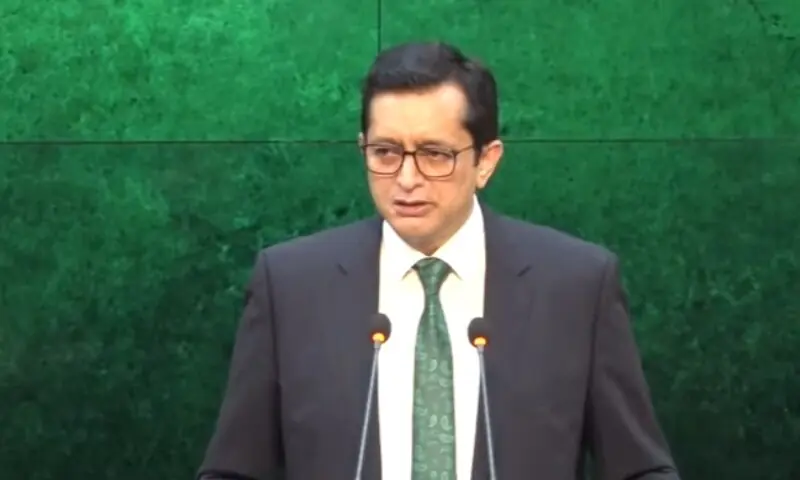
The latest dialogue in Islamabad is the most advanced version of this role. Deputy Prime Minister and Foreign Minister Ishaq Dar confirmed that Pakistan has been transmitting a 15-point US ceasefire offer to Tehran. This plan is not just a truce demand; it is a multifaceted structure with sanctions relief, maritime security assurance, and nuclear restrictions.
The Islamabad summit is important because it was inclusive. By uniting the Sunni Quad (Pakistan, Saudi Arabia, Egypt, and Turkey), Islamabad established a regional security umbrella that enabled Tehran to interact without the perception of giving in to the pressure of the West. One physical success of this diplomacy was the Iranian offer of letting Pakistani-flagged ships pass through the Strait of Hormuz alone, a pilot project to de-escalate the energy crisis in the world.
The World’s Indispensable Intermediary
The world has attempted to bury Pakistan’s relevance many times. It was marginalized after the Soviet withdrawal, it was questioned after 9/11, and it was pitied in its recent economic crisis. However, as the 2026 crisis shows, the world always comes back to Islamabad.
Whether it is passing a secret 15-point plan from Washington to Tehran or providing the venue for a regional coalition to demand a ceasefire, Pakistan has proven that it is not a bystander in history. It is the bridge. One thing stands out clearly today that the quickest way to peace in the Middle East does not go through the orthodox capitals of Europe. It passes through the heart of Pakistan. Geography, indeed, is destiny; and right now, that destiny is keeping the world from the brink of total war.

Syed Abdullah Anwer is a leading legal expert and international media analyst appearing regularly on platforms such as Russia Today (RT) and TVRI World. As a Senior Associate at TAHOTA Law Firm and a CIArb-accredited neutral, he offers authoritative insights into the intersection of regional geopolitics, treaty obligations, and international diplomacy. He is widely recognized for his unique ability to navigate the legal complexities of the China-Pakistan Economic Corridor (CPEC) and maritime law.