Every year on August 21, the world remembers the victims of terrorism. For Pakistan, this day is not just a date on the calendar. It is a mirror that shows us how much we have lost, and how much we have survived.
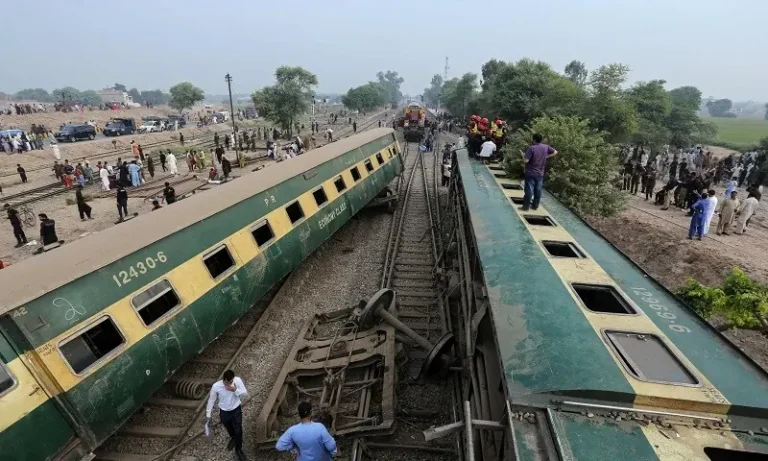
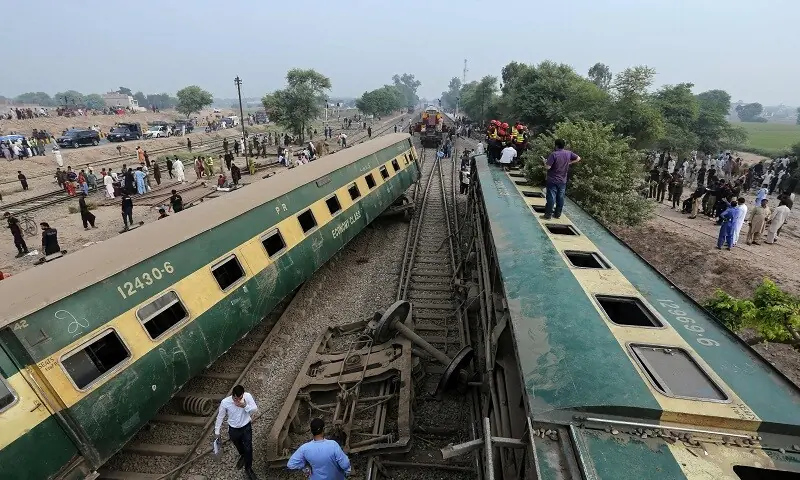
For more than two decades, terrorism has followed Pakistan like a shadow. It has walked into our schools, our mosques, our markets, our army camps, and our streets. It has not spared anyone. Soldiers who left home to guard the borders never came back. Policemen who stood at checkpoints to protect ordinary citizens were killed doing their duty. Children who went to school with bags on their backs became victims of hate they could never understand. Political leaders, including a former prime minister, were taken from us in broad daylight. Workers, labourers, shopkeepers, and travellers on buses and trains have all paid this price at different times.
The scale of this loss is hard to put into words. Tens of thousands of Pakistanis, from every province and every walk of life, have died because of terrorism since the early 2000s. Thousands more carry wounds that never fully heal, on their bodies and in their hearts. Families have lost fathers, mothers, sons, and daughters. Entire villages in Khyber Pakhtunkhwa and Balochistan have grown used to the sound of loss. No other country has sacrificed as much in this fight as Pakistan has.
And yet, this is not only a story of pain. It is also a story of courage. After every attack, Pakistan has stood back up. Soldiers still volunteer for the most dangerous postings, knowing the risks. Teachers went back to empty classrooms just weeks after their students were killed. Markets that were bombed were rebuilt by the same people who lost everything in them. This is the quiet strength of ordinary Pakistanis, a strength that rarely makes headlines but holds the country together.
Behind every story is a name, a face, a family that was never the same again. Benazir Bhutto, who had led this country twice, was taken from us in a bomb attack while leaving an election rally. Shahbaz Bhatti and Bashir Ahmad Bilour, two leaders who spoke up for the voiceless, were both gunned down for refusing to stay silent. And then there was Aitzaz Hasan, just a schoolboy in Hangu, who saw a suicide bomber walking toward his school gate and stopped him before he could reach his classmates. He did not survive, but hundreds of children who were his age are alive today because of what he did.
The heaviest loss of all came on a December morning in Peshawar, when nearly 150 students and teachers of the Army Public School never made it home. They were children who had gone to school with the same excitement every child feels, and they became victims of a war that was never theirs to fight. Their names are read out every year, their photographs still hang on classroom walls, and their parents still light candles for them.
Alongside them stand thousands of soldiers, policemen, and Frontier Corps personnel who never made it back from a checkpoint, a patrol, or an operation in the mountains of Waziristan or the streets of Balochistan. Every year brings fresh names to this list, young men who put on a uniform knowing the risk and went anyway. Their families do not get to grieve quietly; they carry the title of “martyr’s family” for the rest of their lives, a title that comes with pride but also with an emptiness that never really fills. These are not just victims of an attack. They are reminders of what this country has lost, and why it keeps standing back up.
Terrorism has also hurt Pakistan in ways that are less visible but just as real. It has scared away foreign investors who might have brought jobs and factories. It has slowed down trade and tourism in regions that had so much potential. Every attack means new security spending, damaged roads and buildings, and business that shuts down out of fear. Ordinary people pay for this too, in the form of unemployment, rising prices, and opportunities that never arrived. The economic cost of terrorism runs into billions of dollars, but the real cost is the future that so many young Pakistanis were denied.
Despite all of this, the spirit of this nation has not been defeated. Pakistanis have buried their dead, mourned their losses, and gone back to work the next morning. This is not because the pain is small, but because the resolve is bigger. As a nation, we have said again and again that terror will not decide our future. We remember our martyrs not with fear, but with pride, and we carry their memory as a reason to keep moving forward, together.
On this day, Pakistan does not just remember its victims. It renews a promise. A promise that no matter how many times we are struck, we will rise again. We have bled more than most nations should ever have to. But we have also shown the world what it means to stand tall after every fall. That is the true story of Pakistan’s fight against terrorism, a story of loss, yes, but even more, a story of unbreakable resolve.
Read more: https://digdebate.com/pakistans-war-without-borders/

Our Editorial Desk is the intellectual engine of Digital Debate, responsible for the rigorous research that anchors every conversation. Our team deep-dives into data, checks every source, and consults academic literature to move beyond headlines and identify the questions behind the questions.