
Pakistan and France have reaffirmed their commitment to strengthening defence and security cooperation following a day of high-level engagements in Islamabad and Rawalpindi.
The eighth round of the Pakistan-France Joint Security Commission was held in Islamabad on Tuesday. Pakistan’s delegation was led by Defence Secretary Lieutenant General (retd) Muhammad Ali, while the French side was headed by Nicolas Roche, France’s Secretary-General for Defence and National Security.
The meeting reviewed progress since the commission’s seventh round in Paris in 2022 and examined ways to further implement the Pakistan-France Roadmap for Bilateral Cooperation agreed in 2023.
The two sides agreed to continue bilateral dialogue and engagement, including through staff talks aimed at assessing the progress of defence cooperation.
They also decided that the next round of the Joint Security Commission would be held in France on mutually agreed dates. Both countries exchanged views on regional security developments and underlined the importance of diplomacy and dialogue in addressing emerging challenges.
In a separate meeting at General Headquarters in Rawalpindi, Nicolas Roche called on Chief of Defence Forces and Chief of Army Staff Field Marshal Syed Asim Munir. French Ambassador to Pakistan Jean-Noël Poirier accompanied Roche during the visit.
According to the Inter-Services Public Relations, the meeting covered matters of mutual interest, regional security and bilateral cooperation in the defence and security sectors. Field Marshal Munir reaffirmed Pakistan’s commitment to strengthening relations with France and expanding cooperation between the two countries.
Roche acknowledged Pakistan’s efforts to promote regional peace and stability and expressed France’s interest in broadening cooperation in areas of mutual interest.
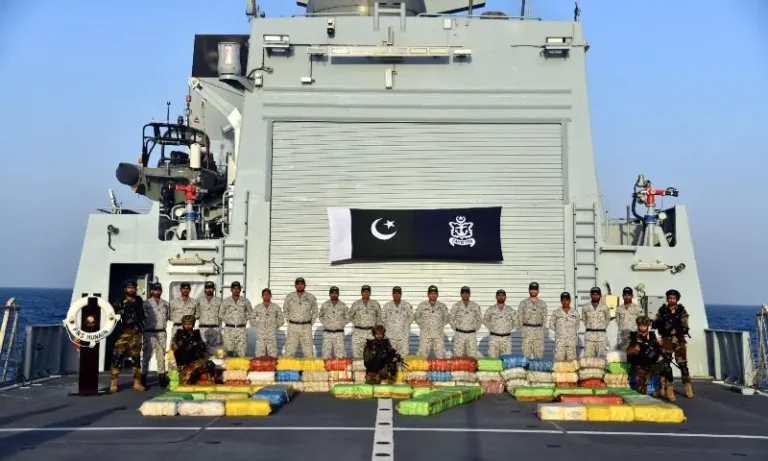
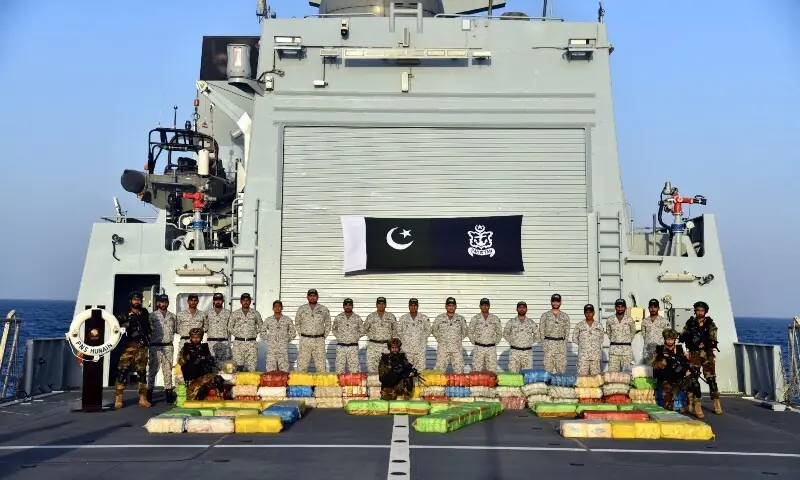
The discussions also placed emphasis on non-traditional security threats. Pakistan and France reaffirmed their commitment to enhancing cooperation against terrorism and related challenges, including drug trafficking, piracy and other forms of transnational organised crime.
This wider agenda indicates that the relationship extends beyond conventional defence cooperation and includes broader security concerns affecting South Asia, the Middle East and the Indian Ocean region.
However, the official statements did not announce any new weapons deal, military platform or specific procurement agreement. Instead, they focused on institutional mechanisms, regular consultations and the implementation of existing bilateral commitments.
The back-to-back meetings suggest that Islamabad and Paris are seeking a more structured and predictable security relationship. The Joint Security Commission provides a formal channel for policy-level coordination, while staff talks are expected to support practical defence engagement.
The decision to hold the next commission meeting in France also reflects both sides’ intention to maintain regular and reciprocal dialogue.
For Pakistan, closer engagement with France could strengthen cooperation in counter-terrorism, maritime security and efforts against transnational crime. For France, Pakistan remains an important regional partner because of its geographical position and role in South Asian and wider regional security affairs.
The latest engagements therefore represent an effort to deepen bilateral cooperation through sustained dialogue rather than a one-time diplomatic interaction.

Our News Desk represents a rapidly expanding frontier in contemporary journalism, focusing on the intersection of technological advancement, geopolitical narratives, and the shifting dynamics of public information.