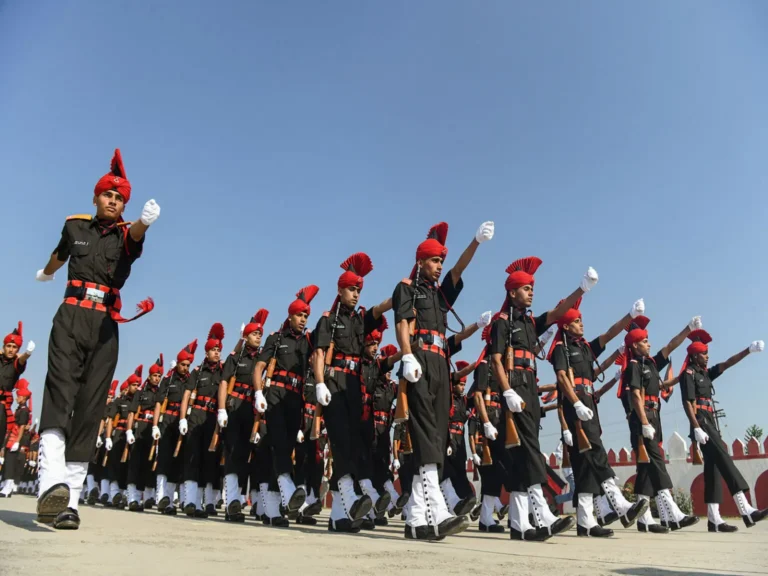
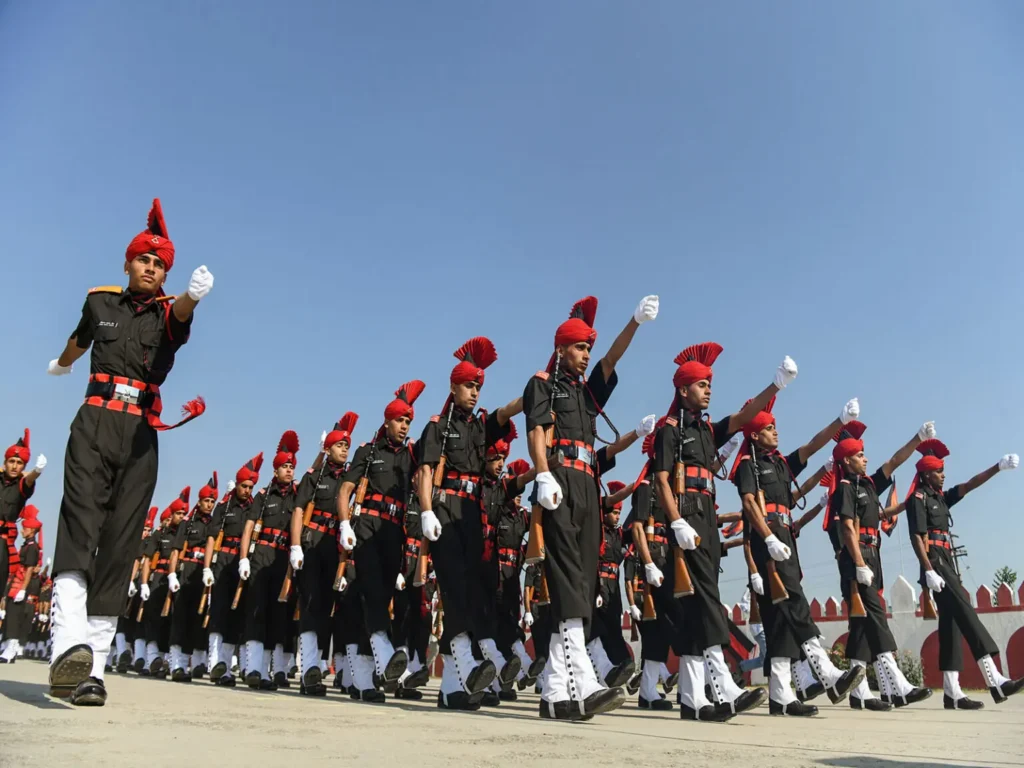
The Agniveer extension is not a reform. It is an admission that the Agnipath scheme failed. India’s Cabinet has given the 75 percent due to exit an additional two-year engagement. That is about 18,300 of the first batch’s 24,400 recruits. Delhi calls it a “second tour of duty.” We call it damage control. Seven points follow, each showing where the official case breaks down.
First, the logic collapses
Officials say the first batch performed with courage, even in Operation Sindoor. Yet the government rewrote the deal weeks before their exit. A scheme that worked would not need rescuing. A scheme that needed rescuing never deserved the confidence it was sold with. The Chief of Defence Staff calls the result a win-win, but repairs imply someone was losing. This raises serious questions about why a model declared successful needed changing before a single exit.
Second, the money no longer adds up
Agnipath was sold as a cure for the wage and pension bill, and short service was the mechanism. The extension reverses it. Monthly pay of ₹43,500 and ₹47,500 over two years totals about ₹10.9 lakh per recruit. These rates exceed the ₹40,000 paid in year four. If all 18,300 stay, salaries alone near ₹2,000 crore as a rough upper bound. Because every willing recruit can later enrol, the pension bill returns, only later. This raises questions about the full costing and where the promised savings have gone.
Third, cohesion is at risk
Hindustan Times reports that recruits entering regular service in year six will rank below those enrolled in year four. Units will hold regular soldiers, year-four enrollees and year-six enrollees side by side. Congress’s Gaurav Gogoi calls this a three-tier force. Armies run on equal risk and equal standing, and unequal status invites resentment. The announcement offered no evidence that mixed tiers protect fighting spirit. This raises questions about how command, morale and seniority will work across three categories in one unit.
Fourth, recruits still face an exit cliff
The CDS said job quotas in paramilitary forces, state governments and public firms will be scrapped. His reasoning is that Agniveers may now serve full terms. But enrolment stays subject to selection, so no one is guaranteed. States such as Uttar Pradesh, Haryana and Maharashtra offered reservations because of worries over the shorter engagement. Removing those cushions before the new path is proven is reckless. It raises questions about what happens to recruits not selected after six years.
Fifth, Delhi appears afraid of the job market
Releasing 18,300 young men weeks before key elections carries a political cost, and the extension reads like an attempt to avoid it. States such as Uttar Pradesh, Haryana and Maharashtra offered reservations because of worries over the shorter engagement. Now the CDS says job quotas will be scrapped, since recruits can serve longer. That moves the problem; it does not solve it. After six years, those not selected enter the same market, older and with fewer cushions. The announcement outlined no new absorption plan. This raises questions about what awaits recruits who are not selected.
Sixth, the services themselves wanted more
The Navy was reported to be seeking retention of nearly 75 percent, while the Army and Air Force sought about 50 percent. The original design kept just 25 percent. If the services wanted double that, the four-year model never matched their needs. Yet it was defended for four years. This raises questions about who owned the original design and why leadership backed it so publicly.
Seventh, the timing looks political
The announcement came weeks before three-quarters of the first batch was due to leave. Assembly elections in Uttar Pradesh, Uttarakhand and Punjab follow early next year, and these states supply many recruits. Opposition parties have called the move an election gimmick. Journalist Rajat Pandit described it as a virtual rollback. Timing alone proves little, but a scheme defended for four years and altered beside an election cannot claim pure strategy.
Verdict
These seven fault lines point in one direction. Agnipath promised a younger, cheaper, leaner force. The extension delivers an older, costlier, more complicated one. It exposes a manpower gap, a weak exit route, and a design the services never fully matched. A scheme rewritten before its first batch leaves has failed its first test.
Together, these failures raise questions about readiness, ownership and the true cost of the experiment. Delhi has not fixed Agnipath. It has confirmed the fault lines. Until it publishes evidence, costings, and a clear tenure model, India’s Army remains the laboratory for a policy its architects keep revising.

Our News Desk represents a rapidly expanding frontier in contemporary journalism, focusing on the intersection of technological advancement, geopolitical narratives, and the shifting dynamics of public information.