Israel’s post-election political uncertainty has intensified after the Central Elections Committee reportedly ordered an investigation into suspected foreign interference and alleged funding intended to increase voter turnout among Arab citizens. The Shin Bet, Israel’s domestic security agency, is leading the inquiry following a briefing by its chief, David Zini, on what was described as exceptionally grave interference.
Israeli Prime Minister Benjamin Netanyahu has sharply escalated the rhetoric, calling the alleged “Ra’amgate” affair an “earthquake” and claiming that the elections were stolen. In a statement shared by Likud, Netanyahu alleged that foreign entities interfered in the election and bribed voters in favour of Arab parties. He described the alleged activity as an attack on democracy and urged an investigation.
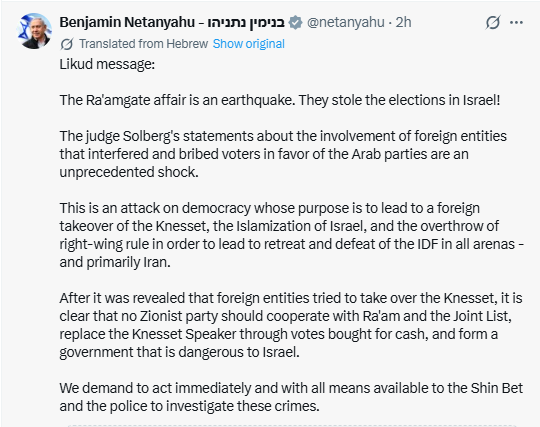
According to the reports, investigators are examining suspicions that funds linked to hostile foreign actors, including alleged Muslim Brotherhood connections, were channelled into Israel to influence Arab voter participation. The allegations remain unverified, and the investigation’s findings are expected within a week. Claims of widespread electoral fraud should therefore be distinguished from suspicions that authorities are still investigating.
The controversy comes as Arab-led parties make significant electoral gains. The two main Arab political parties are projected to secure approximately 19 of the Knesset’s 120 seats, potentially giving them leverage in negotiations over the formation of Israel’s next government. Meanwhile, demonstrations in Tel Aviv have called for a Jewish-Arab governing coalition.
The investigation carries implications for both electoral integrity and political representation. Foreign financing, if proven unlawful, could raise serious concerns about external interference in Israel’s democratic process. However, increased turnout among Arab citizens does not itself establish electoral misconduct. With coalition arithmetic potentially giving Arab-led parties a decisive role, the handling of the investigation could shape public confidence in the election and influence the negotiations over the next government. The forthcoming findings will be crucial in determining whether the allegations are supported by credible evidence.

Our News Desk represents a rapidly expanding frontier in contemporary journalism, focusing on the intersection of technological advancement, geopolitical narratives, and the shifting dynamics of public information.