When the dust settled over the Serena Hotel in Islamabad on the morning of April 13, and the delegations of two bitter adversaries boarded their respective aircraft, the world’s media rushed to deliver a verdict: the talks had failed. It was a lazy characterization; a headline built for clicks rather than comprehension. The Islamabad Talks did not fail. They did exactly what serious diplomacy is designed to do in its earliest, most combustible phase; they kept two warring nations talking.
The White House itself confirmed that the negotiations in Islamabad were the first face-to-face talks between the United States and Iran since 1979. Washington and Tehran have spent 47 years communicating with each other using proxies, threats, sanctions, and bombs. They were also the highest-level discussions since the 1979 Islamic Revolution, the first face-to-face engagement between the two countries since 2015, when the Obama administration negotiated a nuclear deal with Iran that Trump later scrapped. The fact that the two of them were sitting in the same room and that the negotiation took 21 hours is a huge change in the geometry of world conflict resolution.
On Truth Social, Trump himself wrote that “the meeting went well, most points were agreed to, but the only point that really mattered, NUCLEAR, was not.” That is not the language of a failed summit. That is the language of negotiation in progress. Iran’s Foreign Ministry spokesman Esmail Baghaei acknowledged that on some issues, mutual understanding was actually reached, but there remained a gap over two or three important issues that ultimately prevented an agreement. Agreement on the majority of matters, lapses on two or three, that is, no collapse. That is the architecture of a future deal being slowly assembled.
Pakistan’s Diplomatic Moment
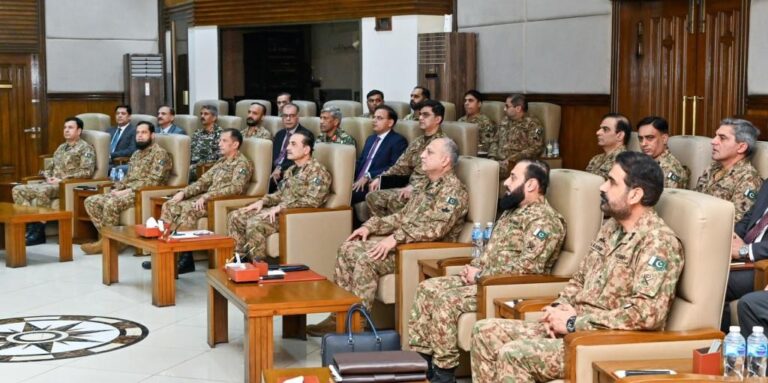
The story of how these talks came to be held in Islamabad is remarkable in itself. Pakistan, by having good ties with both Tehran and Washington and playing no part in the war, was able to bring the two adversaries together, a feat that even many Pakistanis described as surreal, given that Islamabad is a small, purpose-built capital not used to high-stakes global diplomacy. Its strategic location, with a long border with Iran and yet having strategic relations with Washington, made it the only plausible, honest broker in a region with many interested parties and hidden agendas.
Trump acknowledged this when he said he agreed to the ceasefire “based on conversations with Prime Minister Shehbaz Sharif and Field Marshal Asim Munir, of Pakistan.” Iranian Foreign Minister Araghchi was equally effusive, expressing gratitude to “PM Sharif and Field Marshal Munir for their tireless efforts,” confirming that Iran accepted the ceasefire “in response to the brotherly request of PM Sharif.” The world needs to pay attention when both Washington and Tehran are simultaneously thanking the same country. Field Marshal Munir built a rapport with Trump, who has described him as “his favorite Field Marshal,” and FM Munir also knows the leadership of Iran’s Revolutionary Guards, having served as head of military intelligence a decade ago. That bilateral access to the Oval Office and to Tehran is a luxury not enjoyed by any other country in the region.
What now has also become quite clear is who the spoilers are. With negotiations in progress in Islamabad, the Israeli Prime Minister Netanyahu wrote on X that his military campaign against Iran had not reached its end. Israel’s relentless offensive campaigns, as well as a potential US naval push through the Strait of Hormuz during the agreed ceasefire, created exactly the kind of environment that makes agreement difficult; in effect, Israel tried to hold a veto over a possible deal, even though it was not at the negotiating table. A spoiler absent from the table but present on the battlefield is the most dangerous kind.
What Comes Next
The noise that followed the talks, the announcement of the naval blockade by Trump, the maximizing posture, should be viewed as what it is, as a pressure strategy, domestic theatre, not the end of a process. Vance himself left saying: We are leaving here with an extremely straightforward offer, an approach to understanding which is our last and our very best one. We will see whether the Iranians will take it. Iran’s Parliament Speaker Ghalibaf signaled the same desire to continue, saying it was now “time for the US to decide whether they can earn our trust or not.” Neither side declared the process dead. Both left a door open, both for domestic purposes, but open.
History will not remember the Islamabad Talks as the summit where a deal was not struck. It will not forget that it was the time when a 47-year-old wall began to crack, and two enemies were sitting opposite each other in a green Pakistani capital and, nevertheless, in the most stilted manner, they preferred to talk rather than to disaster. Pakistan built that table. The rest of the world should be grateful it exists.

Our Editorial Desk is the intellectual engine of Digital Debate, responsible for the rigorous research that anchors every conversation. Our team deep-dives into data, checks every source, and consults academic literature to move beyond headlines and identify the questions behind the questions.