On Tuesday evening, April 7, 2026, the world sat roughly 90 minutes away from what US President Donald Trump had described as the destruction of an entire civilization. Trump had warned earlier in the day that Iran faced total annihilation if it did not reach a deal before his 8 pm ET deadline. Then, with the clock running out, Islamabad stepped in.
Pakistan proposed a two-week ceasefire with Iran, which the US accepted. Iranian Foreign Minister Abbas Araghchi acknowledged that Tehran has accepted and indicated that Iran would permit a safe passage through the Strait of Hormuz during this time. The ceasefire took effect immediately. Global markets exhaled. The S&P 500 futures gained over 1%, and oil futures fell approximately 6%. This was not a spontaneous breakthrough. It was the product of weeks of deliberate Pakistani diplomacy, operating on multiple fronts simultaneously.
Weeks in the Making
When the Iran war started on February 28, 2026, with joint US-Israeli attacks that killed Iran’s Supreme Leader Ayatollah Ali Khamenei and other leaders, Pakistan adopted a policy of official neutrality. Pakistan shares a 900-kilometer border with Iran and has close ties with both Iran and Saudi Arabia. Lying between the two worlds, Islamabad decided to become helpful instead of passive.
Pakistan hosted the foreign ministers of Egypt, Turkey, and Saudi Arabia in Islamabad on March 30, 2026, producing a joint five-point initiative that called for an immediate ceasefire, urgent diplomatic engagement to prevent further escalation, and the restoration of normal maritime traffic through the Strait of Hormuz. Pakistan’s Foreign Minister Ishaq Dar then flew to Beijing, where China backed Pakistan’s initiative, reflecting a determination to protect its core energy and trade interests.
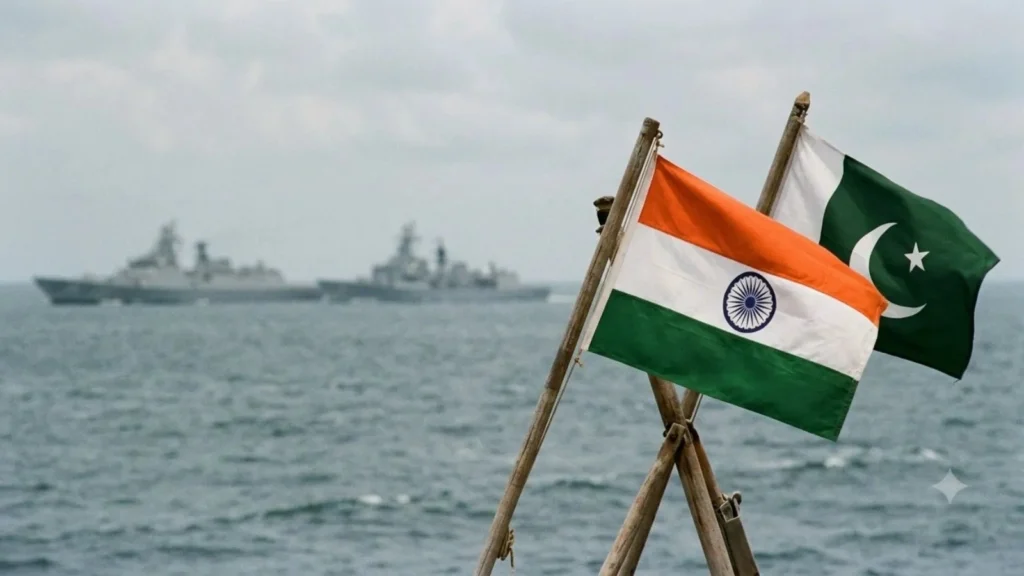
Pakistan revamped its relationship with the US over the past year, enticing Trump with business deals and sending army chief Asim Munir to meet him directly. A key moment came during Pakistan’s war with India last May, when Trump took credit for brokering a ceasefire between them. Pakistan recognized the role of Trump. India did not. That earned a goodwill reservoir on which Pakistan tapped in the last hours before Tuesday deadline.
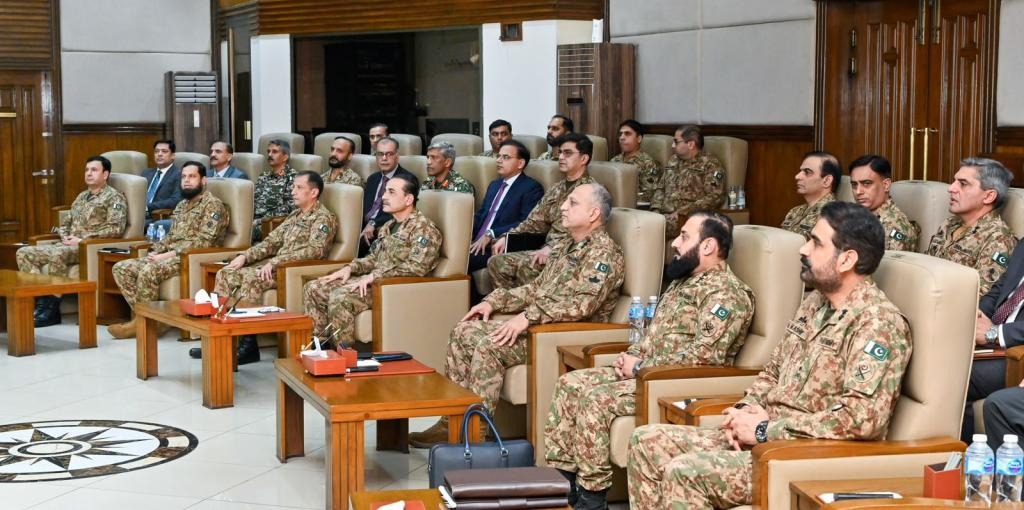
Field Marshal Asim Munir was in contact throughout the night with US Vice President JD Vance, Special Envoy Steve Witkoff, and Iranian Foreign Minister Abbas Araghchi. This was not a courtesy call. They were the final wiring of an agreement assembled piece by piece over weeks.
The Final Hours
Prime Minister Shehbaz Sharif called on Trump and the Iranian regime to agree to a two-week ceasefire less than five hours before Trump’s deadline. Trump explained his decision by saying that he had consulted with Prime Minister Shehbaz Sharif and Field Marshal Asim Munir, who compelled him to postpone military action and offered the two-week ceasefire framework that formed the foundation of the agreement.
The reply of Iran was swift. Foreign Minister Araghchi confirmed that Iran agreed to halt military operations and reopen the Strait of Hormuz for two weeks, expressing deep appreciation to Sharif and Field Marshal Munir, crediting Pakistan’s persistent efforts with bringing the two sides closer. On Friday, April 10, 2026, Sharif invited both delegations to Islamabad to further the negotiation towards an ultimate agreement that would resolve all pending differences.
The picture is not entirely clean. The office of Israeli Prime Minister Benjamin Netanyahu expressed its approval of Trump to suspend the strikes against Iran in two weeks, but Lebanon was not mentioned as a part of the ceasefire, which was in contrast with a previous announcement by the Pakistani Prime Minister. Questions also remain over Iran’s insistence on continuing uranium enrichment and Washington’s demand for a permanent end to its nuclear program.
The most interesting thing about the activism of Pakistan is not that it has become a necessary mediator, but that its role seems politically convenient to the US. There are reports that the US peace proposal was delivered through Pakistan. That is a significant distinction. Pakistan is not neutral in the way Switzerland is neutral. It shares a defense agreement with Saudi Arabia, most of its oil is imported through Hormuz, and millions of people in Gulf countries send remittances that keep its economy afloat. The motives that Pakistan had to intervene were obvious; the economic aspect is perhaps more evident than it used to be the case in the past.
None of that diminishes what Islamabad achieved. A two-week window is not peace. It is a truce, a narrow avenue into which the negotiators have to wade. Whether this ceasefire can be the basis of something permanent or merely the postponement of an unavoidable renewal of war depends on the Islamabad talks April 10.
What is already clear is that Pakistan has elevated itself from a so-called basket-case country to a state recognized for its efforts to secure regional peace, a shift that comes after years of Islamabad being sidelined by previous US administrations. For now, the bombs have stopped. The strait is open. And the next chapter of this conflict will be written, at least in part, in Islamabad.

Our Editorial Desk is the intellectual engine of Digital Debate, responsible for the rigorous research that anchors every conversation. Our team deep-dives into data, checks every source, and consults academic literature to move beyond headlines and identify the questions behind the questions.