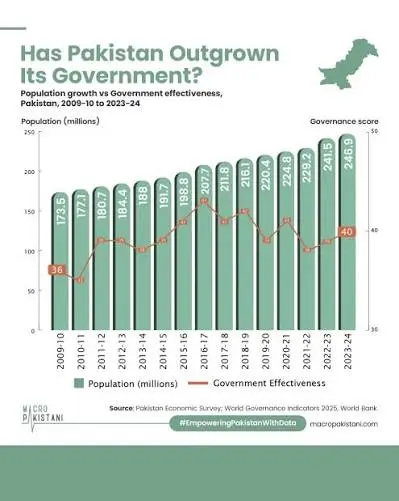
Has Pakistan Outgrown Its Government?
Pakistan’s population grew by 42% between 2009 and 2024, from 173.5 million to 246.9 million. Over the same period, government effectiveness on the World Bank’s percentile scale moved just four points

Pakistan’s population grew by 42% between 2009 and 2024, from 173.5 million to 246.9 million. Over the same period, government effectiveness on the World Bank’s percentile scale moved just four points

The PIMS tragedy, which killed 14 newborns, exposes deep failures in Pakistan’s healthcare system and governance.

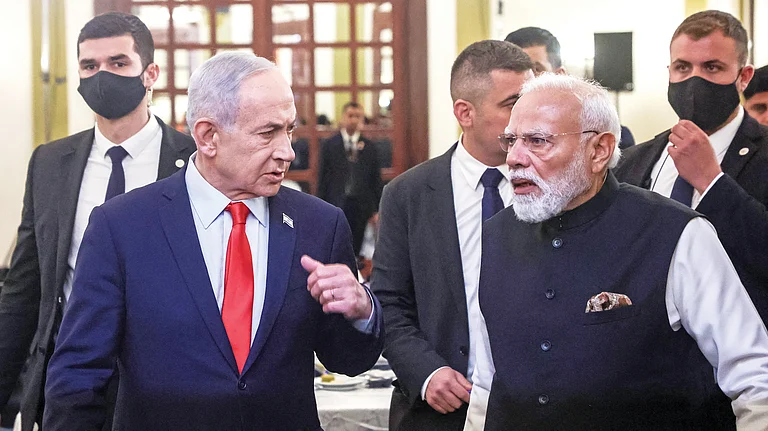
A new Amnesty International investigation has blown the lid on the Indian government’s complicity in the Gaza genocide. The report

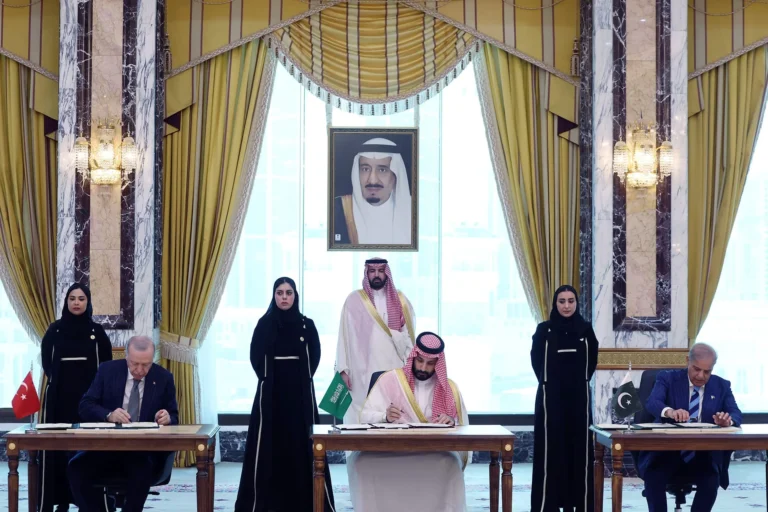
A defense pact between Pakistan, Saudi Arabia, and Turkey shows how far U.S. influence in the Middle East has eroded—and how regional powers are now shaping their own security order.

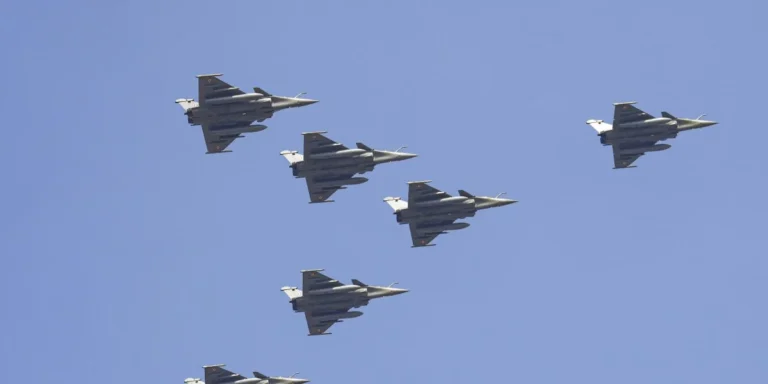
The MRFA programme represents the latest iteration of a requirement the IAF first articulated nearly two decades ago and, in many respects, amounts to a return to the abandoned MMRCA project.

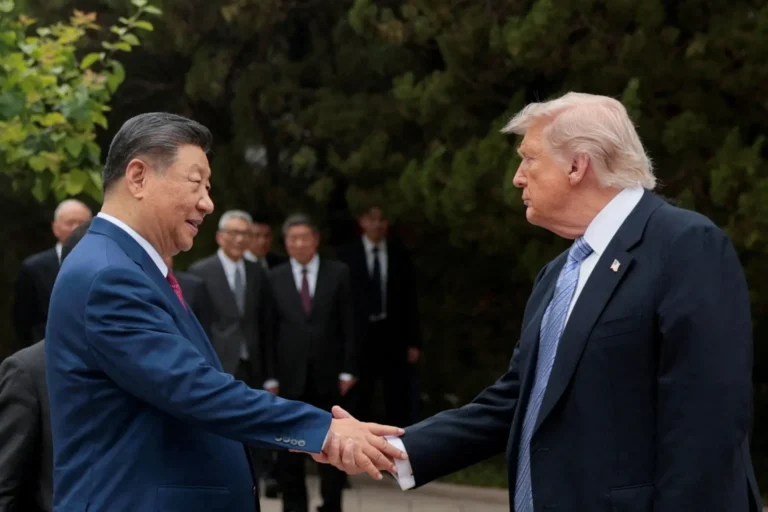
For the first time in nearly two decades, a new Pew Research survey shows China is viewed more favorably than the United States in most countries surveyed—but the findings say more about a decline in U.S. soft power than a Chinese surge.

The consumers of security increasingly want to become its producers, and that is a much bigger geopolitical story than an Islamic NATO.

While Pakistan’s relationship with China is rooted in strategic logic, its relationship with the United States is more tactical in nature.

Since 2014, the planet has been warming by about 0.36°C per decade, according to an analysis of five temperature datasets, raising fears that climate tipping points could be crossed earlier than expected.

By targeting civilians and infrastructure projects, the terrorist group has severely affected economic activities in the strategic region and beyond.