The withdrawal of US forces in 2021 has created a seismic shift in the geopolitical landscape of South Asia, which the world has been waiting to see with bated breath. To Pakistan, the resurgence of the Afghan Taliban was at first seen by some as a possible stabilizing factor and a friendly western frontier. But as we head into 2025 and 2026, that optimism has given way to a stricter message and an increase in friction. The relationship, often described in fraternal terms, is now defined by a widening expectation gap, a disconnect between what Islamabad requires for its internal security and what Kabul is willing or able to provide.
The October Friction and the Security Red Line
One of the critical events, recently, was the outbreak of a sharp tension between the two countries in October 2025. This was not just a diplomatic tussle, but a display of weary patience on the part of Pakistan. Since 2023, Islamabad has had a consistent position: the tolerance margin on terrorist safe havens is exhausted.
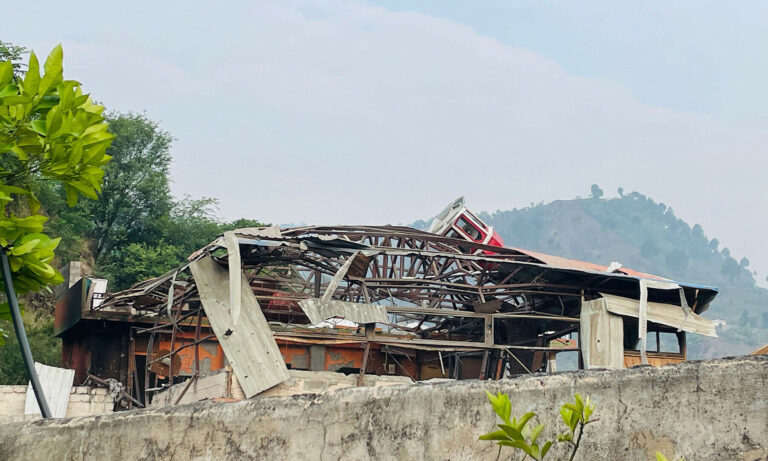
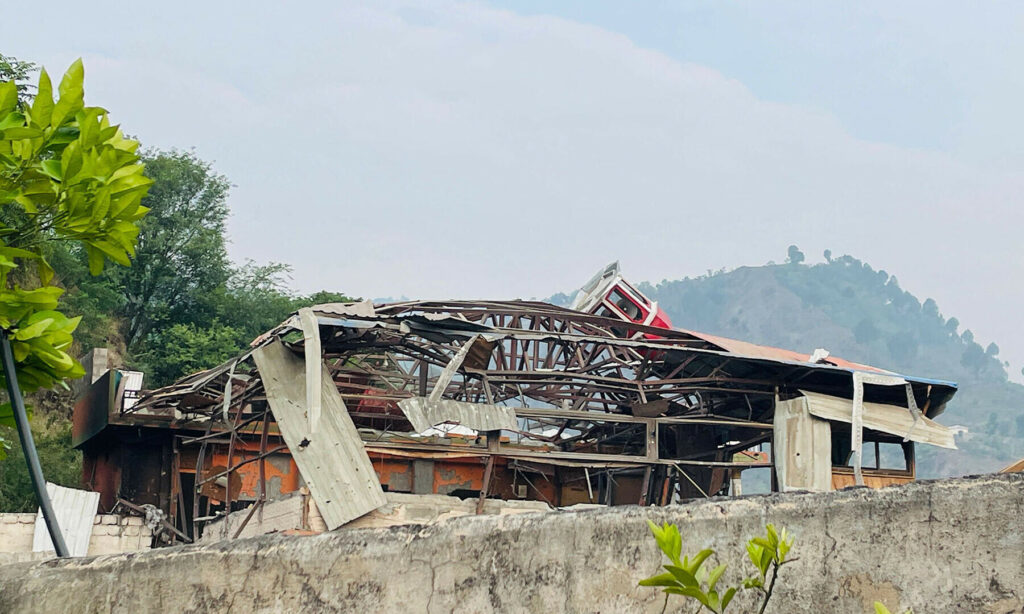
The main point of contention is the Tehrik-e-Taliban Pakistan (TTP). Despite the repeated guarantees made by the de facto authorities in Kabul, the militant activities originating on the Afghan soil have kept haunting the border areas of Pakistan. Late-2025 incidents, such as the alleged airstrikes and skirmishes around the Zero-Point, highlight a situation in which diplomacy is being increasingly marginalized in favour of kinetic responses. To Pakistan, the safety of its people is a red line that Kabul should not cross, or it will face complete regional isolation.
Governance, Ideology, and the Internal Framework
Within Afghanistan, the Taliban regime and power base are still rooted in one of the most conservative ideological thinking. Such radical changes in the internal structure of Afghan governance are unlikely to occur within the near future. The Kandahar leadership still focuses on the purity of ideology rather than its international acceptance, which has resulted in the stagnation of civil rights, in particular, female education and employment.
This domestic inflexibility poses a paradox to the global community. Although the Quad countries (the US, China, Russia, and Pakistan) and other mediators are still pushing with the commitments of the Doha Agreement, the Taliban seems willing to wait out the pressure. Living under the current Afghan administration is becoming a reality that the region is being forced to get used to, despite the inherent instability it breeds.
The Demographic Time Bomb: Refugees and Youth
The stability of Afghanistan in 2026 will be determined by two important aspects, i.e., the quality of the refugee crisis and the ambitions of the young population. The move by Pakistan to repatriate illegal Afghan refugees has created an enormous humanitarian dimension to the bilateral conflict. Kabul now has to absorb hundreds of thousands of returning people in an already crippled economy with sanctions and the absence of foreign capital.
Moreover, Afghanistan has one of the youngest populations. Such a young population has future expectations of connectivity, technology, and economic opportunity that are already incongruent with a government that denies access to the global world. Without the possibility to bridge the gap between their old model of governance and the demands of its young population in the 21st century, the internal pressure might prove more dangerous than any external threat to the Taliban.
Economic Stakes: TAPI, CPEC, and Connectivity
The allure of the so-called geo-economics still exists despite the security gloom. Some projects, such as the Turkmenistan-Afghanistan-Pakistan-India (TAPI) gas pipeline and the possibility of a further extension of the China-Pakistan Economic Corridor (CPEC), provide a ray of hope. Afghanistan is strategically positioned to be a natural route between South and Central Asia.
But these mega projects are ransomed by the security environment. Shareholders and local associates are reluctant to invest billions in infrastructure that may be destroyed by militants or be rendered useless by a new civil war. The message being sent to Kabul is simple, i.e., there is no economic prosperity without security in the region.
The Path to 2026: Diplomacy or Isolation?
With the rest of 2026 ahead of us, the ball is in the court of Kabul. Pakistan, though still holding on to its rhetoric of brotherhood, has changed and adopted a defensive and pragmatic stance. The patience of the international community is limited. An inclusive government, the safeguarding of women’s rights, and an enforced cessation of terrorism are not only Western demands, but the conditions of a working modern state.
Unless the Afghan leadership starts to open up to diplomacy and honour their Doha commitments, the route is to complete isolation. On the other hand, a real attempt to reorganize the society and respond to the needs of the neighbours might open the gates to the world of legitimacy and economic resurgence.
Conclusion
The debate over Afghanistan no longer concerns what could happen- it concerns the repercussions of what is happening. To Pakistan, a stable, peaceful, and terror-free neighbour is still the priority. In the case of Afghanistan, the priority should be the shift of a militant movement to a responsible governing body. In the absence of such an evolution, the expectation gap will probably become an irreparable rift, and the people of the region will end up being the victims of a lost peace opportunity.

Iftikhar Firdous is a specialist in militant ideologies and the founder of The Khorasan Diary, a digital platform dedicated to mapping conflict in the greater Khorasan region.