
Abstract
Pakistan’s electricity sector is undergoing a structural transformation marked by rising fixed capacity payments, seasonal under-utilization of generation assets, escalating tariffs, and rapid expansion of solar energy. Although installed generation capacity has expanded significantly since 2013, electricity consumption growth has slowed and become highly seasonal, resulting in idle capacity and increasing financial strain. Capacity payments have surged from modest levels in 2009 to approximately Rs 1.5 trillion annually in recent years, pushing the implied capacity charge to nearly Rs 10 per kWh before fuel and distribution costs are added. This has contributed to higher tariffs, suppressed demand, and accelerated consumer migration toward distributed solar solutions.
This study proposes a fixed-supply, flexible-price tariff model under which a stable national supply level of 30,000 MW is maintained year-round while electricity prices are adjusted seasonally. Lower winter tariffs (Rs 6–10 per kWh) stimulate consumption and substitute electricity for natural gas, while higher summer tariffs reflect peak demand conditions. The model demonstrates that such seasonal differentiation can raise annual electricity revenue to approximately Rs 5.16 trillion—substantially exceeding recent revenue levels—while generating significant gas savings and improving capacity utilization.
At the same time, solar adoption is projected to increase sharply, potentially exceeding 130 TWh by 2035 under moderate growth assumptions. As solar generation expands, non-solar output declines, intensifying the per-unit burden of fixed capacity payments if contractual structures remain unchanged. The paper argues that Pakistan must adopt a dual reform strategy: implement flexible seasonal pricing to enhance short-term financial stability, and proactively restructure capacity contracts to manage the long-term solar transition. Recognizing and adapting to technological change is essential to reduce fiscal risk, stabilize tariffs, and ensure sustainable power sector reform.
Read Full Policy Paper
Pakistan Electricity Fixed Supply Flexible Price Tariff
By Dr. Syed Tahir Hijazi • Full research paper including tariff models, seasonal consumption analysis, and capacity restructuring frameworks.

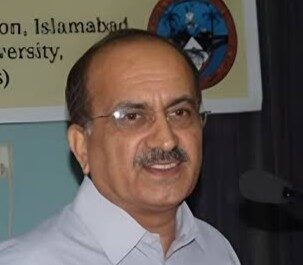
Dr. Syed Tahir Hijazi is a senior economist and the Vice Chancellor of Muslim Youth University, Islamabad. A veteran academician with experience teaching in the USA, Greece, and the UAE, he is a leading expert on Islamic banking and governance reform. He has held top executive roles at the University of Central Punjab (UCP) and the International Islamic University (IIUI) and continues to advise the Government of Pakistan on civil service modernization and economic planning.