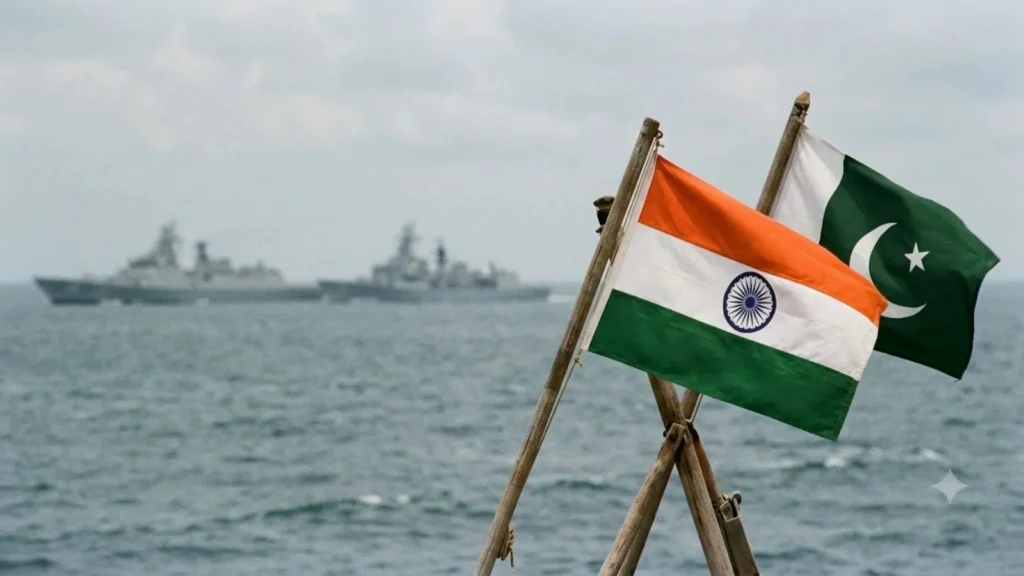
On 31 August 2025 Narendra Modi sat across from Xi Jinping in Tianjin, on his first visit to China in seven years, and agreed that the two countries were “development partners and not rivals”. Four days earlier, a 50 percent American tariff on Indian goods had come into force as punishment for India’s purchases of Russian oil. Ten weeks earlier, Pakistan’s army chief had lunched with Donald Trump at the White House, the first time in years a sitting American president had hosted the man in that post.
Three dates in a single summer marked the point at which the plan India had followed for twenty-five years stopped working on its own terms.
The Opening That Worked
For most of the period since 2000, India’s foreign policy rested on one well-prepared opening. In Washington it was called de-hyphenation. The United States would deal with India as a rising power and a counterweight to China, and with Pakistan as a counterterrorism file, and the two relationships would never be priced against each other. Delhi’s own variation added two refusals: no third-party mediation on Kashmir, and no talks with Islamabad while militancy continued. The aim was to deny Pakistan a seat at any table where India sat.
For two decades the opening delivered. India entered the nuclear mainstream through the 2008 civil nuclear agreement with Washington, joined the Quad, hosted the G20 in 2023, and watched Pakistan slide down the priority list of every capital that mattered to it. Opening theory in chess runs on a similar bargain. A memorised line keeps paying until an opponent finds a novelty, a move the books did not anticipate, and the player who relied on memory is left calculating from scratch in a position he has never seen.
The Novelty
The novelty arrived in May 2025, and Washington played it. When the four days of fighting ended on 10 May, Trump claimed credit for the ceasefire. He kept claiming it, speaking of India and Pakistan in one breath, as a pair of quarrelling neighbours he had calmed. Delhi held to its theory. In a June call, Modi told Trump that India had never accepted mediation and never would. Islamabad endorsed the American account at once.
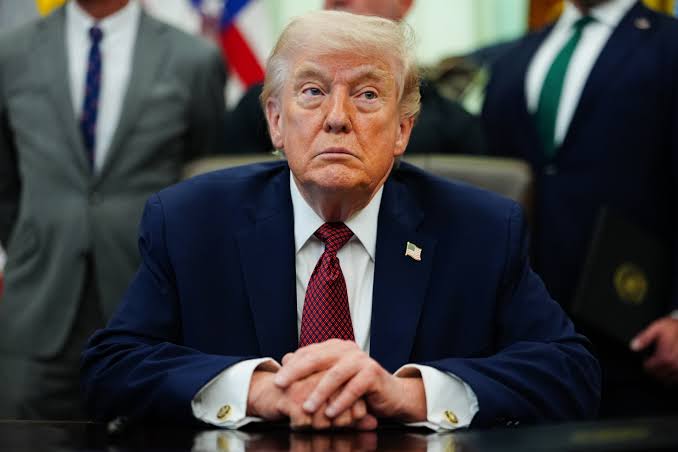
The endorsement cost Pakistan nothing and spoiled India’s plan before India could play it, the manoeuvre Aron Nimzowitsch, in My System, called prophylaxis. It denied Delhi the frame of a bilateral matter settled bilaterally, and it bought a channel to a president who keeps careful score of who thanks him.
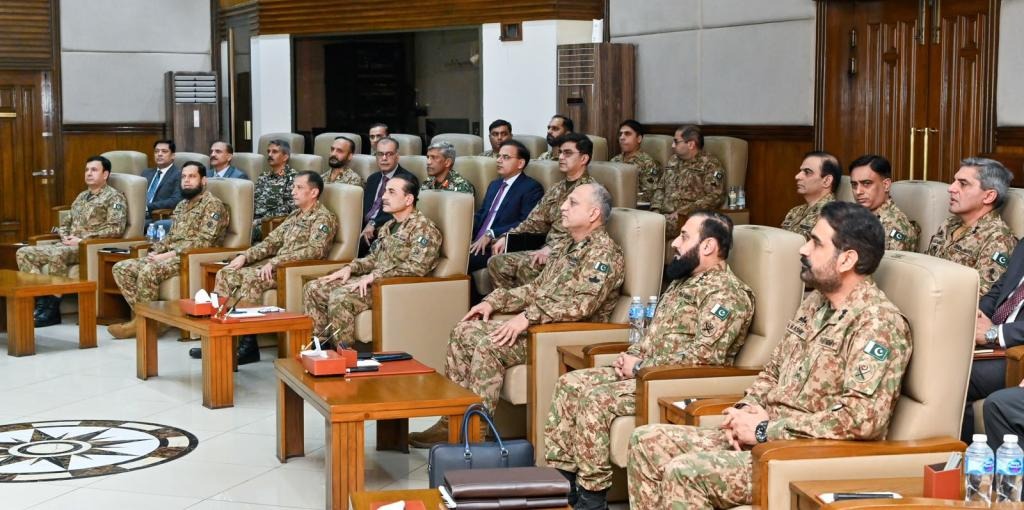
On 18 June Asim Munir, promoted weeks earlier to a rank last held by Ayub Khan, was at lunch in the White House. The hyphen India had spent twenty-five years removing was back, redrawn by the one hand in world politics Delhi could not brush away.
More Than Two Players
Chess is a game of perfect information between two players, and most of its metaphors fail the moment a third party touches the board. South Asia acquired several in quick succession.
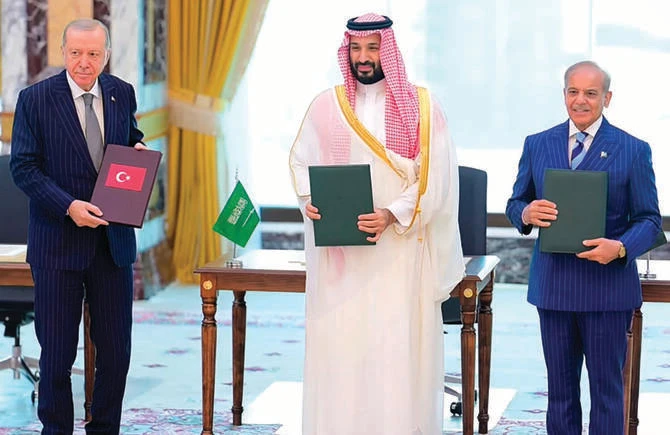
Washington moved first. In August 2025 the administration stacked a 25 percent penalty for Russian oil on top of an existing 25 percent tariff, leaving India sharing, with Brazil, the highest rate among America’s major trading partners. Riyadh followed. On 17 September Saudi Arabia and Pakistan signed a Strategic Mutual Defence Agreement, under which aggression against either country would be treated as aggression against both. On the day of signing, a senior Saudi official told Reuters that the kingdom needed to balance its relations with India, a reminder that the piece Riyadh had placed on Pakistan’s side of the board remained Riyadh’s piece.
Beijing had already made its moves through hardware. The Reuters reconstruction of the 7 May air battle traced the Rafale loss to a kill chain built around Chinese fighters and missiles, and an American congressional commission later recorded that the engagement had showcased Chinese weaponry.
Delhi adjusted within weeks, and with more skill than its critics in Islamabad allow. Modi went to Tianjin. On 27 January 2026 India concluded a free trade agreement with the European Union after nearly two decades of stop-start talks. A week later it accepted a framework deal with Washington under which the tariff would fall to 18 percent.
Trump announced that India would stop buying Russian oil in return. Delhi never confirmed the clause in public, but within days its refiners had paused spot purchases of Russian crude and Washington had lifted the oil penalty. Then the board moved again. On 20 February the US Supreme Court ruled that the emergency law behind Trump’s tariffs did not authorise them, and much of the leverage behind the oil clause went with it. The 18 percent rate was never implemented. By July, India was importing a record 2.8 million barrels a day of Russian crude, more than half of everything it bought.
India had offered a pawn it had sworn to defend, then took it back once the piece threatening it was removed from the board by an American court. Delhi recalculated twice in six months, and the second calculation was the better one.
Zugzwang in Islamabad
Zugzwang is the German word for a position in which a player would rather pass, because every legal move makes things worse. Chess forbids passing. Diplomacy permits it, at a price that rises each time.
Pakistan holds the chairmanship of the Shanghai Cooperation Organisation’s Council of Heads of State for 2026-27, which means the bloc’s next summit, attended by China, Russia, Iran and the Central Asian republics, will meet in Islamabad. In late September India sent Alok Amitabh Dimri, a joint secretary in its foreign ministry, to the national coordinators’ meeting in the capital, with a brief to discuss the agenda and nothing else. The leaders’ summit is planned for August 2027, and Delhi says the level of its representation will be decided closer to the date.
Sending the prime minister hands Pakistan the photograph it wants. A junior minister in his place would tell Beijing and Moscow that India’s regional commitments bend to its quarrel with Islamabad, and an empty chair would cede a forum India joined largely to keep an eye on China.
Small moves have begun to appear at the edges of the board. On the last day of 2025, in a waiting room at Bangladesh’s parliament during the funeral of Khaleda Zia, Subrahmanyam Jaishankar walked across and shook hands with Pakistan’s National Assembly speaker, Ayaz Sadiq. In June 2026 the joint communiqué from the EU-Pakistan Strategic Dialogue in Islamabad referred to Kashmir, and Delhi protested that neither party had any standing on the matter. The protest drew more attention to the paragraph than the paragraph would have drawn on its own.
The Kabul Gambit
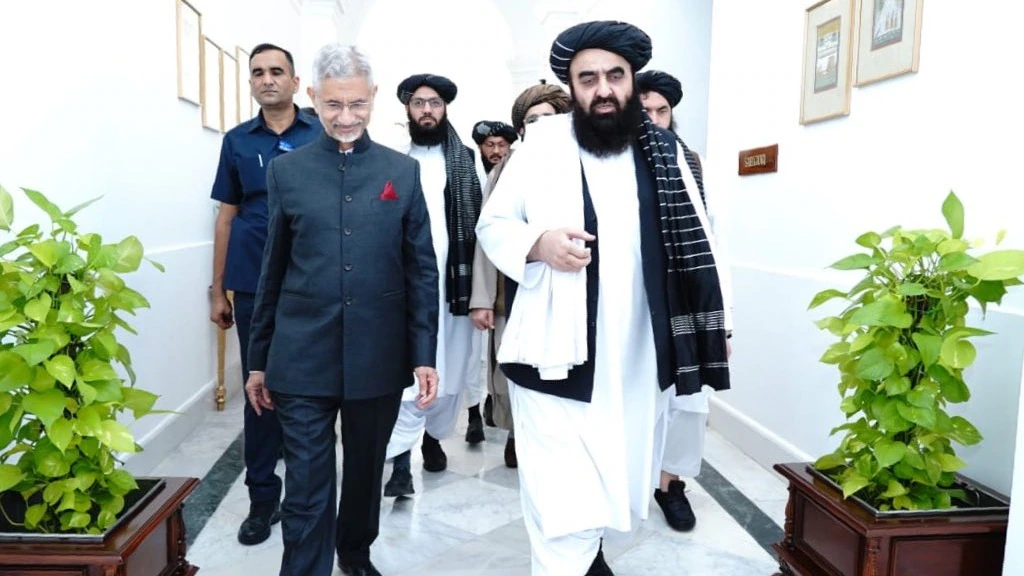
India has been playing on a second board. In October 2025 the Taliban’s foreign minister, Amir Khan Muttaqi, made an unprecedented visit to Delhi. Within days Pakistan and Afghanistan were fighting along their border, and the ceasefire Qatar and Turkey brokered that month did not hold. On 27 February 2026, after Afghan attacks on its border posts, Pakistan bombed Kabul, Kandahar and Paktia, and its defence minister declared “open war”.
China hosted talks in Urumqi in April, and the attacks inside Pakistan continued. The war is now in its eighth month. Pakistani strikes in Kunar and Helmand on 1 October killed at least ten civilians, most of them children, according to the UN, and fighting along the border has continued daily since 12 October. Russia is the latest outside power to try its hand at calming it.
Islamabad accuses Delhi of backing the militant groups that strike inside Pakistan, and the Taliban deny sheltering them. The public evidence of Indian direction remains thin.
The war has opened a weak square on Pakistan’s western flank, a hole an opponent can occupy at leisure. No amount of goodwill in Washington or Riyadh covers it, since neither capital has much leverage over the Taliban, and the hole has begun to spread inward. On 11 October Islamabad imposed governor’s rule in Khyber Pakhtunkhwa, the province that borders Afghanistan, citing the provincial government’s failure to keep it secure. India has noticed.
Position Rented, Material Owned
Pakistan’s gains since May 2025 are real. It has a working channel to the White House and a mutual defence pact with the Gulf’s richest state. Its Chinese-equipped air force has been validated in combat, and it has acquired a mediator’s role that the EU’s foreign policy chief credited with helping to prevent a return to full-blown war between the United States and Iran.
Each of those gains was lent by a player with interests of its own. Trump’s warmth is transactional, and he has already extended it to India on new terms. Riyadh signed its pact partly as a hedge against American unreliability, with officials taking care on signing day to mention their ties with Delhi, while Beijing’s investment in Pakistan’s air force doubles as a sales brochure for Chinese aircraft. Europe’s attention will last as long as the Iran file stays open.
In a consultation game, several players confer on every move for one side. The side plays well while its partners agree on the plan. When they disagree, or one of them loses interest, the position belongs to nobody in particular.
India’s position is less elegant and more durable. Its economy is roughly ten times the size of Pakistan’s. While Pakistan collected headlines and fought a war on its western border, India assembled a trade agreement with Europe and a working thaw with Beijing, and watched a court in Washington cut the tariff on most of its exports to a fifth of the rate it faced in August 2025. Positional chess since Wilhelm Steinitz, the first official world champion, has rested on the accumulation of small advantages, and on converting them before they fade. Over a long game, material usually tells.
For Pakistan the conversion has to happen in the economy: investment that stays after the photographs, exports that survive the loss of any single patron, and a tax base that ends the cycle of IMF programmes. Without it, the position will be returned to its owners the way rented things always are, on a schedule someone else sets.
India, for its part, has learned that the board it prepared for no longer exists. It paid for the lesson in six months of punitive tariffs, a handshake in Tianjin and a promise on Russian oil it later found reason to forget. The next test arrives in Islamabad in August 2027. In the Foreign Office on Constitution Avenue, a protocol officer is drawing up a seating plan with a card marked India and a blank line beneath it for a title Delhi has not yet chosen.

Dan Qayyum
Dan Qayyum is Director at The Policy Review and editor of The Pakistan Playbook. He is a media strategist and long-standing advisor to government institutions and media organizations across the region. His work explores the intersections of geopolitics, military doctrine, and regional transformation. His upcoming book, The Other Side of Endurance, examines his own journey through crisis, resilience, and reinvention.