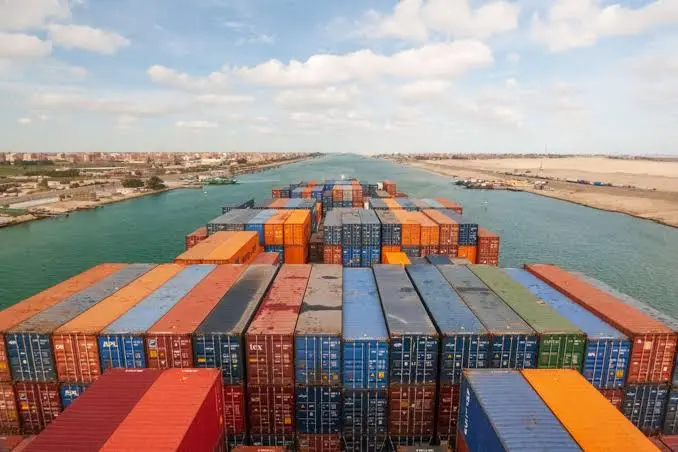
The Red Sea is a vital maritime corridor connecting the Indian Ocean and Mediterranean through the Bab el-Mandeb Strait, Gulf of Aden, and Suez Canal. It supports international trade and energy supplies between Asia, Europe, and other regions. Conflict involving Saudi Arabia and Yemen’s Houthi movement has made this route a major security concern, as attacks on ships, retaliatory operations, and threats to infrastructure risk a wider regional crisis. Disruptions elsewhere, including in the Strait of Hormuz, have further increased the importance of alternative routes, as discussed in this .
The central argument is that Saudi-Houthi tensions threaten regional stability by linking Yemen’s unresolved civil war with wider Middle Eastern rivalries, endangering international shipping, raising the risk of direct military confrontation, and worsening humanitarian suffering. The Houthis, also known as Ansar Allah, seized Sana’a in 2014, forcing the internationally recognized government from the capital. In 2015, Saudi Arabia led a coalition supporting that government and opposing Houthi expansion. Iran has supported the Houthis, although the movement has its own leadership and interests. A UN-supported truce beginning in 2022 reduced large-scale cross-border fighting but did not resolve Yemen’s political divisions.
Council on Foreign RelationsUN Special Envoy for Yemenreport on the Houthi threat Recent reporting in 2026 describes renewed attacks affecting Saudi and Yemeni airports, threats against Saudi-linked shipping, and intensified fighting along Yemen’s western coast near strategic maritime approaches. Reuters reported on 7 October that airports in Saudi Arabia and Aden were affected by attacks, while Saudi-led forces said they had struck Houthi military sites. Reuters also reported on 11 October a deadly attack on Riyadh airport and subsequent Houthi warnings. Separately, a US maritime advisory reported that two tankers were reportedly struck off the Saudi coast near Yanbu in August. These incidents show how attacks on infrastructure and shipping can provoke retaliation, endanger civilians and crews, delay deliveries, increase insurance costs, and raise transport prices.
The United States is involved through maritime security, support for regional partners, deterrence, and military operations against Houthi targets. In 2025, US forces conducted a campaign intended to reduce Houthi capabilities and restore freedom of navigation; an agreement brokered by Oman in May halted that particular campaign, but did not settle all maritime tensions. As of October 2026, reports of possible US support for further Saudi action indicate a risk of deeper involvement, not confirmation that a new US campaign has begun. Military operations can weaken armed groups, but they can also cause civilian casualties, damage infrastructure, and trigger retaliation. An Associated Press report described a Pentagon review finding civilian deaths and injuries from US strikes in April 2025, underlining the importance of international humanitarian law.
Israel’s role is linked to the Houthis’ opposition to Israel and the wider confrontation involving Gaza and Iran. Since the Gaza war began in October 2023, the Houthis have launched missiles and drones towards Israel and attacked ships they associate with Israel. Israel has carried out strikes against Houthi-controlled areas in response. These actions risk a cycle of attacks and retaliation across Yemen and the wider region. The United States and Israel share concerns about Houthi weapons, shipping security, and Iranian influence, but their policies and military decisions are not necessarily identical. Iran’s support for the Houthis should not be taken to mean that Tehran directly orders every Houthi action, nor should all US and Israeli operations be assumed to be coordinated. Associated Press reporting on coastal developments is available here.
The Red Sea matters because disruptions around Bab el-Mandeb can force vessels to sail around southern Africa, lengthening journeys and raising costs. Threats to tankers can also unsettle energy markets, while control of the coast gives armed groups and regional powers strategic leverage. The International Maritime Organization provides [Red Sea updates] on shipping incidents and seafarer safety. The conflict’s consequences include possible regional escalation, more expensive goods, worsening food insecurity and displacement in Yemen, obstacles to humanitarian aid, and violations of protections for civilians and commercial navigation.
A lasting solution requires renewed negotiations among Saudi Arabia, the Houthis, Yemen’s internationally recognized government, and relevant regional actors. Parties should stop attacks on civilians and commercial shipping, protect freedom of navigation, maintain humanitarian access, and avoid actions that widen the conflict. A durable political settlement must also address governance, security, economic recovery, and representation within Yemen.
In conclusion, the Saudi-Houthi conflict shows how a prolonged domestic war can threaten regional and global stability. The Red Sea’s strategic importance means that attacks originating in Yemen can affect trade, energy security, civilian safety, and diplomacy far beyond the Arabian Peninsula. Military deterrence alone cannot provide lasting stability; sustained diplomacy, respect for international law, protection of civilians, secure maritime navigation, and a political settlement are essential. Because reports of attacks, casualty figures, responsibility claims, and territorial changes can be contested or updated, they should be checked against multiple independent sources before publication.

Laiba Mumtaz is a young Political Science Scholar. She takes keen interest in politics, governance, and social issues, with a special focus on global politics.