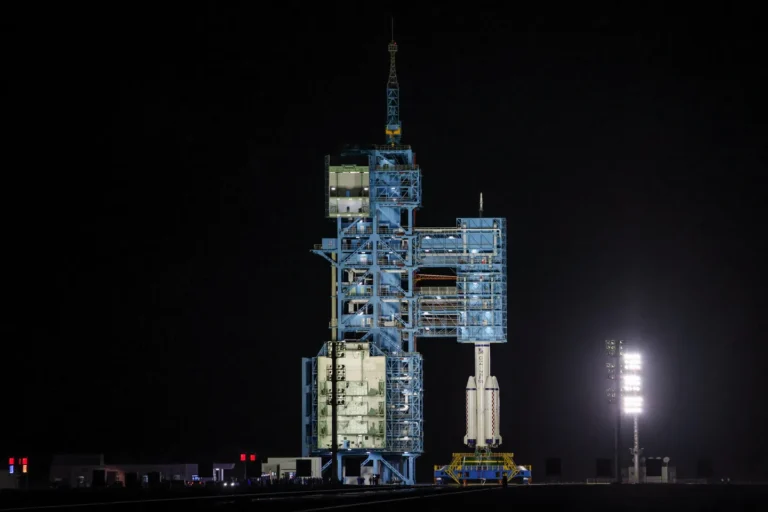

Pakistan is preparing to send its first astronaut into space after China selected two Pakistani candidates for its manned space programme, with one of them set to fly to the Tiangong space station as the first foreign astronaut to board China’s orbital outpost.
State broadcaster CCTV reported that both candidates will undergo advanced training in China, and one will participate in a flight mission as a payload specialist, marking a landmark event in the history of China’s space industry and a significant step forward in Pakistan’s space exploration journey.
The two astronauts, Muhammad Zeeshan Ali and Khurram Daud, have passed multiple rounds of selection procedures and are now undergoing intensive training at the Astronaut Centre of China in Beijing.
The China Manned Space Agency described the selection and training of Pakistani astronauts as a demonstration of Beijing’s open attitude and willingness to share its space development achievements with the international community, emphasizing that the peaceful use of outer space for the benefit of all humanity has always been the original aspiration and mission of China’s space programme.
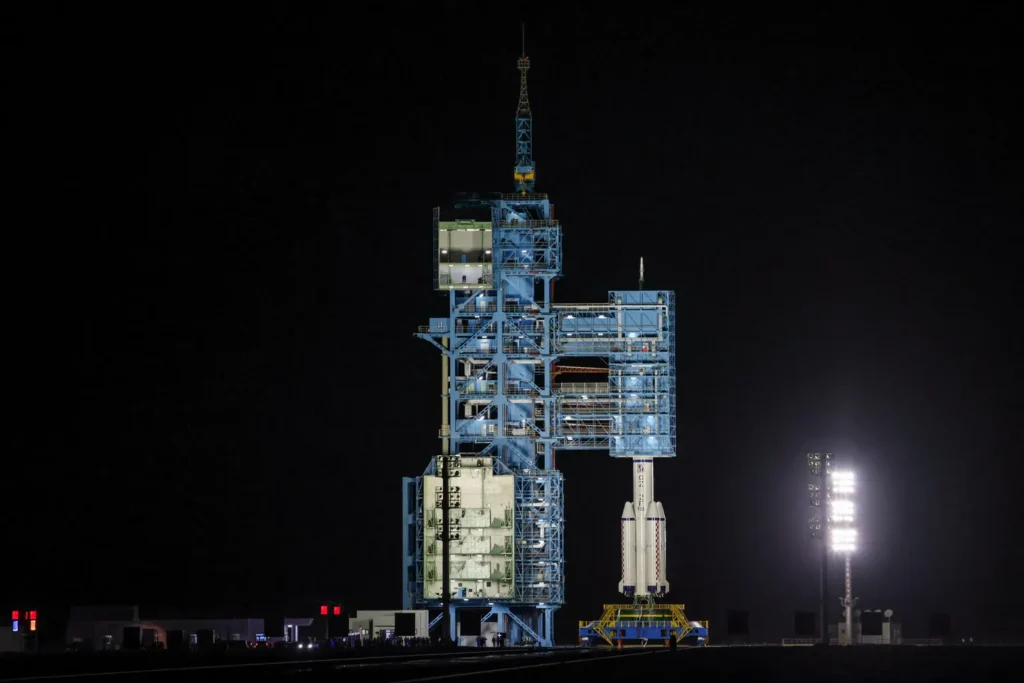
Suparco confirmed that the astronauts are preparing for Pakistan’s first-ever participation in a mission to the China Space Station, planned for launch in late 2026.
During the mission, the Pakistani astronaut will conduct several scientific experiments in microgravity spanning critical areas including material science, fluid physics, life and bio science, and biotechnology, with potential applications for climate resilience, food security, and industrial innovation.
Suparco received more than 300 proposals from universities across Karachi, Lahore and Islamabad, and Chinese institutes ultimately selected four biotechnology experiments focused on food security and climate-change resilience.
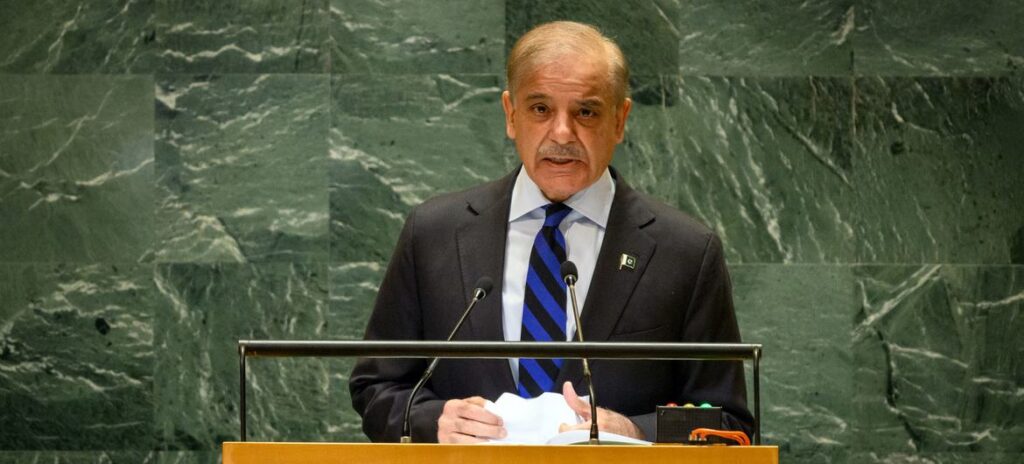
Prime Minister Shehbaz Sharif has commended Suparco’s efforts, terming the development a harbinger of deep space exploration and yet another testimony of the strong friendship between Islamabad and Beijing.
The cooperation builds on a 2025 agreement between Suparco and the China Manned Space Agency, under which two Pakistanis were to train in China, with one joining a mission on the Tiangong space station.
The flight is part of a wider arc of Pakistan–China space cooperation that already includes Chinese-launched Pakistani satellites, work on a joint satellite-navigation system, and a Pakistani-built lunar rover scheduled to fly on China’s Chang’e-8 mission around 2028.
Once selected, the astronaut will remain in China through launch, spend about a week on Tiangong alongside a Chinese crew, and return home only after a post-flight recovery period.
The mission relies entirely on Beijing’s human spaceflight infrastructure, as Pakistan does not yet have its own crewed spacecraft or launch vehicle.
When it launches, the mission will mark Pakistan’s entry into the small group of nations that have sent a citizen into space, and the first time China has carried a foreign astronaut on its crewed spacecraft

Our News Desk represents a rapidly expanding frontier in contemporary journalism, focusing on the intersection of technological advancement, geopolitical narratives, and the shifting dynamics of public information.