
Pakistani Prime Minister Shehbaz Sharif and Bangladeshi Prime Minister Tarique Rahman have agreed to strengthen bilateral cooperation in trade, investment, connectivity, education, tourism and people-to-people exchanges.
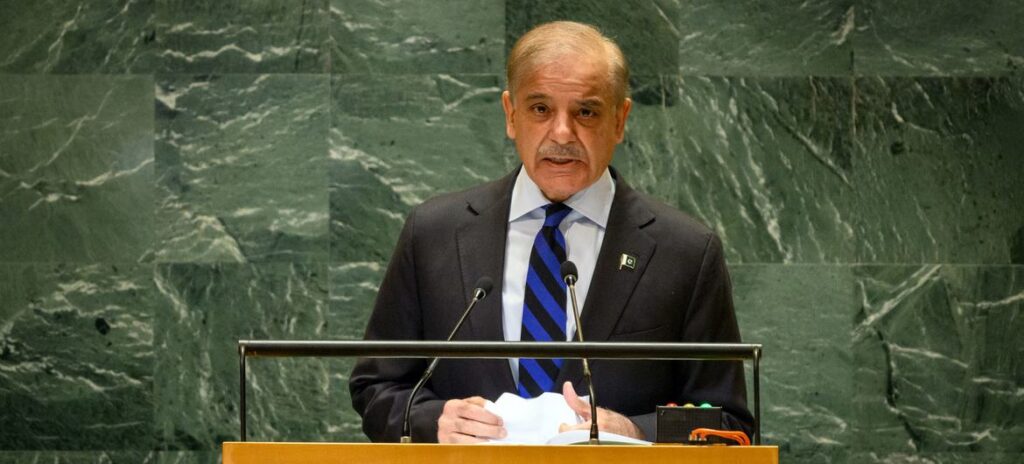
The agreement was reached during a meeting on the sidelines of the United Nations General Assembly in New York. The talks marked another important step in the gradual improvement of relations between Pakistan and Bangladesh, which have remained sensitive since the 1971 war.
Relations began to improve after the ouster of former Bangladeshi Prime Minister Sheikh Hasina in 2024. Since then, both countries have increased diplomatic contacts and explored opportunities for greater economic cooperation.
Direct flights between Dhaka and Karachi also resumed in January 2026 after a gap of more than a decade, improving prospects for trade, tourism, business travel and family visits.
Prime Minister Sharif said the two leaders had agreed to deepen cooperation across several sectors. Prime Minister Rahman welcomed the improving relationship and expressed his government’s desire to strengthen ties with Pakistan.
However, neither side announced a new agreement, investment package or specific timeline for implementing the proposals.
The two leaders also discussed the importance of connectivity and people-to-people exchanges. Increased flights, easier travel arrangements, educational links and stronger business contacts could help reduce the distance between the two countries and create a more balanced relationship.
In a separate meeting, Prime Minister Shehbaz Sharif held talks with Lebanese Prime Minister Nawaf Salam. Sharif called for an immediate cessation of hostilities in Lebanon, strict observance of ceasefire arrangements and the withdrawal of Israeli forces from Lebanese territory.
He also reaffirmed Pakistan’s support for Lebanon’s sovereignty and territorial integrity and called for the full implementation of relevant United Nations Security Council resolutions. The talks came amid continuing tensions between Israel and Hezbollah, which have displaced civilians and damaged infrastructure in southern Lebanon.
The United Nations peacekeeping mission in Lebanon is scheduled to end its mandate on December 31, 2026, following a final extension approved by the Security Council.
The planned withdrawal has raised concerns about the future security situation in southern Lebanon, particularly if fighting continues or foreign forces remain deployed in Lebanese territory.
The two meetings highlight Pakistan’s diplomatic priorities at the UN General Assembly: strengthening economic and regional partnerships in South Asia while calling for ceasefires, respect for sovereignty and UN-backed solutions in the Middle East.

Our News Desk represents a rapidly expanding frontier in contemporary journalism, focusing on the intersection of technological advancement, geopolitical narratives, and the shifting dynamics of public information.