When I first learnt about the inexplicably tragic incident of the death of 14 newborn babies in the Mother and Child Centre of Islamabad’s major public sector hospital, around noon on Wednesday, I was left in a state of disbelief. How can one comprehend a calamity of this magnitude, taking place in the very place that is meant to protect the newborns with all the necessary equipment and expertise that are there?
What happened, as we are told, was that a fire broke out in the gynaecology ward of the Pakistan Institute of Medical Sciences (PIMS) early in the morning, and it spread to the nursery, where 15 newborns were kept. Only one infant could be saved.
One thought that rushed into my mind was a famous saying of Rabindranath Tagore. He had said: “Every child comes with the message that God is not yet discouraged of man”. Yes, one may also be reminded of that Wordsworth line: “The child is the father of man”. However, Tagore’s philosophical interpretation of the divine scheme of things is so meaningful because it asserts the idea that a newborn is the divine renewal of human potential.
Ah, but what is the message in the entirely preventable death of 14 babies, with all their promise and potential, in a prominent medical institution of this country? The more one thinks of the human dimension of this tragedy, the more one wonders about the value that is accorded to human life in the working of our primary institutions.
It is not possible to imagine all the stories that would be related to the birth and then an almost immediate death of these 14 infants. Without any doubt, so many lives will suffer the pain of this loss for long years. How the affected mothers must have taken it is beyond my comprehension.
Naturally, there is a national sense of anger and grief over this shocking incident. And there is no clarity about how it happened. One thing, though, is starkly evident. We have here one more piece of evidence of how rotten the system is that professes to deliver essential services to the ordinary citizens of this country. (The elites, of course, live in another country.)
For that matter, a disaster of this kind is forever waiting to happen. And it happens again and again. Two examples. At least 14 children died when the roof of an unregistered tuition centre collapsed in Lahore two months ago. Early this year, around 80 persons died in the Gul Plaza fire in Karachi. Things, generally, keep falling apart.
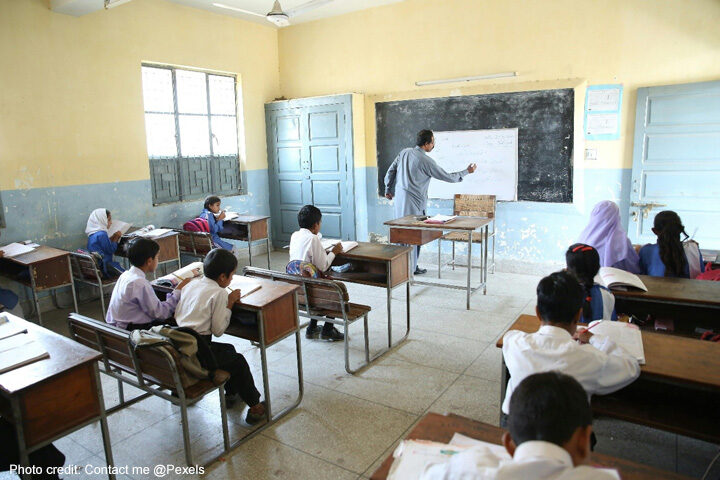
In fact, our rulers have willfully been refusing to read the writing on the wall. What else would you reap when you persistently refuse to plant the seeds of social growth and economic development? Education and health are the most neglected sectors when it comes to allocating resources and promoting human resources. The statistics, if you go there, tell the story of the degradation of the two fundamental pillars of the nation-building project.
What I am trying to say is that monumental lapses in planning and in administration are an expression of that idiom: the chickens are coming home to roost. There is no way to avoid the consequences of mistakes made in the past and continuing in the present.
The question now is: what can be done now to set things right? One may argue that the rulers themselves are now appearing to concede that the existing system has collapsed, though the idea that creating new administrative units – or, call them provinces – would be a viable solution lacks any understanding of what social change is all about.
While this column focuses on the Pims tragedy and its aftermath, I feel constrained to mention other issues that have raised serious concern this week among social activists and concerned citizens. I see a connection between these issues and the death of the newborns because they essentially portray a broken system and a dysfunctional society.
I would particularly want to highlight the brutal murder of 45-year-old Hina Javed in Rawalpindi, allegedly by her husband Faisal Asghar and domestic servant Zeeshan. Hina was found dead in her in-laws’ house, where police officials found her body tied to the shower in the bathroom, with her hands bound behind her back. Her neck was broken. Faisal and Zeeshan are in police custody.
I should commend the efforts of a group of social activists who launched a WhatsApp page titled Justice for Hina Javed to spread the word. This murder deserves our attention because it is another manifestation of the state of our society, where women and children are subjected to violence and sexual abuse, and the murder of children is a crisis of its kind.
The latest report in this context comes from Haripur, where a five-year-old girl was raped before the body was disposed of in an unused well. Her decomposed body was discovered on Monday. Four persons have been detained. A separate case study is the murder of a young trader in Karachi, Mir Raza Ali. It has become a mystery because of how the initial police investigation was bungled.
Finally, let me conclude with remarks made by Federal Health Minister Mustafa Kamal in the Senate on Friday. Various quarters have vehemently demanded his resignation. Referring to the fire at Pims, he said that “no one will be spared”.
He made the dreadful revelation that “400,000 children between the ages of one and five die every year, 1,300 die every day and they are all dying preventable deaths”. He noted that the system was “rotten” and asked, “Where do I find a better person after removing an incompetent one?”
Apparently, this question would be valid for almost all institutions in the public sector. This is what happens when building human capital is not a national priority.
Read more: https://digdebate.com/ishaq-dar-indus-waters-treaty-india-abeyance/

Ghazi Salahuddin
The writer is a senior journalist. He can be reached at: ghazi.karachi@gmail.com