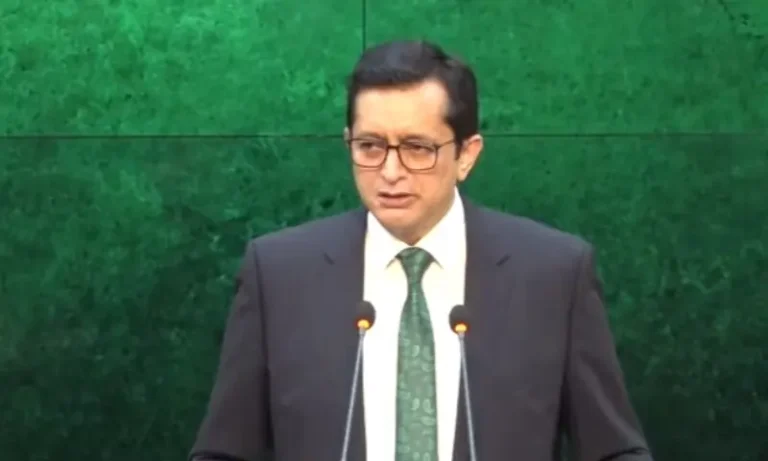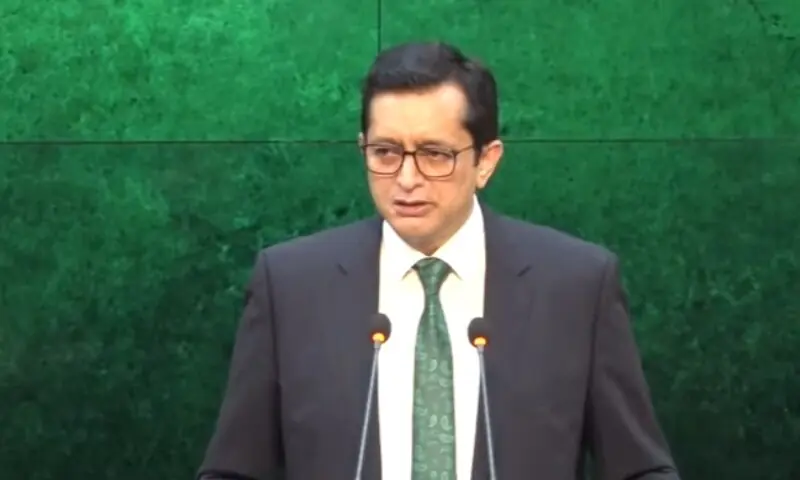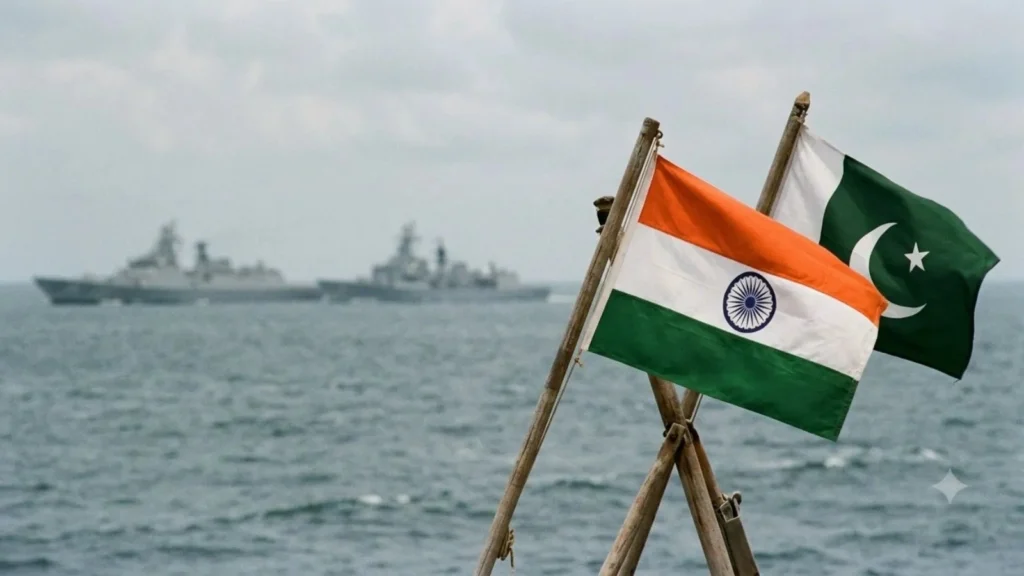
Deputy Prime Minister Ishaq Dar’s keynote address on the Indus Waters Treaty is, at its core, an attempt to close a loophole India has been quietly exploiting since April 2025: the idea that a treaty can be neither honoured nor formally exited, but simply left hanging in an undefined state of “abeyance.” Dar’s speech is Pakistan’s most direct challenge yet to that ambiguity, and it deserves to be read on three levels, as a legal argument, as a security doctrine, and as a statement of strategic patience.
The Legal Register: There Is No Such Thing as “Abeyance”
Dar’s central claim is narrow but consequential: the 1960 treaty contains no clause permitting either party to unilaterally suspend its obligations. This is not rhetorical flourish, it is the crux of Pakistan’s entire legal position. India’s framing since April 2025, that the treaty has been placed “in abeyance” following the Pahalgam attack, occupies a deliberately ambiguous space between formal withdrawal (which the treaty also does not permit) and outright breach. By refusing to treat “abeyance” as anything other than a legal fiction, Dar denies India the shelter of a middle category. Under his framing, there is no such thing as a treaty half-suspended, India is either honouring the IWT or violating it, and Pakistan’s position is that it is doing the latter.
This matters because the durability argument, that the treaty survived 1965, 1971, 1999 and Pulwama-Balakot without either side invoking suspension, functions as more than historical trivia. It is being used as evidence of customary practice: if six decades of hostility never produced a unilateral suspension, the treaty’s architecture was built to be war-proof by design, and any departure now is a political choice rather than a legal necessity.
The Security Register: Water as the New Red Line
The more significant shift is rhetorical. Dar explicitly folds water security into the vocabulary of national security, describing the Indus system as sustaining 250 million Pakistanis and warning of “profound consequences for regional peace and security” should the flows be deprived. This is not new sentiment in Pakistani strategic discourse, but hearing it delivered by the Deputy Prime Minister at this level signals that Islamabad wants water treated as a first-order security issue, not merely a technical or agricultural one. It also pre-positions an argument for the future: that any Indian move to physically alter western river flows through infrastructure, rather than through paperwork, would cross a threshold Pakistan has now publicly and repeatedly flagged, without Dar himself using explicitly escalatory language.
The Diplomatic Register: Litigation, Not Escalation
What is notable is what Dar does not do: he does not threaten reciprocal unilateral action, nor frame Pakistan’s response in military terms. Instead, the toolkit he emphasises, the Permanent Indus Commission, neutral experts, and the Court of Arbitration at The Hague, is procedural. This is a calculated posture: Pakistan is betting that its strongest asset in this dispute is legal and reputational leverage, not coercive leverage, which it largely lacks vis-à-vis India on this issue. By continuing to pursue arbitration on the Kishenganga and Ratle projects even as India disengages from the treaty’s cooperative mechanisms, Pakistan positions itself as the party still operating in good faith under international law.
The climate-change framing serves a similar function. By linking Pakistan’s water stress to glacial retreat and hydrological variability, Dar broadens the coalition of interested parties beyond India-Pakistan bilateralism into the global climate-adaptation and transboundary-water-governance conversation, a constituency considerably more sympathetic to Pakistan’s position than a purely bilateral dispute would attract.
The Contrast: Law Versus Defiance
What Dar’s address ultimately underscores is a pattern rather than a single dispute. Pakistan has consistently chosen to work through the treaty’s own mechanisms, the Permanent Indus Commission, neutral experts, and the Court of Arbitration, even as India has moved to disengage from the very framework it once helped negotiate. India’s “abeyance” posture on the IWT is not an isolated act; it fits a broader pattern in which New Delhi has shown a readiness to disregard international legal rulings and frameworks when they prove politically inconvenient, from its stance on the Court of Arbitration’s jurisdictional findings to its handling of other bilateral and international commitments. Pakistan, by contrast, has continued to pursue arbitration and dialogue in good faith, betting that legal consistency and reputational standing will ultimately count for more than short-term political posturing. That contrast, a state working within the law against one stepping outside it, is likely to define how this dispute is judged internationally far more than any single address.
Read more:https://digdebate.com/moodys-upgrades-pakistan-b3-economic-recovery/

Our Editorial Desk is the intellectual engine of Digital Debate, responsible for the rigorous research that anchors every conversation. Our team deep-dives into data, checks every source, and consults academic literature to move beyond headlines and identify the questions behind the questions.