
Ratko Mladić, the former Bosnian Serb military commander known around the world as the “Butcher of Bosnia,” died on 27 August 2026 in the hospital ward of the United Nations detention centre in The Hague. He was 84 years old and had been serving a life sentence for genocide, war crimes and crimes against humanity. His death was confirmed both by his lawyer, Dragan Ivetić, and by the UN’s International Residual Mechanism for Criminal Tribunals.
This report lays out Mladić’s life, his gravest crimes, his years as a fugitive, his capture, his trial, and finally his death, in full detail.
Early Life and Military Career
Ratko Mladić was born on 12 March 1942 in the municipality of Kalinovik, in what was then Yugoslavia, at the height of the Second World War. His childhood was shadowed by that conflict: his father was killed by the Ustasha, a Nazi-backed Croatian fascist movement that carried out genocide against Jews, Serbs and Roma during the occupation. That early loss is often cited as a formative influence on Mladić’s fierce Serb nationalism.
He trained at the Yugoslav People’s Army military academy in Belgrade, graduating in 1965, after which he joined the Communist Party and pursued a career as a professional soldier. When Yugoslavia began breaking apart, Mladić was still an officer in the old communist-era Yugoslav army.
The Bosnian War and Military Command
In 1992, when Bosnian Serbs rose up against Bosnia’s Muslim-led push for independence from Yugoslavia, Mladić was chosen to command the newly formed Bosnian Serb army. Under his leadership, that force rapidly overran roughly 70 percent of the country.
Throughout the war, which raged from 1992 to 1995, Mladić’s forces carried out a campaign to forcibly expel Muslims, Croats and other non-Serb populations from various parts of Bosnia, a campaign international courts later formally labeled “ethnic cleansing.” The war as a whole killed more than 100,000 people.
The Long Siege of Sarajevo
Mladić’s army laid siege to the besieged Bosnian capital, Sarajevo, for nearly four years, subjecting it to relentless shelling from artillery, tanks, mortars and heavy machine guns. The siege, one of the longest in modern military history killed more than 10,000 people, a large proportion of them civilians and children.

Srebrenica: The Worst Genocide in a UN ‘Safe Area’
In July 1995, Mladić’s forces seized the eastern Bosnian town of Srebrenica, which the United Nations had designated a “safe area,” and where thousands of Muslim refugees had sought shelter from Serb forces. After capturing the town, Mladić’s troops separated Muslim men and boys from women and children.
In the days that followed, more than 8,000 Muslim men and boys were systematically killed. Bodies were buried in mass graves, and some were later dug up and reburied at remote sites in an attempt to hide the evidence. It remains the worst massacre on European soil since the Second World War and has been formally classified as genocide.
At the moment of the town’s capture, Mladić appeared on camera declaring his forces’ advance a victory and calling the territory a “gift” for the Serbian people. The very next day, his troops handed out sweets to children to reassure them of safe passage — even as preparations were underway to kill thousands of Muslim men and boys. When NATO threatened air strikes to stop the Serb forces, Mladić’s troops used UN peacekeepers as human shields.
Sixteen Years on the Run and Finally, Capture
Even after the war ended, Mladić evaded justice for years. Despite intense pressure from Western powers, he was regarded as a hero within Serbia’s nationalist circles and lived for years in hiding in Belgrade. A $14 million reward was offered for his capture — never claimed, since Serbian war crimes investigators ultimately arrested him themselves.
On 26 May 2011, after almost 16 years as a fugitive, he was arrested in a farming village near Belgrade. By then he was already seriously ill and physically weakened; experts believe he had suffered multiple strokes while in hiding.
Trial, Life Sentence and Final Appeal
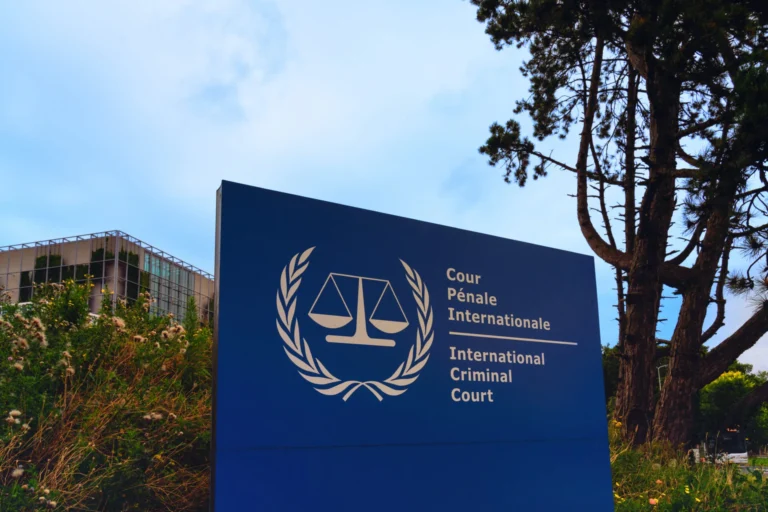
The International Criminal Tribunal for the former Yugoslavia (ICTY) charged Mladić with genocide, crimes against humanity and war crimes. The tribunal found that Mladić, former Serbian president Slobodan Milošević, and Bosnian Serb political leader Radovan Karadžić were part of a criminal enterprise aimed at forcibly removing non-Serb populations from Bosnian territory to carve out land for a “Greater Serbia.”
In 2017, he was sentenced to life in prison. Delivering the verdict, presiding judge Alphons Orie said Mladić’s crimes ranked among the most heinous known to humankind. Mladić shouted at the judges during sentencing and rejected the verdict as a lie, and was removed from the courtroom as a result. He appealed the ruling, but the appeal was rejected in 2021.
In his final years, Mladić repeatedly sought early release on humanitarian grounds due to failing health, every request was denied. In August 2026, UN doctors determined that his condition had rapidly deteriorated and that death “may occur at any time,” yet the court again refused to release him, ruling it was not in the interest of justice.
Death and Global Reaction
On 27 August 2026, Ratko Mladić died in the hospital ward of the UN detention centre on the outskirts of The Hague. His lawyer confirmed the death but did not immediately give a cause. The UN body overseeing the tribunal has ordered a full inquiry into the circumstances of his death.
A representative of the Mothers of Srebrenica victims’ group expressed mixed feelings, noting that while a major war criminal of the Balkans had died, families of victims still carry the pain of their loss 31 years on. Within Serbia, however, a significant segment of the population continues to view Mladić as a hero and protector of the Serbian nation, murals in his honor have appeared in Belgrade in recent years.
Why Ratko Mladić Matters in History
Mladić’s case stands as one of the most significant chapters in the history of international criminal justice. His conviction demonstrated that even senior military and political figures can be held accountable for genocide and war crimes, even if it takes decades to bring them to justice. The Srebrenica genocide remains a central case study in international law on crimes against humanity.