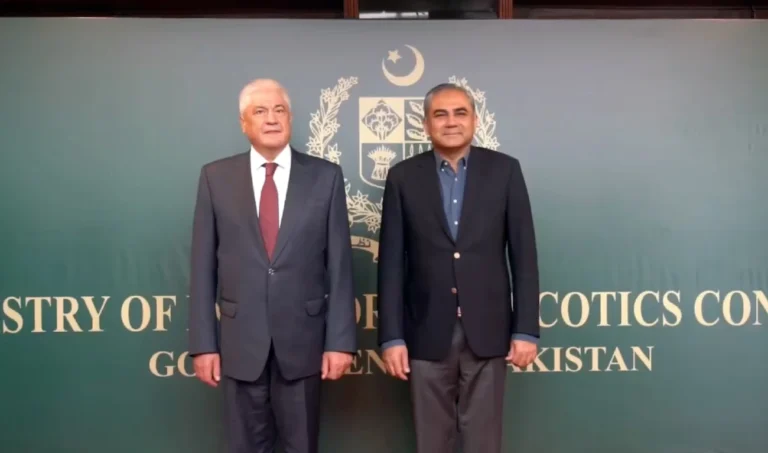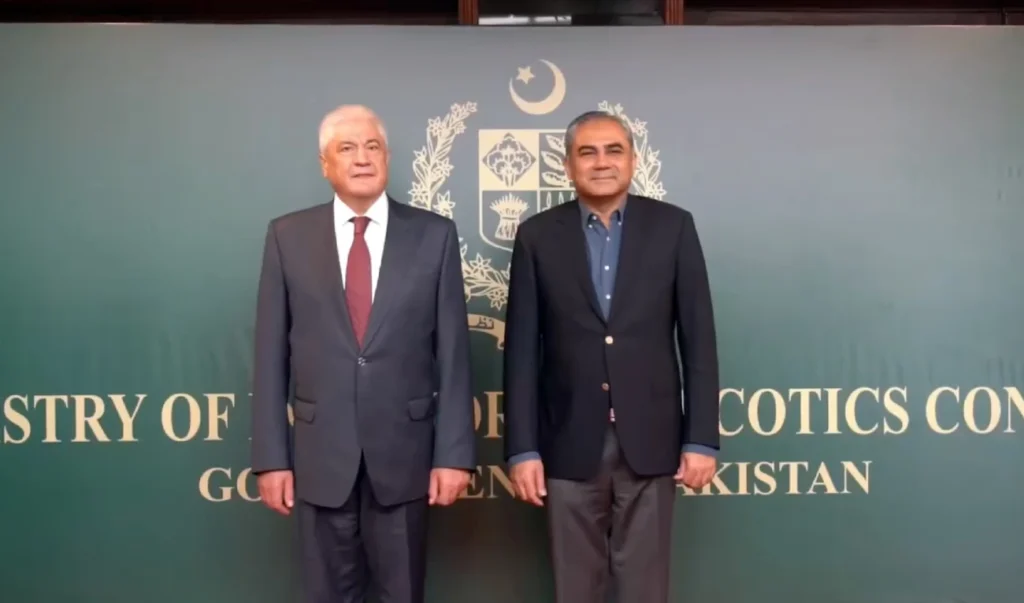
On Thursday, in Rawalpindi, Pakistan’s Defence Minister Khawaja Asif and Kuwait’s Defence Minister Sheikh Abdullah Ali Abdullah Al-Sabah signed the “Protocol Agreement-2026.” On paper, it looks like a routine upgrade: an expansion of the 2023 Pakistan-Kuwait Defence Cooperation Agreement, with Pakistan offering training, capacity building, and help with border management. The language is calm and bureaucratic. But the timing tells a bigger story, and that is worth looking at closely.
This agreement did not happen in isolation. It comes barely three weeks after Pakistan, Saudi Arabia, and Turkey signed the Makkah Joint Defence Agreement on August 7, a pact that says an attack on any one of the three countries will be treated as an attack on all three. That trilateral pact itself grew out of an earlier one: the Strategic Mutual Defence Agreement Pakistan signed with Saudi Arabia in September 2025, months before the region was pulled into the wider Iran war. Seen together, these agreements are not separate events. They are stages of the same process, and Kuwait’s move this week is the latest step in it.
That process is not hard to explain. Gulf states, watching the region grow more dangerous by the month, are looking for a partner that can offer something Turkey and Saudi Arabia cannot fully offer on their own: a battle-tested military, a large trained officer corps, and a nuclear deterrent. Pakistan is the only nuclear power in this emerging arrangement, and that single fact changes how every other clause in these agreements should be read.
Kuwait’s decision fits the pattern closely. Kuwait had already felt the fallout from the Iran conflict, and Reuters reported back in July that talks between Islamabad and Kuwait City on a wider security arrangement were already underway. So this week’s signing was not a surprise to anyone following the file. What is worth noting is the sequence: Saudi Arabia first, then Turkey through Makkah, and now Kuwait moving closer to Pakistan’s defence establishment.
And the circle may be about to grow further, in a direction few expected. Bangladesh has now told Reuters and its own state news agency that Saudi Arabia has invited Dhaka to join the Makkah pact, and that Bangladesh’s new government is viewing the idea “positively.” State Minister Humayun Kobir has said that joining a security arrangement among Muslim nations “is not unusual,” and that Prime Minister Tarique Rahman may soon meet Saudi Crown Prince Mohammed bin Salman in Riyadh. Nothing is settled yet, and Dhaka has been careful to frame this through its “Bangladesh First” policy rather than as an alignment against anyone. But the fact that Bangladesh, a country of nearly 175 million people with no history of formal ties to this kind of arrangement, is even discussing membership shows how far this network has already travelled beyond its original Riyadh-Islamabad core in less than a year.
For Pakistan, the shift in status is significant. Financial support from the Gulf has propped up Pakistan’s economy for decades, and defence relationships of this kind tend to bring side benefits with them, from deferred oil payments to investment and deposits. There is also prestige in being treated as the security guarantor for wealthy partners across two regions, rather than simply a country that exports labour or receives aid.
What began as a single bilateral pact between Riyadh and Islamabad a year ago has, step by step, turned into something wider: a Makkah-based security network that Kuwait has now formally joined, and that Bangladesh is openly weighing. Thursday’s signing in Rawalpindi may look small on its own. But placed next to the last twelve months, it reads like one more chapter in a story that is still being written.
Read more:https://digdebate.com/bangladesh-saudi-pakistan-turkey-defence-pact-india/

Our Editorial Desk is the intellectual engine of Digital Debate, responsible for the rigorous research that anchors every conversation. Our team deep-dives into data, checks every source, and consults academic literature to move beyond headlines and identify the questions behind the questions.