
On the eve of Pakistan’s independence, as the subcontinent was being carved along the Radcliffe Line, Muhammad Ali Jinnah, Quaid-e-Azam, the Great Leader who had steered the Muslim League from a minority group to the founder of a nation-state, is recorded to have said something that has outlived every political slogan of his era: that Kashmir was “the jugular vein of Pakistan,” and that “no nation or state would tolerate its jugular vein remaining under the sword of the enemy.” According to the diary of his personal physician, Colonel Ilahi Bakhsh, and corroborated by contemporaries, the remark surfaced most pointedly during his final months in Ziarat in 1948, when the founder of Pakistan, already gravely ill, was still preoccupied with the fate of the princely state whose geography, rivers and Muslim-majority population he considered inseparable from the logic of Partition itself.
Seventy-nine years later, on 5 August 2019, the government of India revoked Article 370 and Article 35-A of its constitution, stripping Jammu and Kashmir of the residual autonomy it had held since 1949 and bifurcating the former princely state into two federally administered territories. For Pakistan, the anniversary of that day, now marked annually as Youm-e-Istehsal, the Day of Exploitation, is not simply a diplomatic grievance. It is the moment that, in Islamabad’s reading, proved Jinnah right: that an unresolved Kashmir would remain a wound at Pakistan’s throat, subject to unilateral alteration by a supposedly more powerful neighbour, decades after the United Nations had promised its people a plebiscite.
This writing revisits the anatomy of that metaphor. Why did Jinnah, a lawyer trained in the rigors of constitutional argument rather than martial rhetoric, choose so visceral a phrase? And does the strategic, hydrological, economic and political logic he invoked in 1947–48 still hold after the events of 2019? The answer, this piece argues, is that the “jugular vein” was never merely ornamental language. It was a compressed statement of geography and interdependence that remains empirically verifiable, and that the abrogation of Article 370 has, if anything, sharpened rather than dulled its relevance.
The Origins of the Metaphor
Jinnah’s engagement with Kashmir did not begin in 1947. He visited the state at least three times in the decade before Partition, including a widely documented trip to Srinagar in 1944 during which he addressed the All Jammu and Kashmir Muslim Conference and sought to draw the state’s politics into the orbit of the All-India Muslim League, then locked in competition with Sheikh Abdullah’s National Conference for the loyalty of Kashmiri Muslims. His interest was not incidental. Kashmir was, on Jinnah’s own logic of Partition, precisely the kind of territory that ought to have acceded to Pakistan: a Muslim-majority population, variously estimated at the time to be over 75 percent of the state’s roughly four million people, contiguous with Pakistani Punjab and the North-West Frontier, and bound to the plains of West Punjab by rivers that had irrigated them for centuries.
It was this combination of demography, geography, and hydrology, rather than sentiment alone, that Jinnah compressed into the “jugular vein” image. The choice of anatomical metaphor was deliberate. A jugular vein is not a peripheral limb whose loss can be absorbed; it is a structure whose severing threatens the survival of the organism itself. In using it, Jinnah was making an argument about existential vulnerability, not merely territorial preference, an argument he pressed home in April 1947 in a meeting with the last British Viceroy, Lord Mountbatten, and again through his explanation of the very name “Pakistan,” in which the “K” stood for Kashmir alongside Punjab, Afghania (the Frontier), Sindh and Balochistan. In Jinnah’s own conception, a Pakistan without Kashmir was, definitionally, an incomplete Pakistan.
That the state’s Hindu ruler, Maharaja Hari Singh, supposedly acceded to India in October 1947 under contested circumstances, allegedly after a tribal incursion from Pakistan and amid a document whose signing and dating are still disputed by historians, did not, in Jinnah’s assessment, settle the matter. He ordered the Pakistan Army’s British commander, General Sir Douglas Gracey, to move troops toward Srinagar and Jammu, an order Gracey controversially declined to execute without the concurrence of the overall Supreme Commander, Field Marshal Auchinleck. The episode is instructive: even at the moment of Pakistan’s most acute institutional fragility, barely ten weeks into its existence, its founder judged Kashmir worth the risk of a wider war. That is not the behaviour of a leader deploying a rhetorical flourish. It is the behaviour of one who believed, in the most literal sense, that a vital artery was being severed.
Geography: The Logic of Contiguity
Strip away the politics, and the geographic argument for Jinnah’s metaphor is difficult to dismiss. Jammu and Kashmir sits on Pakistan’s northern frontier for its entire length, from the Working Boundary in Jammu to the Karakoram watershed abutting China. The state’s western districts, Muzaffarabad, Poonch, and Mirpur, are not merely adjacent to Pakistani Punjab; they are physiographic extensions of it, sharing the same river valleys, the same Potohar-adjacent topography, and, before 1947, the same trade routes into Rawalpindi and Sialkot.
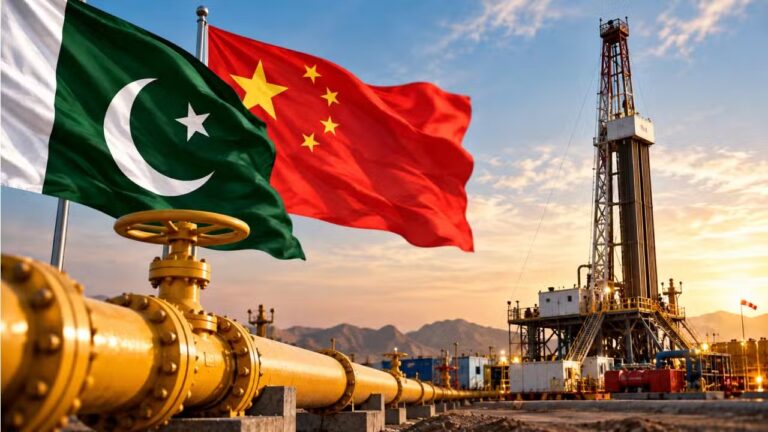
More consequentially, Kashmir is the point at which Pakistan, India and China converge. The Karakoram Highway, Pakistan’s overland lifeline to China and now the physical spine of the China-Pakistan Economic Corridor, runs directly through Gilgit-Baltistan, territory whose final status remains, in the UN’s own framework, bound up with the wider Kashmir dispute. A hostile or fully consolidated Indian presence across the Line of Control would place Indian forces within a short distance of that corridor and of the Pakistani heartland of Punjab, a fact reflected in the deployment patterns and infrastructure both militaries have built in the region for seventy years. This is the strategic reading that Pakistani military planners have consistently offered for why Kashmir is not a peripheral irredentist claim but a core determinant of the country’s defensive geometry: whoever controls the heights of Kashmir controls the approaches to Islamabad, to the Mangla Dam, and to the Grand Trunk corridor linking Punjab to the capital.
This convergence of borders is not merely a cartographic curiosity. It means that any military planner in Rawalpindi or New Delhi must account for a two-front contingency in the north, a consideration that has shaped both the size and disposition of forces along the Line of Control for generations, and that acquired a sharper edge after the 1963 Sino-Pakistan Boundary Agreement, under which Pakistan ceded a portion of the Trans-Karakoram Tract to China, an arrangement India has never recognised precisely because it regards the entire territory as integral to the former princely state. The result is a triangular dispute layered atop a bilateral one: Pakistan’s claim to Kashmir cannot be disentangled from its relationship with Beijing, nor can India’s posture in Ladakh be separated from its broader anxieties about Chinese infrastructure creeping toward its western Himalayan frontier. Jinnah could not have foreseen the specific contours of a Sino-Pakistani economic corridor built seven decades after his death, but his instinct that Kashmir’s geography would remain permanently entangled with Pakistan’s wider strategic environment, not merely its bilateral rivalry with India, has proved, if anything, understated.
Water: The Circulatory System Made Literal
If geography supplies the skeleton of Jinnah’s argument, hydrology supplies its blood. Of the six rivers of the Indus Basin apportioned under the 1960 Indus Waters Treaty, the three “western rivers” reserved primarily for Pakistan’s use, the Indus, the Jhelum and the Chenab, either rise in or flow directly through Jammu and Kashmir before entering Pakistani territory. The Jhelum rises at the Verinag spring in South Kashmir and threads through the Kashmir Valley and Wular Lake before crossing into Pakistan at Muzaffarabad; the Chenab rises in Himachal Pradesh but transits Jammu before it, too, crosses the frontier. Whoever controls the upper riparian territory of these rivers controls the headworks that determine the timing and volume of flow into the canal-irrigated plains of Punjab and Sindh below.
The stakes attached to that control are not abstract. Agriculture dependent on the Indus system accounts for roughly a quarter of Pakistan’s GDP and employs over a third of its workforce, while irrigation drawn from the system supplies close to 90 percent of the country’s agricultural output, figures that have remained remarkably stable across six decades of Pakistani economic data. This is precisely why successive Pakistani governments have treated Indian hydroelectric projects on the western rivers, Baglihar and Kishanganga among them, as matters of strategic anxiety rather than routine bilateral friction, and why India’s decision in April 2025 to hold the Indus Waters Treaty in abeyance following an attack in Pahalgam was received in Islamabad not as a diplomatic gesture but, in the words of Pakistani officials at the time, as an act tantamount to war. That reaction, whatever one makes of its proportionality, is the clearest possible vindication of Jinnah’s metaphor: a state that treats interference with water flowing from Kashmir as an existential threat is a state that has internalised, across generations of leadership irrespective of party or era, the founder’s original diagnosis. The jugular vein, in this reading, is not simply territory, it is the water that gives Pakistan’s agrarian economy its pulse.
This is why Pakistani commentators, officials and successive army chiefs have consistently described interference with the western rivers not as a resource dispute among many but as an act touching the country’s capacity to feed itself. The Indus system does not merely irrigate Punjab and Sindh; it sustains Karachi’s drinking water, feeds the turbines at Tarbela and Mangla that supply a substantial share of the national grid, and underwrites the wheat, rice, sugarcane and cotton output on which Pakistan’s export earnings and food security both depend. A country of roughly 250 million people, projected to be among the most water-stressed in the world within a generation, cannot regard the upper reaches of that system, largely situated in or transiting Indian-administered territory, as a matter of secondary strategic concern. It is this arithmetic, as much as sentiment or historical grievance, that has kept the Indus Waters Treaty and the status of Kashmir bound together in Pakistani strategic thought since 1960, and that explains why the treaty’s suspension in 2025 was treated in Islamabad with a gravity usually reserved for territorial incursions.;
Economy and Trade: The Corridor Argument
Beyond irrigation, Kashmir’s economic significance to Jinnah’s Pakistan lay in its role as a hub of pre-Partition commerce. The state’s trade routes, the Jhelum Valley road linking Srinagar to Rawalpindi, the traditional passage of Kashmiri shawls, timber, fruit and handicrafts to markets in Lahore and Amritsar via routes that ran predominantly westward, had for a century oriented the Valley’s economy toward the plains that became West Pakistan rather than toward Delhi. The 1947 Partition and the subsequent closure of the Line of Control severed those arteries overnight, converting what had been a functioning regional economy into two disconnected fragments.
That economic logic has acquired a new dimension in the twenty-first century with the construction of the China-Pakistan Economic Corridor, which threads through Gilgit-Baltistan en route to the deep-water port at Gwadar. Pakistani strategists now argue that the corridor’s long-term viability is itself hostage to the unresolved status of the wider Kashmir region, since any future settlement, or any renewed conflict, over the Line of Control carries direct implications for the security of a project Islamabad regards as central to its economic future. In this sense, the economic argument Jinnah made in miniature, about shawls and timber and river-borne trade, has been reproduced at civilizational scale in the form of a multibillion-dollar infrastructure corridor whose route runs through the same contested geography.
There is, additionally, a demographic and cultural dimension to the economic argument that is easily overlooked in discussions confined to GDP figures and treaty clauses. The Kashmir Valley’s Muslim population has historically maintained kinship, marriage and mercantile ties with the towns of Pakistani Punjab and Azad Kashmir that predate the modern border by centuries, ties that Partition interrupted but did not erase, and that continue to surface in the form of divided families across the Line of Control, a phenomenon well documented by both Pakistani and independent researchers since 1947. Jinnah’s language of an “incomplete Pakistan” drew as much on this social fabric as on formal economic statistics: a Muslim-majority population separated by force from a state whose founding rationale was explicitly the protection and self-determination of the subcontinent’s Muslims represented, in his view, a rupture of the two-nation theory’s own internal logic, not merely a foreign-policy setback.
The Political and Legal Case: Plebiscite Deferred
Jinnah’s strategic and economic reasoning was always paired with a political and legal claim: that the accession of Kashmir to India was neither final nor legitimate absent the consent of its people, and that this consent had been promised by India itself. Jawaharlal Nehru, in the immediate aftermath of the 1947–48 war, took the Kashmir dispute to the United Nations Security Council, whose resolutions, most notably Resolution 47 of April 1948, called for a ceasefire, a phased demilitarization, and, ultimately, a plebiscite conducted under UN auspices to determine the state’s final disposition. Between 1948 and 1957, at least eleven and a total of eighteen Security Council resolutions reaffirmed variants of this principle. None was ever implemented; no plebiscite was ever held. India has since maintained that its position shifted definitively with the 1972 Simla Agreement, which committed both countries to resolving the dispute bilaterally, while Pakistan has insisted that Simla did not, and could not, extinguish standing UN resolutions or the underlying right of self-determination they codified.
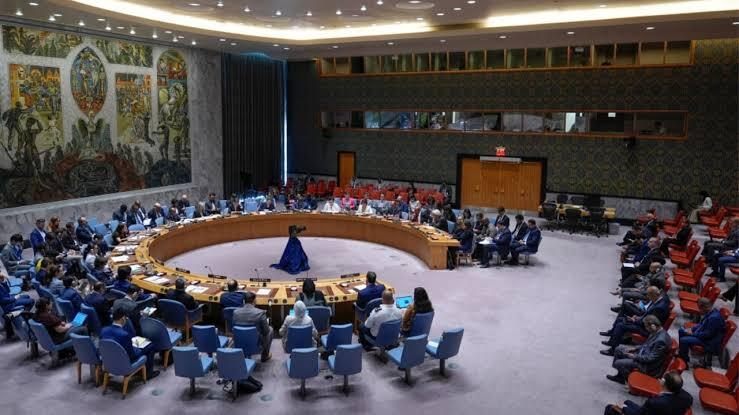
It is against this seven-decade backdrop of deferral that the events of 5 August 2019 must be read. The reading down of Article 370, which had granted Jammu and Kashmir a measure of legislative and constitutional autonomy since 1949, and of Article 35-A, which had restricted permanent residency and property rights in the state to its own domiciled inhabitants, was undertaken unilaterally by India’s Parliament, accompanied by an extensive security lockdown, a prolonged communications blackout, and the bifurcation of the state into the union territories of Jammu and Kashmir, and Ladakh. India has consistently characterised the move as a purely internal constitutional matter, integrating the region fully into the Indian federation and, in New Delhi’s account, opening the door to development and investment previously constrained by the region’s special status. Pakistan, along with China, contested the move at the UN Security Council, which held closed-door consultations but issued no formal resolution or statement, a diplomatic outcome that Islamabad has read as evidence of the issue’s marginalisation on the world stage, even as it continues to insist that unilateral changes to the region’s status cannot alter its character as internationally recognised disputed territory pending a plebiscite.
For Pakistan’s political class, 2019 supplied precisely the vindication Jinnah had warned against: a demonstration that, absent a final settlement anchored in international law, Kashmir’s status remained subject to alteration by whichever party held effective control on the ground, the very condition the “jugular vein” metaphor had been coined to warn against seventy-one years earlier.
The legal architecture Pakistan continues to invoke rests on a straightforward, if contested, syllogism: that Jammu and Kashmir’s accession to India in October 1947 was conditional, accepted by Mountbatten’s government “subject to a reference to the people” once law and order had been restored; that India itself brought the matter to the Security Council rather than treating it as a closed domestic question; and that the resulting resolutions, however imperfectly implemented, remain in force under international law until superseded by an instrument both parties recognise as having done so, a status India disputes with reference to Simla, but which Pakistan maintains was never intended, and could not in law, override a multilateral UN framework through a bilateral accord. The 2019 measures compounded this legal dispute with a demographic one: the introduction of new domicile rules under the Jammu and Kashmir Reorganisation Act altered eligibility for residency and property ownership in ways that Pakistani officials, echoing concerns also raised by some Kashmiri political parties within India itself, have characterised as laying the groundwork for a long-term shift in the region’s demographic composition, a concern that, whatever its ultimate accuracy, has fed directly into Islamabad’s argument that unilateral Indian action, rather than a UN-supervised process, is being used to pre-determine the outcome that a plebiscite was always meant to decide.
The Quaid’s Vision Reconsidered
What unified these positions was not a single fixed demand but the underlying strategic diagnosis: that Pakistan’s long-term security, economic viability and territorial coherence could not be assured while Kashmir’s final status remained unresolved.
That diagnosis has proved durable across seventy-nine years, three declared wars, a limited conflict at Kargil in 1999, and periodic crises, including the most recent one following the April 2025 Pahalgam attack, that have repeatedly drawn both nuclear-armed states to the edge of confrontation. Every Pakistani government since 1947, regardless of ideological orientation, has continued to invoke Jinnah’s formulation, from General Raheel Sharif’s use of the phrase during his tenure as army chief to its repetition in official statements marking Youm-e-Istehsal each August. This continuity across sixteen prime ministers and a dozen army chiefs is itself a form of evidence: whatever one’s assessment of the merits of Pakistan’s territorial claim, the strategic logic Jinnah articulated has functioned as the country’s most stable point of consensus on any major foreign policy question.
Conclusion: An Unclosed Wound
Six years after 5 August 2019, the Kashmir dispute remains exactly what Jinnah warned it would become if left unresolved: a standing vulnerability at the intersection of Pakistan’s geography, its water security, its principal economic corridor to China, and its constitutional self-understanding as a state founded on the unfinished business of Partition. The abrogation of Article 370 did not create this vulnerability; it exposed how little the underlying dispute had moved in seven decades, and how easily a status quo Pakistan had learned to work within could be altered unilaterally by its more powerful neighbour.
Jinnah did not live to see Pakistan reach its first anniversary, let alone its eightieth year. Yet the metaphor he reached for in his final months, hurried, unadorned, delivered by a dying man who still considered the matter urgent enough to raise, has outlasted every treaty, ceasefire line and constitutional amendment that has since been layered onto the dispute. That durability is itself the strongest evidence for its accuracy. A state does not sustain a single strategic conviction across sixteen prime ministers, a dozen army chiefs and three generations of citizens unless that conviction continues to be validated by events on the ground, and 5 August 2019 supplied precisely such validation, demonstrating once again that Kashmir’s status remains, seven decades on, exactly what the Quaid warned it would be: unfinished business, and Pakistan’s jugular vein still waiting to be freed.

Dr. Syed Mujahid Gilani is a Medical Professional, Son of Kashmiri Soil. He is the nephew of two Political Prisoners, Dr Qasim Factoo and Syeda Asiya Andrabi, and hails from the family of Syed Ali Geelani.