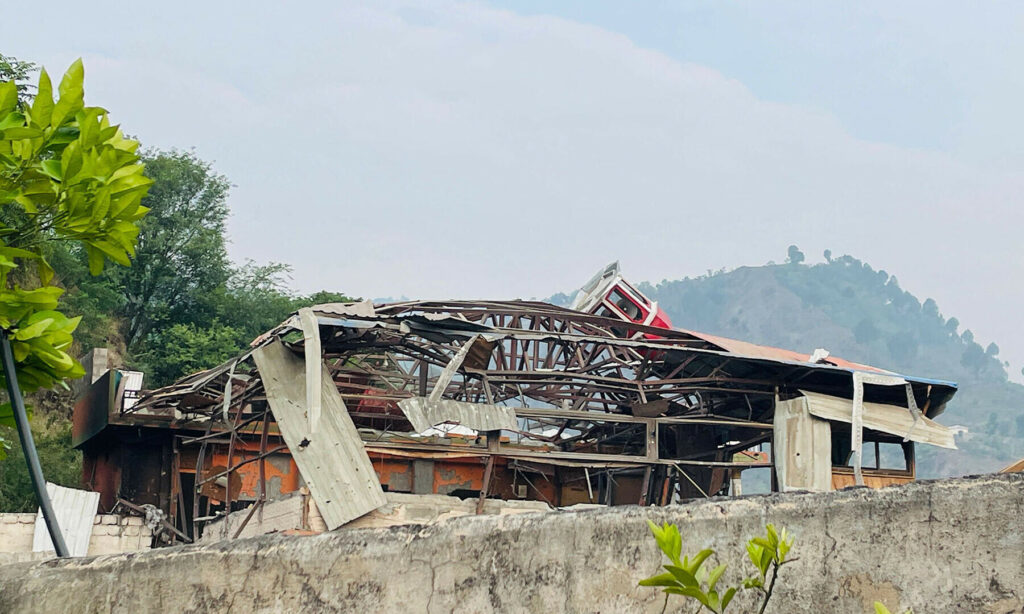
A young man called Azan outside the Srinagar Central Jail on July 13th, 1931. The Dogra forces shot him dead. Another man stood up and called the Azan. He was shot dead too. One after another, 22 Kashmiris were killed, each stepping forward to complete what the last had started, until the call to prayer was finished. They were taken through the streets of Srinagar and buried in the shrine of Khwaja Bahawuddin Naqshbandi, which is now known as the Martyrs’ Graveyard, Mazar-e-Shuhada.
On July 13, 2026, 95 years later, Mirwaiz Umar Farooq was put under house arrest and prohibited from visiting the same graveyard. Even a sitting minister, Sakina Itoo, was barred from entering. Restrictions were tightened across Srinagar, and residents were barred from paying their respects at the graves of those 22 men. The instruments may have changed, but the intention did not.
The Day That Made Modern Kashmir
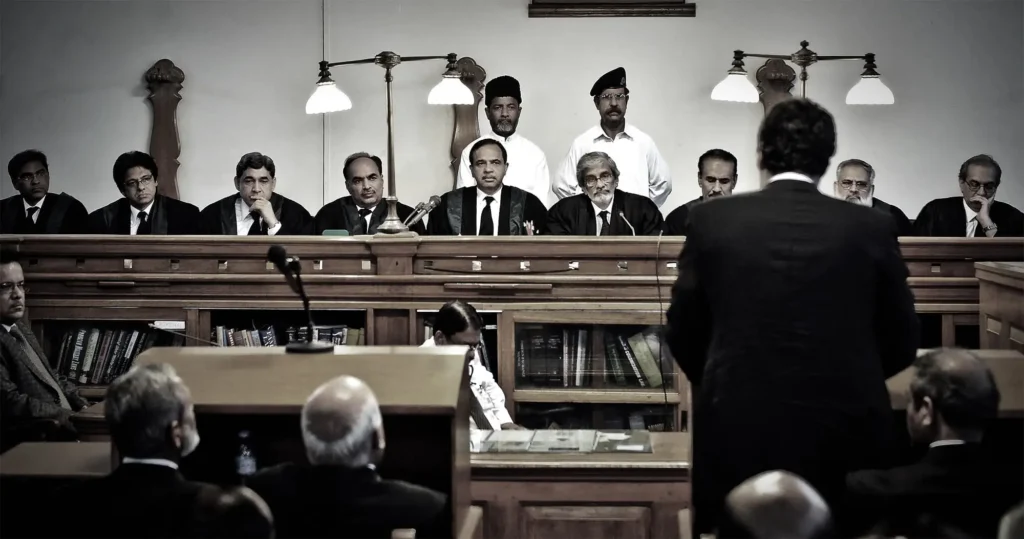
The 1931 events were not a surprise. Kashmiris had endured a century of Dogra rule under Maharaja Hari Singh’s court: punishing land taxes, forced labour, systematic discrimination against the Muslim majority population that constituted over 75% of the state, and the criminalisation of basic religious expression. Abdul Qadeer, a young man who had given a speech in June 1931 calling on Kashmiris to rise against the Dogra administration, was arrested on charges of sedition. His trial was moved to the Central Jail in Srinagar. Thousands gathered outside, not merely as spectators but as a declaration that his case was their case.
As the Zuhr prayer time arrived, a volunteer rose to call the Azan. He was shot. Another rose. He was shot. Again and again, until 22 Kashmiris lay dead and the prayer had been completed. As Kashmiri Pandit historian Prem Nath Bazaz wrote in his account, “the most important day in the annals of contemporary Kashmir” was July 13, 1931, “from which day the struggle for independence and freedom in the most modern sense started openly. Sheikh Abdullah compared it to the Jallianwala Bagh Massacre. Omar Abdullah, a former chief minister, said the same in more recent times: “The July 13 massacre is our Jallianwala Bagh.”
What the Dogra forces achieved that day was the opposite of what they intended. Isolated protests turned into an organized movement. Private grief became public resolve. The Reading Room Party announced a statewide shutdown. Political consciousness had been growing since the labour revolts of the shawlbafs in 1865 and the activities of the Silk Factory in 1924 had solidified it into an irreversible course. The martyrs emerged as the pillars of the modern Kashmiri political identity, a testament to the power of people’s faith, their land and dignity over the power exercised to suppress it.
What Changed, and What Did Not
Sacrifices are the hallmark of the decades from 1931 to the present. In the violence preceding and following 1947, almost 300,000 Kashmiri Muslims were killed, all under the orders of Indian troops who had entered the state when the population’s demographic makeup clearly indicated an alternative path. The mass armed uprising of 1989 ushered another round of losses. In the 36 years since, nearly 100,000 more Kashmiris have been killed in the ongoing resistance. The Kashmiri martyrs’ roll extends from the unnamed young men of 1931 to Maqbool Bhat, executed in Tihar Jail in 1984, to Burhan Wani, killed in 2016, and the thousands whose names are recorded in the collective memory of a people who do not forget.
On August 5th, 2019, Indian-occupied Jammu and Kashmir lost its special status, was divided into two separate union territories and came under the direct rule of the central government. The communication blackout that ensued was 5 months long. Thousands of political leaders, activists and ordinary residents were arrested. July 13 was removed from the list of official public holidays. The Lieutenant Governor’s administration banned all functions at Mazar-e-Shuhada. In a gesture that required no subtlety to interpret, September 23, Maharaja Hari Singh’s birthday, was declared a public holiday in its place. The man whose forces killed the 22 was to be commemorated. The 22 were to be forgotten.
They sealed the graveyard. They placed leaders under house arrest. They replaced the martyrs’ holiday with the Maharaja’s birthday. The pattern is not new. It is the same reason that made the soldiers pull triggers in 1931 and start shooting the man who called the Azan, because they believed that if they killed the man, they would stop the prayer. It didn’t work back then, and it didn’t work even now. APHC leaders, including those illegally detained in Indian prisons, issued statements on July 13, 2026, reiterating their resolve to carry the freedom movement to its conclusion.
The Kashmiri people’s connection to July 13 is not maintained by official calendars or state permission. It is maintained by the same force that made a second man step forward after the first was shot. The names of the 22 martyrs of 1931 are being taught in homes, it is being recited in prayers, it is being carried in the collective memory of a people, across the Line of Control, in Azad Kashmir and all over the world in the diaspora. On the day of the anniversary, the Mazar-e-Shuhada in Srinagar could be barricaded by armoured vehicles, but the significance of the graveyard cannot be barricaded. It has been tended and visited and mourned over for 95 years, through every political configuration that those 95 years have produced.
The freedom struggle in Kashmir predates India and Pakistan as states by sixteen years. It predates the United Nations Security Council resolutions that called for a plebiscite, which have never been held. It pre-dates the armed uprising of 1989 by almost 60 years. It is not just a date, but a proof over the generations that no force, no legal change, no demographic manipulation, no administrative suppression has been able to disconnect the Kashmiri people from their identity, faith and memory of those who laid down their lives to preserve them.

Our Editorial Desk is the intellectual engine of Digital Debate, responsible for the rigorous research that anchors every conversation. Our team deep-dives into data, checks every source, and consults academic literature to move beyond headlines and identify the questions behind the questions.