
As the world, under the global narrative led by the United States, marks the 25th anniversary of 9/11 this week, the deteriorating security landscape of South Asia raises serious questions that need to be addressed. The War on Terror (WoT) took the lives of more than 0.9 million people, including around 400,000 innocent civilians who had nothing to do with either the 9/11 attacks or militancy.
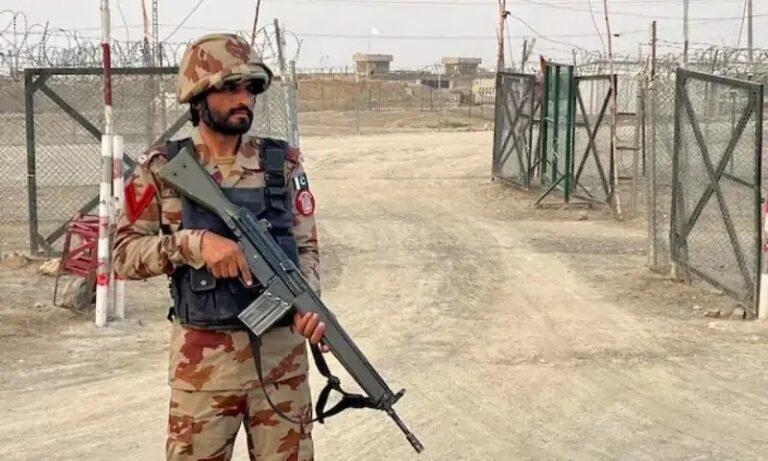
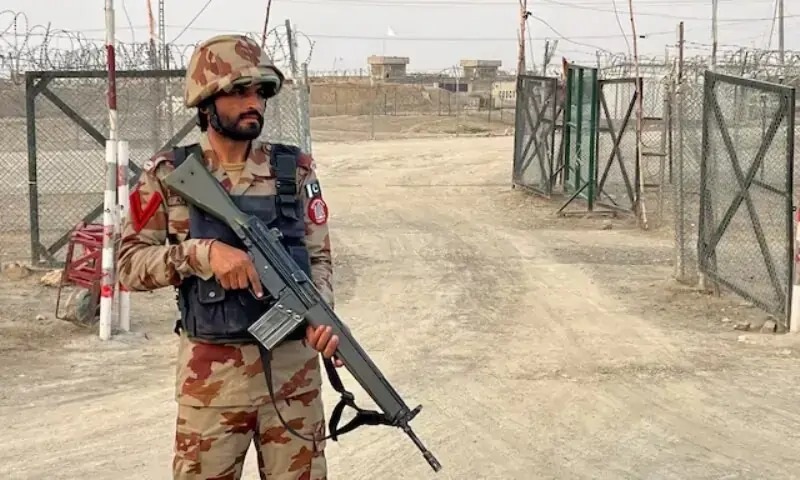
The picture is even more devastating for a country like Pakistan, which is still dealing with the consequences of the WoT. More than 4,700 Pakistanis, a number higher than those killed in the 9/11 attacks, have been killed in cross-border attacks over the past three years, according to a statement by Pakistan’s envoy to the United Nations, Asim Iftikhar, on 12 September 2026.
So, the question remains: What is the pre-emptive approach of the world, or specifically of counterterrorism strategists in the United States, to prevent such events from happening again in the 21st century? Pragmatically, the answer is disappointing. The Taliban 2.0 regime poses many of the same challenges and concerns that existed two decades ago.
The United Nations Security Council Monitoring Team Report, dated 10 August 2026, stated that Afghanistan continues to provide an enabling environment for several militant groups. The report also states that Al-Qaeda’s strength and presence in Afghanistan remain largely unchanged. Al-Qaeda continued to provide ideological guidance, training and other support to the TTP.
One Member State also reported that Al-Qaeda trainers in Afghanistan had trained BLA militants alongside TTP members. There is substantial evidence pointing towards possible militant activity originating from Afghan soil. The situation reflects a similar pattern of warning signs collected by the intelligence community before 9/11.
According to the commission established to investigate the September 11 attacks, intelligence indicating the possibility of a major attack had been steadily increasing during the spring and summer of 2001.
By late June, officials were warning of the possibility of a major operation. CIA Director George Tenet later said that, in effect, “the system was blinking red.”
On the 25th anniversary of the September 11 attacks, the United States released dozens of declassified presidential intelligence briefings detailing what the US government knew about Osama bin Laden and Al-Qaeda before the attacks of September 11, 2001.
A briefing from September 1998 said bin Laden’s priority could be to carry out an attack inside the United States, particularly in Washington. It also raised the possibility that Al-Qaeda might attempt to attack a US city using an aircraft loaded with explosives.
These were among the warning signs that were not connected in time before the attacks occurred. However, after spending trillions of dollars on counterterrorism, today’s threats are far more open and visible. Meanwhile, South Asia remains on the frontline before these threats potentially spread further.
The availability of state structures, institutional spaces and technological opportunities to militants can make these threats even more dangerous. Today, militants do not necessarily need to hijack a plane and use it as a missile. They are increasingly developing and adapting drone and weapons technologies of their own.
Afghanistan’s interim Ministry of Higher Education says dedicated faculties for air radar systems and unmanned aerial vehicle (UAV) technology have been established for the first time within the country’s higher education system.
The situation should be alarming, as militant groups operating in Balochistan and Khyber Pakhtunkhwa have, for the first time, formally announced the creation of dedicated “air” units. In late December 2025, the banned Tehrik-e Taliban Pakistan (TTP) said it had established an “Air Force” as part of its new military structure, while the banned Baloch Liberation Army (BLA) introduced its first aerial unit under the name “Qahr.”
An organization called The Watch Floor has claimed in a report that the TTP’s air unit includes around 80 trained personnel and 30 drones, while a further 150 drones are said to be under development.
For a sovereign and independent state, the initiative taken by the Taliban’s Ministry may appear to be a legitimate academic development. But what guarantee is there that this technology will not fall into the hands of terrorist entities operating from Afghanistan and already advancing in these sectors?
The situation becomes further complicated when we trace Al-Qaeda-linked approval and interest in such developments. According to Violent Extremism Lens, a research platform specializing in monitoring Al-Qaeda’s digital activity, a scientific channel linked to Al-Qaeda in the Arabian Peninsula commented on the Taliban government’s plan to open a specialized college in Afghanistan for air radar systems and drone technology.
The report states that, in a separate article, one of the group’s leaders said that artificial intelligence and drone technology are among the most important skills that current members and new recruits should learn.
Unfortunately, the United States Counterterrorism Strategy Report 2026 addresses none of these threats. The report mentions Afghanistan only once, in reference to the possible release of a US citizen detained under Taliban rule.
In a broader sense, the question remains: Can these threats be stopped before they move beyond borders and spread across continents?
Read more: https://digdebate.com/india-9-11-kashmir-war-on-terror/

Shabir A. Yousafzai
Shabir A. Yousafzai is a multimedia journalist currently working with Turkiye Urdu. He holds a bachelor’s degree in Journalism Studies from the University of the Punjab and is currently pursuing an MPhil in the same discipline. His reporting covers a broad range of national and regional issues, with a particular focus on security, geopolitics, and Afghan affairs, especially their implications for Pakistan and the wider region.