Academic debates serve a purpose beyond intellectual sparring. They create spaces where adversaries can engage through reason rather than force, where complex issues receive nuanced treatment, and where audiences witness competing perspectives presented by thoughtful advocates. When such forums fail, as dialogue collapses before it begins, everyone loses, including the participants, the audience, and the broader cause of understanding between nations.
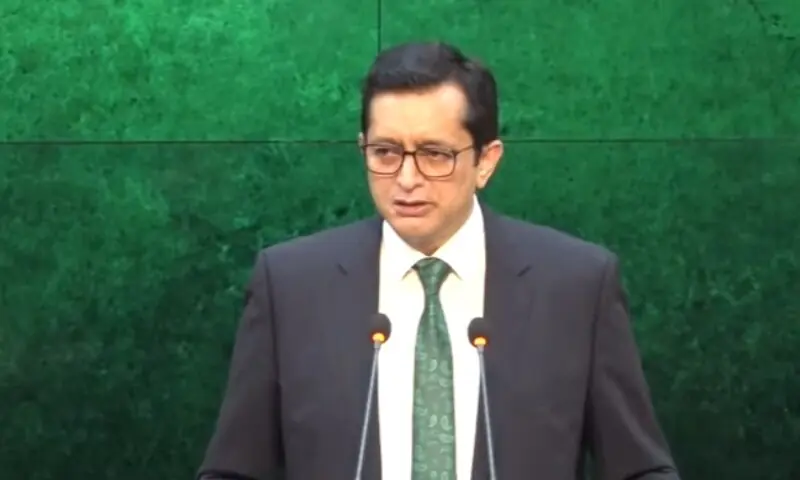
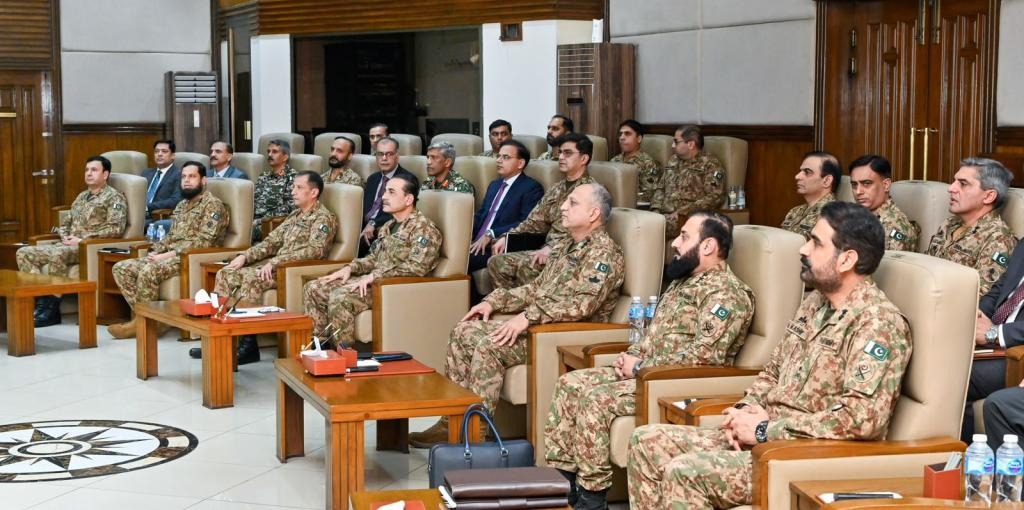
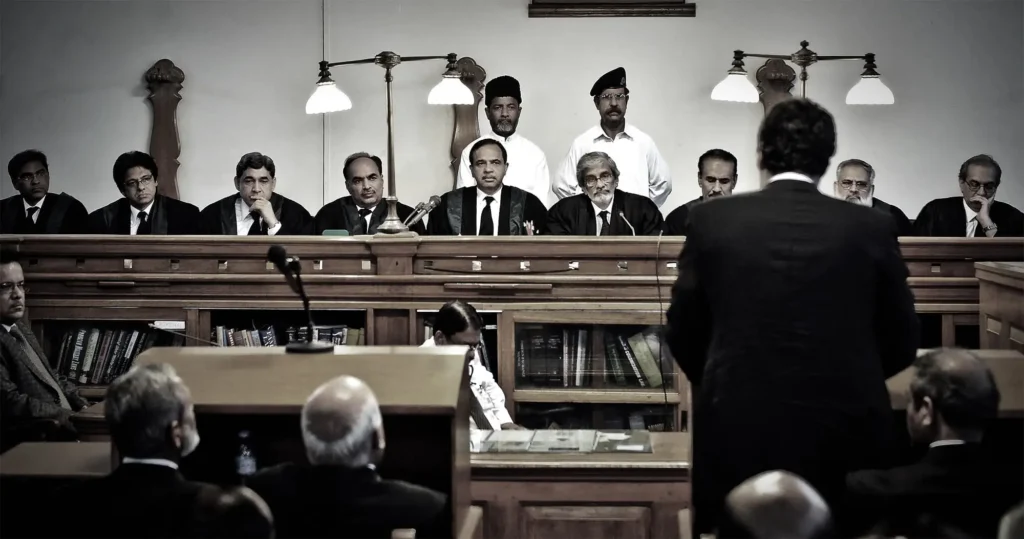
The Oxford Union debate scheduled for November 27, 2025, represented a rare opportunity for substantive India-Pakistan engagement. The proposed lineups were extraordinary, including former Foreign Minister Hina Rabbani Khar, former Chairman Joint Chiefs of Staff Committee General Zubair Mahmood Hayat, and High Commissioner Dr. Mohammad Faisal, from India, former Army Chief General Naravane, former Chief Minister Sachin Pilot, and veteran politician Subramanian Swamy. Two four-star generals facing off in an academic debate rather than military confrontation, and this unprecedented setup was planned to promise genuine insight into how both nations conceptualize security, strategy, and regional stability.
That debate never happened. Understanding why requires examining not just the timeline of events but what this episode reveals about the current state of India-Pakistan relations and the challenges of maintaining dialogue in an era of performative nationalism and social media distortion.
The Timeline of a Collapse
The facts, as documented by Oxford Union correspondence, are straightforward. Invitation letters went out in June 2025 to both delegations. By November 5, all six speakers had confirmed participation. The Pakistani delegation traveled to London, arriving the evening of November 26 for the November 27 debate. On November 27, hours before the scheduled event, Oxford Union President Musa Hiras informed the Pakistani delegation that the entire Indian lineup had withdrawn.
The letter from Moosa Harraj was that “We had our original list of speakers from the Indian side dropping out.” This is not Pakistani spin or nationalist interpretation. It is the official communication from Oxford Union, a neutral institution with no stake in India-Pakistan disputes, documenting what occurred.
Three replacement speakers were proposed as Jai S. Deepak, Pandit Satish, and Devyani Banerjee. None had been part of the original arrangements stretching back to June. None held government positions comparable to the original Indian delegation. The Pakistani side, having committed travel and preparation time based on the expectation of debating senior Indian officials with substantial policy experience, declined to proceed with the substitute lineup.
This sequence of events, confirmed by institutional documentation, has been subjected to extraordinary distortion in subsequent social media narratives, with some Indian commentators claiming Pakistan “ran away” from the debate or specifically feared facing the substitute speakers. Such claims require believing that Oxford Union fabricated its own correspondence, that former Foreign Minister Khar invented her account of being in London when cancellation news arrived, and that the documented timeline is somehow fictional.
Hina Rabbani Khar’s Perspective
Former Foreign Minister Hina Rabbani Khar’s account adds crucial context to the bare facts. She describes landing in London the evening before the debate, having dinner with General Hayat and High Commissioner Faisal, discussing their approach to the next day’s engagement. These were not social media warriors seeking viral moments but experienced professionals prepared for substantive policy discussion.
When informed the next morning that the entire Indian delegation had withdrawn, Khar’s response was measured, that she would not characterize it as “running away” but simply noted that “the people whom we were committed to were the ones who had committed to the Oxford Union. They didn’t show up.”
Her decision not to proceed with substitute speakers reflects professional standards, not fear, as she said, “We were there to debate a certain caliber of Indians, and it would have been a great debate.” This is not elitism but basic respect for the forum. Academic debates at prestigious institutions work best when participants possess comparable expertise and experience. A former Foreign Minister and four-star general debating individuals without equivalent policy backgrounds would be mismatched, likely devolving into talking points rather than a substantive exchange.
Khar’s broader observation about what this episode represents deserves attention: “Unfortunately, I think this is representative of what India has become.” She points to a pattern of the inability to acknowledge when Rafale jets were shot down in May 2025, the construction of alternative narratives disconnected from documented evidence, and the prioritization of domestic political narratives over international credibility.
Academic Institutions and Narrative Warfare
The Oxford Union has functioned since 1823 as a space for rigorous debate on contentious topics. Its legitimacy depends on neutrality, transparency, and commitment to intellectual honesty. Attacking the institution itself, questioning Moosa Harraj’s integrity because he is Pakistani, suggesting the entire episode is a conspiracy, undermines one of the few remaining venues where India-Pakistan dialogue can occur on neutral ground.
This reflects a troubling trend of the weaponization of academic and cultural spaces for nationalist purposes. When every forum becomes suspect, when institutional credibility counts for nothing against politically convenient narratives, dialogue becomes impossible. If Oxford Union cannot host India-Pakistan debates without accusations of bias and manipulation, where can such exchanges occur?
The subsequent social media narratives around this incident demonstrate how easily facts are distorted in the service of nationalist mythmaking.
The Student Debate That Did Occur
While the main event collapsed, a student debate did proceed with three participants from each side. Pakistan’s team, Moosa Harraj, Israar Khan Kakar, and Ahmad Nawaz Khan, faced India’s Veeransh Bhanushali, Dev Rachan Banerjee, and Siddharth Nagaraj. The Pakistani team won decisively: 160 votes to 51.
This outcome matters not because student debates settle geopolitical questions but because it demonstrates that even at the graduate level, Pakistani participants can articulate compelling arguments when given the opportunity. The audience at Oxford Union comprises diverse nationalities, including Pakistanis, Indians, British, and others. A nearly 3-to-1 margin suggests the Pakistani position resonated broadly, not just with partisan supporters.
One can only imagine what might have resulted from the originally planned debate. Hina Rabbani Khar, with years of diplomatic experience, engaging Sachin Pilot on the intersection of populism and security policy. General Hayat and General Naravane discussing military doctrine and strategic stability from professional perspectives. Dr. Faisal and Subramanian Swamy debating diplomatic approaches to longstanding disputes. These exchanges, had they occurred, would have provided valuable insights regardless of which side one favored.
The Cost of Dialogue Failure
When high-level dialogues collapse, the immediate losers are those who invested time and preparation. But the broader cost extends much further. Every failed dialogue reinforces the narrative that the “other side” is unreasonable, unwilling to engage, and not serious about peace. It creates space for extremist voices who argue that communication is futile and only force matters.
For ordinary Pakistanis and Indians, the vast majority who want stable borders, economic prosperity, and normal relations, each dialogue failure represents another missed opportunity. The issues dividing the two countries are real and complex, including Kashmir, water sharing, cross-border terrorism, and historical grievances. These won’t be resolved through social media arguments or nationalist posturing. They require the painstaking work of negotiation, compromise, and mutual understanding that can only begin when serious people engage seriously.
Academic debates, while not diplomatic negotiations, contribute to this broader ecosystem of engagement. They normalize the idea of India-Pakistan interaction, they model how to disagree productively, and they remind both populations that the “enemy” consists of human beings with perspectives worth understanding, even when disagreed with.
The Populism-Security Nexus
The debate topic itself was significant, examining “India’s Policy Towards Pakistan is a Populist Strategy Sold as Security Policy.” This is not merely an India-Pakistan question but a global phenomenon. Across multiple democracies, leaders have discovered they can win elections through nationalist rhetoric, external threats, and martial posturing. But what happens when those domestic political strategies constrain actual security policy? When does the pressure to appear tough prevent pragmatic diplomatic engagement? When does acknowledging reality become politically impossible because it contradicts established narratives?
India’s refusal to acknowledge the loss of aircraft in May 2025, despite French confirmation and international reporting, exemplifies this dynamic. Domestic political imperatives overwhelm factual reality. The government cannot admit what happened because doing so would undermine carefully constructed narratives about military superiority and Pakistani weakness.
This creates a trap that policies must serve as domestic political narratives rather than strategic realities. Dialogue becomes difficult because any compromise or acknowledgment of Pakistani legitimacy triggers domestic backlash. The space for reasonable statesmanship shrinks as nationalist mobilization becomes the default political strategy.
Looking Forward
The Oxford Union episode will fade from headlines, replaced by new incidents and controversies. But the underlying dynamic persists that the challenge of maintaining dialogue when domestic political incentives discourage engagement, when social media amplifies extremism, and when institutional credibility matters less than viral narratives.
Several conclusions emerge from this incident:
Academic institutions must maintain rigorous standards of evidence and transparency. Oxford Union did exactly that, documenting what occurred through official correspondence. This institutional integrity matters enormously even when it becomes politically inconvenient for some participants.
Public figures bear responsibility for factual accuracy in their public statements. Claiming to have been invited when one was not, asserting opponents “ran away” when documented evidence shows otherwise, and attacking institutional credibility without basis, these behaviors corrode the informational ecosystem necessary for democratic discourse.
Dialogue requires good faith from all participants. This doesn’t mean agreeing on substance. India and Pakistan have profound disagreements on many issues. It means accepting basic factual realities, engaging with actual rather than imagined opponents, and recognizing that even adversaries deserve intellectual honesty.
The consequences of dialogue failure extend beyond hurt feelings. Every collapsed forum, every missed opportunity for engagement, makes the next crisis more dangerous. When leaders have no experience communicating with counterparts, when publics view the “other” through pure caricature, and when no mechanisms exist for de-escalation, small incidents can cascade into catastrophic conflict.

Our Editorial Desk is the intellectual engine of Digital Debate, responsible for the rigorous research that anchors every conversation. Our team deep-dives into data, checks every source, and consults academic literature to move beyond headlines and identify the questions behind the questions.