Tragedies don’t come out of the blue. They are developed over many years through a process of legitimate grievance, political manipulation, and outside pressure. The tragedy that is playing itself out in Azad Jammu and Kashmir today is very much like this. And it demands an honest accounting. The movement that began in the name of flour and electricity has long since stopped being about either.
Where It Started
The origins of the AJK protest movement are legitimate. Traders voiced complaints about high Electricity bills. In certain regions, there was a shortage of flour. These were real problems. The federal government had earlier subsidized flour in Azad Kashmir to match the rates at the Rawalpindi market before 2018. Following 2018, that subsidy was shifted to the AJK government, and mismanagement led to gaps. The public had a right to complain. What followed, however, was not reform. It was escalation without end.
The Federal government has slashed the electricity tariff of AJK consumers to 3 rupees per unit. For context, the same unit costs approximately 64 rupees in Islamabad. If the rate is still 30 per cent at 3 rupees per unit, it is the same as the rate of 20 to 25 rupees. The subsidy exists. The public does not pay. And the protest movement continues. One of the movement’s leaders said it simply on a stage: the electricity problem is solved. The next set of problems starts now. That statement should be read carefully. It tells the full story.
The Numbers Nobody Mentions
AJK’s total population per census records is 4.46 million. More than half do not live inside AJK. They reside abroad or in Pakistani cities for employment. The resident population is approximately 2.2 million. Yet flour allocation continues for 4.5 million people. This equals 300,000 tons per year. The AJK government spends 38 billion rupees every year on flour subsidies alone. The total revenues of the Government, including direct taxes, indirect taxes, royalties and net hydro profits, do not exceed Rs. 100 billion. The salary bill is 109 billion rupees. The pension bill is 49 billion rupees. Islamabad needs to invest an extra 36 billion rupees in development expenditure.
Pakistan provides AJK with 200 billion rupees annually on top of AJK’s own 100 billion rupees in revenue. The total budget comes to 310 billion rupees. This is not given to any neighboring country. Because AJK is not a neighboring country. It’s not a separate state. It is an integral part of Pakistan, administered as the representative government of the entire state of Jammu and Kashmir, spanning 84,471 square miles, of which the current administered territory is only a portion. This distinction matters enormously. And it’s exactly the difference that some people in this movement want to dismantle.
The 38 Points and the 36th Demand
The Public Action Committee presented a 38-point charter of demands. The government of Pakistan accepted 35 of them. Free medical facilities already existed through the health card. Uniform education already existed. Feasibility commitments were made for infrastructure projects. Cases against protesters were dropped. Tax and electricity concessions were granted. The government accepted almost everything. But the movement intensified, nonetheless.
The remaining core demand is the abolition of 12 refugee seats in the AJK Legislative Assembly: 6 for refugees from Jammu province and 6 for refugees from Kashmir province. These are seats for the 2.5 million Kashmiri refugees who left their homes, their properties, and their possessions based on their faith and their loyalty to Pakistan. They are conditional citizens of Pakistan under the Citizenship Act and interim citizens under Article 257 of the Constitution, pending the final resolution of the Kashmir dispute.
Since August 5, 2019, India has been giving domicile certificates to 4.5 million non-Kashmiris to change the demographic make-up of occupied Jammu and Kashmir. The elements of Pakistan and its Kashmiri collaborators rightly denounced that as demographic manipulation. Demanding the disenfranchisement of 2.5 million pro-Pakistan Kashmiri refugees is the same policy, executed from a different direction. The only difference is the flag under which it is being promoted.
Any right is only a right if it does not extinguish another person’s right. The demand to remove refugee representation from the AJK assembly extinguishes the political rights of those who sacrificed most for the Kashmir cause. It is not a rights demand. It is a contradiction dressed as one.
The Oath That Changes Everything
More dangerous than the refugee seats demand is what arrived in the new April 2026 charter. Candidates and elected members of the AJK Legislative Assembly currently take an oath of loyalty to the ideology of Pakistan and to Pakistan’s position on the state’s accession. The movement now demands that the word “Pakistan” be removed and replaced with “the geographical unity and integrity of the State of Jammu and Kashmir.”
This is not a procedural amendment. It is an ideological substitution. It replaces Pakistan’s 78-year diplomatic posture based on UN resolutions and the principle of self-determination in the context of accession to Pakistan with a territorially ambiguous formulation which breaks the AJK’s constitutional and ideological ties to Pakistan.
The question worth asking is straightforward: who benefits from this? Not the people of AJK. Not the Kashmiri refugees. Not Pakistan. The beneficiary is the one whose military was defeated in Operation Marka-e-Haq. India will benefit from the weakening of Pakistan’s unity, from the erosion of AJK’s representativeness and from their redefinition of the Kashmir dispute as a local administrative one.
The Cost Being Paid on the Ground
AJK’s economy depends on tourism. The season runs from May through August. Three consecutive tourism seasons have now been disrupted. Hotels closed. Transport businesses shuttered. Daily wage workers were deprived of months of wages. The costs of the flour and electricity subsidies that sparked the movement totaled tens of billions. The economic damage from three lost tourism seasons adds to that.
The people being told that removing refugee seats will bring rivers of milk and springs of honey are the same people who closed their shops for 15 to 20 consecutive days. The daily wager does not know the legal implications of the refugee seats issue. The only thing that is known is that the shelves are empty and the season has passed.
90 percent of those associated with the action committee, including those sitting at home, are not malicious actors. They are people who, under the weight of a compelling narrative and social media amplification, attached themselves to a movement without examining where it leads. When people debate the specifics on social media, the depth is not there.
What Must Happen Now
The democratic process should go on. Elections shall be conducted. The action committee’s campaign against the election process itself is its most revealing demand. Without elections, there is no liberation, only anarchy. A new government, with a clear mandate and the political will to separate legitimate demands from those that serve external interests, is the only path forward. Those who committed violence, including attacks on law enforcement, cannot receive blanket amnesty. Those who were misled deserve a path back.
Kashmir cause is not a slogan to be sold for electricity subsidies. It is a 78-year legal and moral position built on sacrifice. Abandoning it piece by piece, through charters drafted on streets rather than in parliaments, is not a rights movement. It’s quite a different thing. And the question of who benefits from it deserves a clear answer.
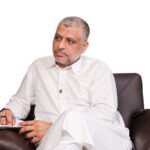
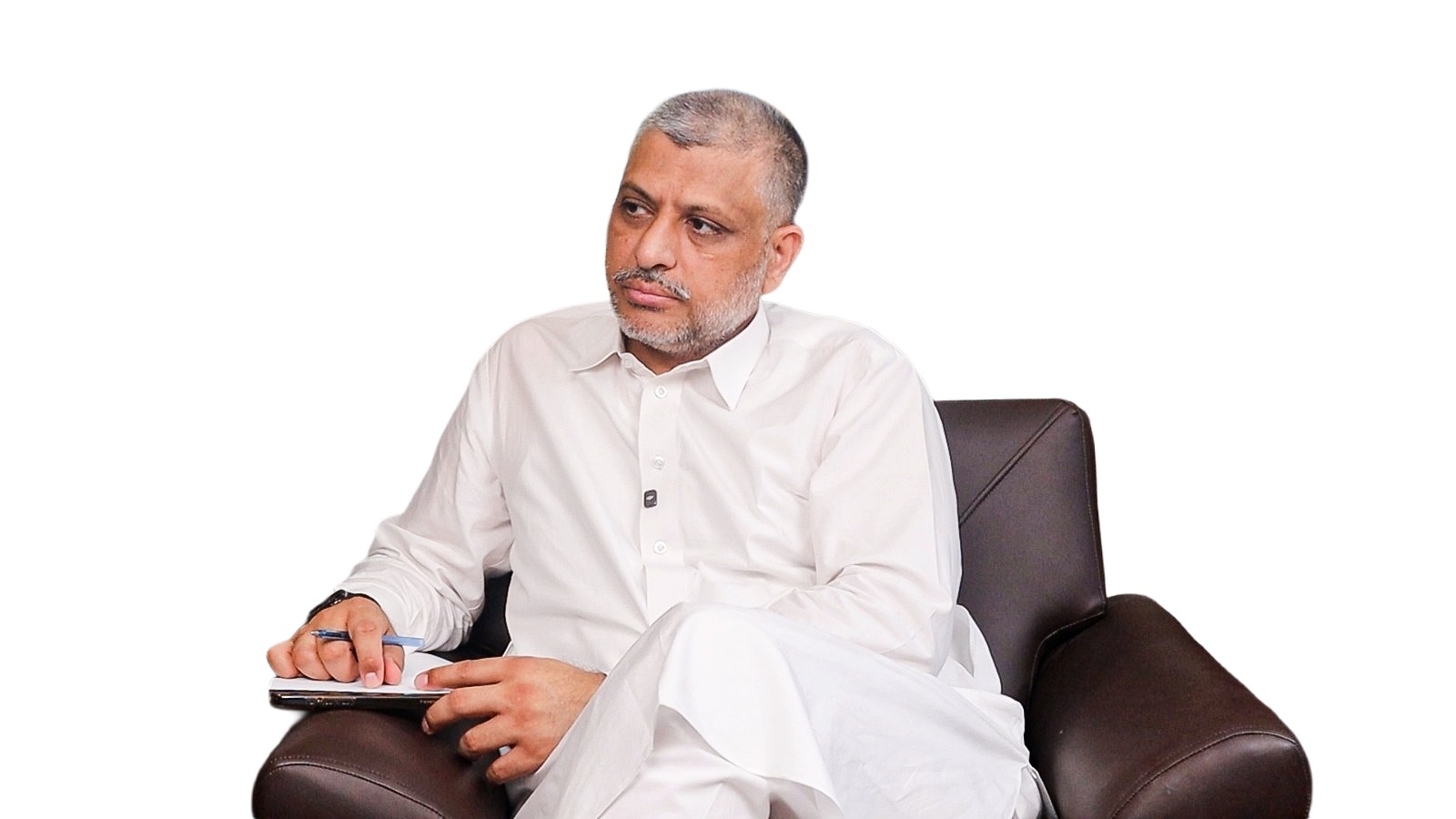
Muhammad Ahmad Raza Qadri is an Azad Jammu and Kashmir MLA representing the PML-N. A two-term assembly member, he represents the Kashmir Valley-V refugee constituency (LA-44) across Rawalpindi, Islamabad, and Attock. He works closely with AJK parliamentary committees to oversee interior affairs, governance reform, and community-level rehabilitation initiatives.