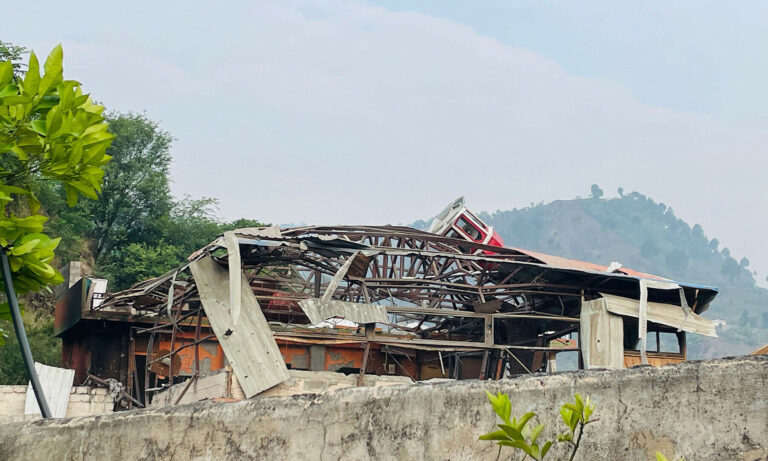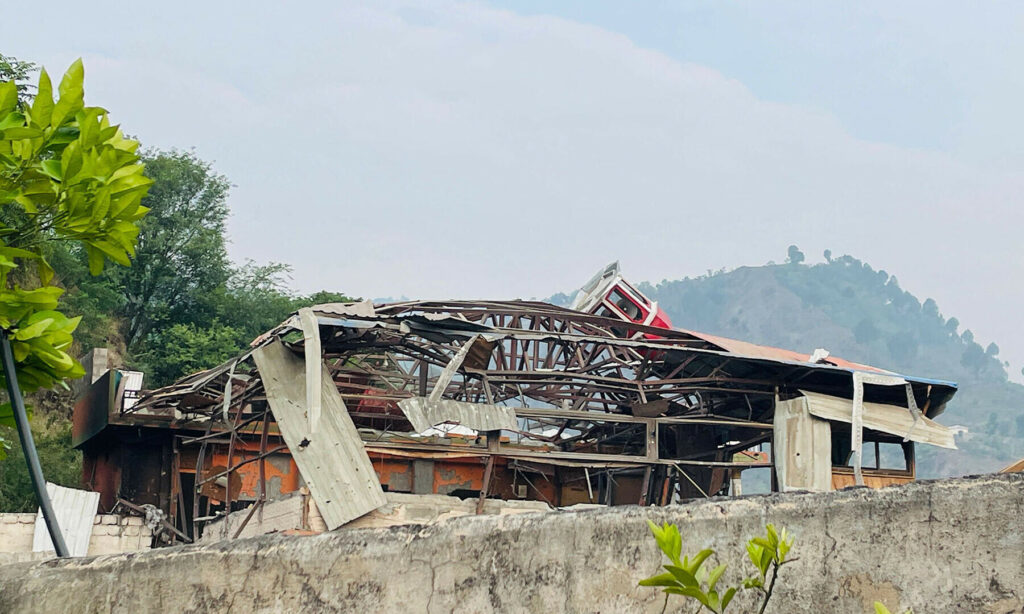
The attack in Pahalgam revealed a disturbing trend in South Asian crisis politics. India’s habit of pointing fingers at Pakistan without any proper investigation. Indian officials and media quickly turned to the usual suspects, militant groups allegedly linked to Pakistan, and made the usual accusations, all of which were made within hours of the incident. These may appease domestic political demands but are incompatible with the principles of international law, shrink diplomatic room, and create the risk of escalation between two nuclear-armed neighbours.
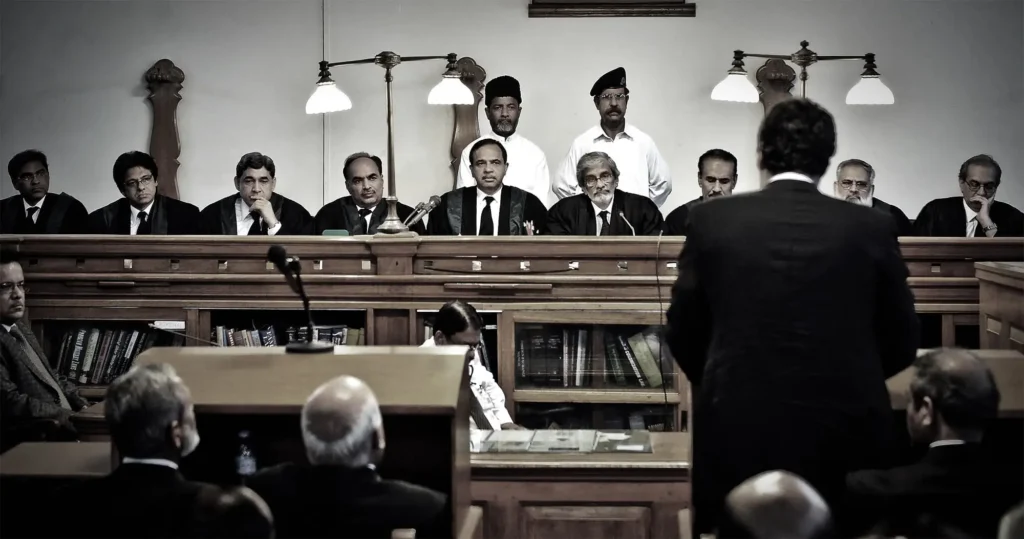
In international law, an accusation is not evidence. A state may not lawfully take diplomatic, political, or military action against another state based on the fact that the other state has relations with a non-state actor. The burden of proof for holding a state accountable is much greater. International jurisprudence, especially the decisions of the International Court of Justice, demands evidence that a state had “effective control” over the particular operation conducted by the group under review. The Nicaragua precedent “effective control” test continues to be one of the most robust tests for state responsibility. It is not enough to simply say that the state has an ideological sympathy, historical association, or geographical proximity.
The more general “overall control” standard, set by the International Criminal Tribunal for the former Yugoslavia, also demands significant evidence of operational direction and coordination. However, in the case of Pahalgam, India had publicly blamed Pakistan but failed to provide any concrete evidence that would be acceptable under international law. No transparent investigation was finished, no independent verification mechanism was activated, and no credible dossier was presented to international institutions before political accusations were amplified.
This is not an unusual trend. In the wake of the 2008 Mumbai attacks, Pakistan and India, despite being extremely hostile and distrustful, conducted some limited investigative cooperation. Pakistan captured suspects, launched legal action, and requested India’s cooperation for evidence. There was some recognition that criminal investigations do not need to be rushed or escalated, but rather evidence sharing, legal processes, and institutional engagement are required, although there was some disagreement about the pace and effectiveness of the process. That precedent proved that diplomacy and legal means could still operate in times of great tension.
By contrast, the current trend is toward the political level of accusation instead of the legal process. It is an extremely destabilizing policy for South Asia. The area is already beset by unresolved conflicts, militarized borders, and periodic crises driven by nationalist rhetoric. In this context, the early attribution has repercussions beyond diplomatic signalling. It fosters an environment of escalation as the norm, in which public pressure constrains political options, and in which strategic prudence is replaced over time by reactive decision-making.
The stance of Pakistan has always been that it is imperative to have an impartial investigation and evidence-based accountability. The attack was condemned by Islamabad, which expressed its willingness to cooperate with any credible international or bilateral investigative mechanism. This is in line with international standards and regional security needs. A state that is accused of being responsible should be given the right to a fair trial under international law, not be condemned by media trials and politically motivated stories before the facts are known.
The country’s frequent practice of quick fixes for attribution, unfortunately, seems to be increasingly linked to domestic political agendas. In recent years, the number of security incidents in disputed areas has been on the rise, and these incidents have been used to further nationalist sentiments and justify more aggressive stances towards Pakistan. This politicization of security crises provides incentives to escalate, not de-escalate. It also undermines the legitimacy of legitimate counterterrorism measures by making it difficult to differentiate between legal responsibility and political opportunism.
Most significantly, charges without evidence create a dangerous precedent for future crises. The whole structure of international law is at risk if suspicion is enough to justify retaliation or coercive action. The prohibition on the use of force in the United Nations Charter is in place just to avoid acting unilaterally on subjective claims. There is no justification for a cross-border force in rhetoric. It must be based on clear evidence, necessity, proportionality, and lawful justification.
The risks are especially high for South Asia. Pakistan and India are both nuclear powers, and their history shows how easily a local incident can turn into a war. The Balakot crisis of 2019 was a recent example of the risks posed by counterproductive responses in the context of conflicting narratives and incomplete information. To lower standards of evidence is not only irresponsible, but it is also strategically reckless in such an environment.
The Pakistani approach of restraint should not be taken as a sign of defensiveness. Instead, it is about the awareness that sustainable security in the region will not be achieved through politics of accusation. Institutional mechanisms, diplomatic communication, intelligence cooperation, and respect for international legal norms are needed to ensure stability. States have a responsibility to fight terrorism, and they should do so through credible investigations and multilateral cooperation, rather than blame campaigns in the media.
The international community is also responsible in this respect. External parties should not validate accusations before they are substantiated by an independent investigation. The acceptance of unverifiable claims undermines international legal standards and fosters unilateralism. Rules-based order must be upheld in all parts of the world, including South Asia.
Finally, the Pahalgam incident is not just a single incident of tragedy. It’s about the general relaxation of legal constraints on regional politics. If accusations take the place of evidence and political expediency takes the place of due process, then the potential for peaceful crisis management is reduced. No country in South Asia can afford a security situation where every incident is an excuse for an inter-state confrontation.
The demand for investigation, evidence, and restraint is thus not just a diplomatic stance, but a vital measure to prevent a future scenario where the security dynamics of the region are dictated by miscalculations instead of law.

Muskan Moazzam is a Research Associate/ Editor at the Institute of Strategic Studies Islamabad (ISSI).