The world geopolitical environment is in the midst of a major shift towards what analysts’ term as a shifting world order. The focal point of this shift is the development of alternative forms of diplomacy, primarily the “Board of Peace” of President Donald Trump. To Pakistan, a nation long bound to the directives of the United Nations, many avenues and existential dilemmas are involved in joining this new organization. Pakistan has to maneuver these dark angles to safeguard its national interests without compromising its moral and principled positions on Palestine and Kashmir.
The Logic of the Table: To Join or Not to Join?
The greatest and possibly the most important question that the Pakistani leadership had to face was whether to take part in the Board of Peace at all. Initially viewed as a tool to resolve the protracted Palestine-Israel dispute, the Board has become a rapid indicator of an expanded, more assertive agenda due to the influence of the US administration. It is always better to be at the table than not to be there at all. As the diplomatic saying goes that if you are not at the table, you are on the menu. Through its participation, Pakistan enjoys the privilege of having its voice heard, and through it, the voice of the Muslim world, during the stages of making decisions affecting the world. Nevertheless, Pakistan’s presence at the table is not a passive gesture but creates a new array of problems that must be addressed in a proactive and strategic manner.
The UN Dilemma: Complement or Replacement?
One of the main questions about the Board of Peace is whether it aims to eliminate or to weaken the United Nations. The UN system has been the foundation of the international agreement for over 80 years. The foreign policy of Pakistan, specifically on the Kashmir dispute, has almost been constructed on the resolutions of the UN Security Council.
The Board of Peace should be considered as an addition, not a substitute for the United Nations. The members of the Board are also members of the UN, and they have the tedious responsibility of ensuring that the actions of the Board do not contravene international law. In the case of Pakistan, the UN centrality should not be compromised. The move to give up the principled stand of the resolutions of the UN and adopt a new and perhaps biased platform might undermine the long-term legal and moral standing of Pakistan.
The Palestine Factor: A Test of Moral Integrity
The Palestine question is still a sensitive and political hot button among Pakistanis. As the pro-Israel hawks and Western billionaires have a massive leverage over the Board of Peace, Pakistan confronts a challenging task of keeping up its policy of non-recognition of Israel and playing a role in a peace process. The right to self-determination and a practical two-state solution is the only sustainable solution to Palestine. Any resolution that is enforced by the Board of Peace will not bear lasting stability. To overcome the bias in the board, Pakistan needs to coordinate closely with other Islamic countries such as Saudi Arabia, Turkey, Indonesia, Qatar, and Jordan. The Group of Eight Muslim countries in the Board should adopt a common stand so that the Palestinian cause does not suffer in the name of political expediency.
Kashmir: Principled Stance vs New Opportunities
The question arises before Pakistan whether the Board of Peace is or can be used as a platform to solve the Kashmir dispute. The long-standing policy of Pakistan, that Kashmir should be settled under the resolutions of the UN Security Council of 1947-48 is non-negotiable. Should the US administration seek to take Kashmir to the Board of Peace, Pakistan needs to keep the dialogue set on such resolutions. The platform, however, may present a rare chance of coercing India into an amicable dialogue. The non-membership of India in the Board of Peace and its declining regional power including poor relationships with its neighbors such as Bangladesh and Iran may actually increase the diplomatic power of Pakistan as a major stakeholder of South Asian stability.
Domestic Perception and the Need for Consensus
The domestic perception in Pakistan is one of the most crucial points when it comes to Board of Peace. The government has been criticized due to the lack of transparency in its engagement with the Board of Peace. Any foreign policy needs to meet the trust and approval of the people in order to succeed. Although not all sensitive matters of national security may be discussed in the open, they should be discussed in Parliament or closed-door meetings with the National Security Committee. Having opposition and the people in the loop is not only a democratic necessity but a strategic one. It makes sure that the actions of the government can be considered as both practical and principled instead of being perceived as a compromise of its values.
The Future of Pakistani Diplomacy
Pakistan is entering a phase of practicing diplomacy that hasn’t been this tough before. The dilemma is to become a peace-contributing stakeholder in the global arena where powerful interests prevail, and yet, keeping the domestic population satisfied that national principles remain intact. The Board of Peace is a new frontier. Whether it is going to be a path towards true conflict resolution or a way of imposing the will of the mighty is yet to be determined. In the case of Pakistan, the policy that must be followed is simple, i.e., stay at the table, coordinate with the allies, do not forget the value of international law and the fundamental values, that is, self-determination of the oppressed people and the sanctity of the United Nations. A pragmatic and at the same time principled approach to international affairs would help Pakistan to negotiate this evolving world order without losing its moral compass.
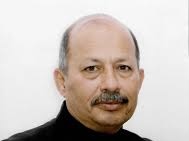
Ambassador Mansoor Ahmad Khan is a veteran diplomat and the Director of the BNU Centre for Policy Research, formerly serving as Pakistan’s top envoy to Afghanistan and Austria. Renowned for his leadership as Chairman of the UN Commission on Narcotic Drugs, he remains a key strategic analyst and a recipient of the Sitara-e-Shujaat for his service to the state.