Afghanistan’s Justice Ministry published Decree No. 18, titled “on judicial separation of spouses,” last week. The title is administrative. The content is not. Among its most controversial provisions, the decree states that the silence of a girl reaching puberty can be interpreted as consent to marriage. It also includes a section on the separation of girls who reach puberty and are married, which the United Nations Assistance Mission in Afghanistan said “implies that child marriage is permitted.” The Taliban government rejected the characterization, saying the decree follows Islamic law and that the country has already banned forced marriage of girls. Both statements can be simultaneously true and simultaneously inadequate. When silence equals consent and a father has the legal right to give his daughter’s consent, a ban on forced marriage becomes meaningless.
The decree also stipulates that a marriage can be ruled invalid “if a father or grandfather has given a minor girl or boy without any dowry, not enough dowry or obscene embezzlement.” This does not abrogate the right to child marriage. It only invalidates child marriage conducted without proper financial arrangements. The girl’s age is not the disqualifying factor. The dowry terms are. Under this decree, a child may be married off by the marriage authorizing father or grandfather and the marriage is recognized as long as it is financially viable. The framing as a separation law is deliberate misdirection. Its operational impact is the legal framework of child marriage enshrined in a national law.
The United Nations “gravely concerned” that the code reaffirms discrimination against women and girls, and that the decree functions in a “deeply unequal framework” whereby men alone have the right to divorce while women must take “complex and restrictive judicial processes” to end their marriage. That last phrase carries specific medical weight. A peer-reviewed study published in BMC Public Health revealed that in Afghanistan, women who were married as minors had significantly higher neonatal and infant mortality rates. According to UN analysis, by 2026, restrictive education policies and laws on marriage will result in a 45% rise in early childbearing, and up to a 50% rise in maternal mortality. Afghanistan already has one of the highest maternal mortality rates in the world. Decree No. 18 will not improve that figure.
A Pattern, Not an Incident
After seizing power in 2021, the Taliban announced certain limited rights for women, including the right to an inheritance and to refuse marriage. However, successive decrees have undermined these protections, UNAMA confirmed, and the myriad restrictions imposed by the government have deprived millions of Afghan women and girls of their rights. That observation is not new. It is a documented pattern spanning five years. Each decree arrives with language that sounds, in isolation, like governance. Each decree, in context, removes another layer of legal protection from the women and girls it claims to regulate.
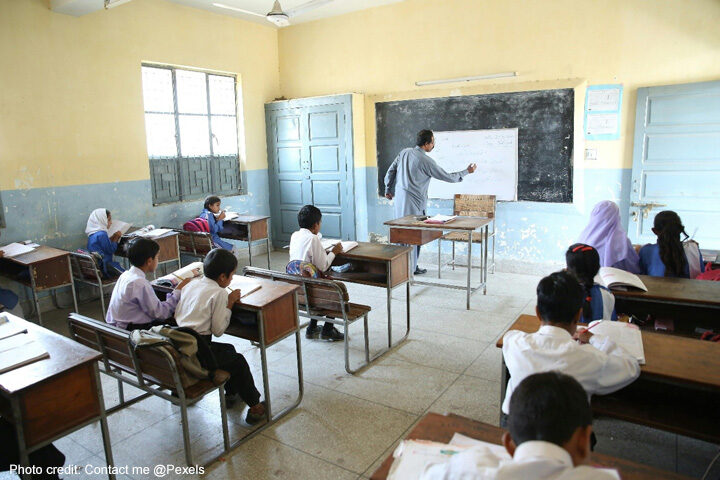
The Penal Code of January 2026, signed on 7 January by the Supreme Leader and applied immediately throughout the country, contains 119 new articles of criminal regulation, in addition to a very strict legal framework. In April 2026, a UNICEF analysis estimated that, if the restrictions persisted, more than 25,000 skilled female professionals would be out of jobs in Afghanistan by 2030, making the education-to-workforce pipeline essentially dead. Decree No. 18 adds to a legal framework that controls Afghan girls from childhood through marriage through the end of their reproductive lives. They cannot attend secondary school. They are not able to work in most industries. They cannot leave the house without a male guardian. And now, their silence at puberty is sufficient legal consent for marriage.
UNICEF data shows that 29% of Afghan girls were married before age 18 as of 2023, down from 46% in 1998, a reduction achieved through years of targeted programming and legal reform that the Taliban has been systematically dismantling since 2021. It is most prevalent in the provinces of Ghor (49-50%), Farah, Nimroz, and Faryab. Decree No. 18 does not create child marriage in Afghanistan. It formalizes it. It provides a legal tool for fathers and grandfathers to make the transfer of a girl’s marriage virtually impossible to challenge. The girl cannot object. Her silence is her agreement.
The global community has reacted strongly to each of the Taliban’ decisions, expressing grave concern. Nothing has happened in 5 years that has led to a change in policy based on those statements. The decrees continue to come. The restrictions continue to get tighter. Decree No. 18 does not deviate from the trend. It is the pattern, written into law one more time.

Our Editorial Desk is the intellectual engine of Digital Debate, responsible for the rigorous research that anchors every conversation. Our team deep-dives into data, checks every source, and consults academic literature to move beyond headlines and identify the questions behind the questions.