Pakistan’s fuel prices crossed a line this week that most people feared, but no one was fully ready for. Petrol is now priced at Rs458.41 per litre, and high-speed diesel at Rs520.35 per litre, an increase of Rs137.23 per litre and Rs184.49 per litre, respectively. These are not incremental adjustments. It is a transformation of the state’s pricing of energy to its citizens, and it requires an objective assessment of what led it to this point.
The direct stimulus is the Middle East war. On February 28, the United States and Israel jointly attacked Iran, which disrupted the global energy and oil markets. In its retaliation, Tehran succeeded in blocking the Strait of Hormuz, one of the major shipping routes, and attacked oil refineries in the Gulf. This was not an abstract geopolitical event for Pakistan. The Middle East supplies 70% of all the petrol in Pakistan. The Strait of Hormuz blockade also caused the price of high-speed diesel to go up by 88 to 187, and the price of petrol to go up by 74 to 130. Dawn With 80% of the energy sources purchased in Dubai and Oman markets, the petroleum minister informed the reporters that the price of crude oil and diesel had reached the point of over $250 per barrel.
The government did not move immediately. On March 6, Pakistan first declared that it will raise the price of petrol and diesel by 55 per litre. The federal government, however, maintained the prices of petroleum products to remain constant in the last three weekly reviews. That pause cost money. The federal government has spent Rs129 billion since March 1 to protect the people, while arrangements for alternative energy supply lines also had to be made due to the disruption of traffic in the Strait of Hormuz.
Why the Blanket Subsidy Had to Go
The move by the government to withdraw the across-the-board fuel support was not merely a policy choice. It was the culmination of three compounding pressures fiscal depletion, IMF commitments, and the arithmetic of a subsidy that was growing too expensive to maintain.
Pakistan has promised the International Monetary Fund that it will directly transfer the international price increment to consumers. This is accompanied by a significant reform to create specific subsidy mechanisms to cushion vulnerable populations against the ensuing financial shock. The IMF condition is not new. Pakistan’s engagement with the Fund under its Extended Fund Facility has consistently flagged blanket energy subsidies as a source of fiscal imbalance. The International Monetary Fund has urged Pakistan to increase the fuel prices in the event that no further savings can be found to sustain the current prices, with inflation last month soaring to an almost one-and-a-half-year high of 7.3% due to rising fuel, electricity, and gas prices.
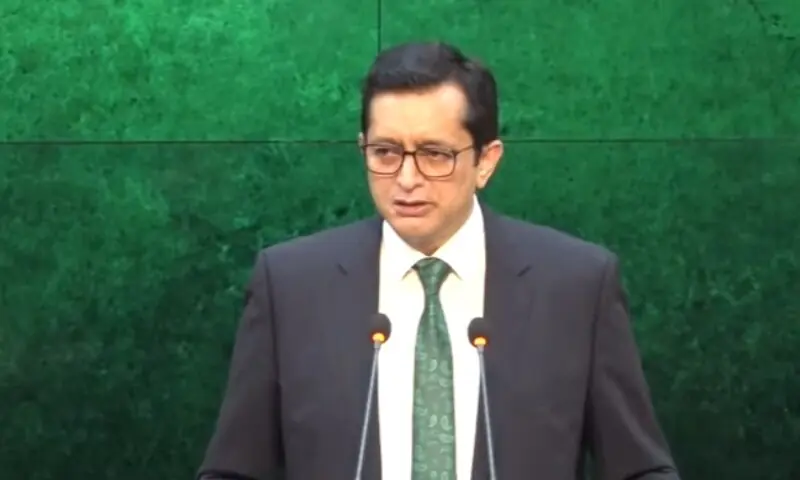
The political logic of a blanket subsidy, to provide everybody with cheaper fuel regardless of income, is easy to grasp. Its economic cost is harder to absorb. The finance minister cited the fiscal constraints and international obligations of Pakistan. He said that the economic stability of the country could not be endangered. Therefore, the decision was made to abandon the blanket subsidy and target relief to the weak segments that required it.
The Targeted Alternative
In place of the blanket cover, the government has announced a layered relief package. Motorcyclists will be subsidized at Rs100 per litre of up to 20 litres of petrol per month. A subsidy of Rs 100 per litre on diesel will be given to intercity public transport. There will be a subsidy of Rs 70,000 per month on fuel for trucks and goods transport. Railways will also have a subsidy from the government so that fares are controlled.
The delivery mechanism is a mobile application. The proposal is a complete, automated, quota-driven fuel delivery system controlled by mobile applications among consumers and retail operators. Retailers will have a free, pre-installed application, and consumers will have a different application. A minimum of two mobile devices will be needed to operate the system in each fuel station.
The concept is sound in principle. Digital targeting prevents subsidy leakage and focuses state money on those who need it most. But execution is where such schemes have failed to perform in the past in Pakistan. The app-based model presupposes national digital literacy, the consistent presence of the internet at petrol stations, and the existence of a NADRA-related vehicle registration database with a minimum number of mistakes. None of these conditions is uniform across the country.
Transport costs were the first to shoot up by 12.5% year-on year to 0.4% the month before, and housing and utilities increased to 11.5% to 9.7%. Monthly CPI increased by 1.2%, four times higher than the 0.3% increase in February. These figures will continue to deteriorate before stabilizing. Any truck that carries food, any rickshaw that carries a worker, any motorcycle that carries goods, is more expensive today than it was last week.
This has earned the government some credibility with the IMF and allowed it to maintain macroeconomic stability in the short run. But credibility with a multilateral lender does not fill a motorcycle tank, nor does it lower the operating costs of a truck driver. The targeted subsidy is the right idea. The app-based delivery system is the right tool. What remains untested is the government’s capacity to execute both at speed and at scale, across 12,000 petrol stations, in a country where digital infrastructure is still uneven. In case of slow or exclusionary rollout, the individuals who this policy was supposed to safeguard will be left to shoulder the entire burden of price shock that they had not contributed to.

Our Editorial Desk is the intellectual engine of Digital Debate, responsible for the rigorous research that anchors every conversation. Our team deep-dives into data, checks every source, and consults academic literature to move beyond headlines and identify the questions behind the questions.