The state of football in Pakistan has been referred to as a sleeping giant over the decades. With a population exceeding 240 million, a youth-heavy demographic, and an organic passion for the sport that rivals its obsession with cricket, the potential has always been there, buried under layers of administrative instability and a lack of infrastructure. However, the tide has turned. The world’s footballing elite, FIFA, led by Chief of Global Football Development Arsene Wenger and President Gianni Infantino, sent a resounding message at the 2026 World Economic Forum (WEF) in Davos that Pakistan is no longer an afterthought. It is the next frontier.
Academies are the Missing Link
The defining feature of Arsene Wenger during his tenure as the “Professor” at Arsenal was his sense of talent in uncovering raw talent and nurturing them. He is now the architect of the FIFA Global Football Development, and his professional eyes are focused on South Asia. Wenger did not merely give hope in an interview at Davos 2026; he provided a diagnosis. The first step, as he called it, lies in the institutionalization of youth academies.
The FIFA Talent Development Scheme (TDS) is the basis of Wenger’s philosophy. He argues that talent is evenly spread throughout the world, but not opportunities. In the case of Pakistan, the missing link has been a structured pathway between the ages of 12 and 16, the golden age of technical development. Wenger’s suggestion of relating FIFA-trained coaches and forming elite academies in Pakistan shows a pathway to the country’s football development. This will substitute the contemporary street-to-stadium model, which is based on luck, with a school-to-stadium model, which is based on science.
The Futsal Victories
Although the traditional full-field national team has always struggled in FIFA rankings, the latest success of Pakistan in Futsal offers a compelling look into the untapped potential of the country. Recent wins in regional Futsal tournaments in Pakistan indicate a significant technical fact that Pakistani players have demonstrated outstanding close control, decision-making skills, and agility.
Futsal is the best environment to develop excellent ball-handling skills, as the small pitch makes the player think and move very fast. The success of the Shaheens shows that children in such areas as Lyari, Quetta, and Lahore already possess natural talent. The idea is to carry these rapid skills gained on small courts and educate players on how to apply them in a full-sized field. When Pakistan can merge this natural talent and professional coaching, the nation will soon emerge as a key player in the sport.
A Great Football Country
The diplomatic nature of the words of FIFA President Gianni Infantino, Davos 2026, cannot be overstated. Infantino declared Pakistan a great football country and promised to visit Prime Minister Shehbaz Sharif, marking a clear end of isolation of Pakistan at football regime. This development comes after FIFA officially lifted the suspension of the Pakistan Football Federation (PFF).
Infantino wants Pakistan to be the top in Asia. It is a grand objective, though with current achievements behind it. The men’s team back in 2023 made it to the headlines around the world as they won their first-ever FIFA World Cup qualifier against Cambodia, and the women’s team has achieved historic breakthroughs when they entered the FIFA women world cup qualifying cycle. These are no longer participating trophies; they are a demonstration of the idea.
From Dust to Turf
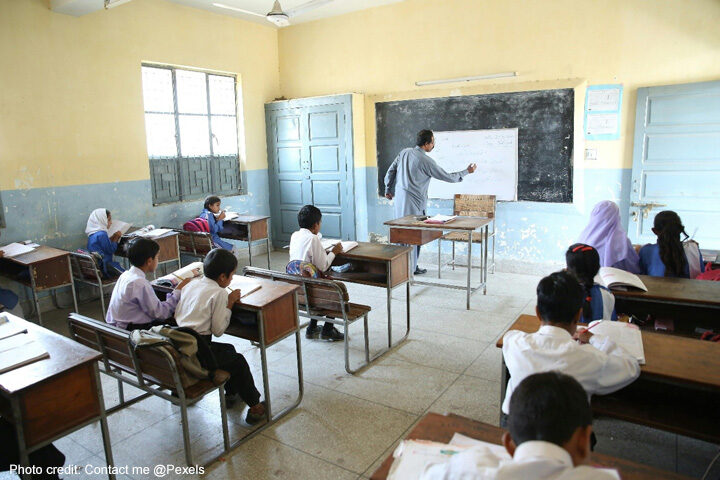
Potential remains a theoretical concept without modern turf. The PFF’s move to introduce “FIFA Arena Mini Pitches” in major cities and the “FIFA Football for Schools” program is a direct response to the lack of facilities. The federation is accomplishing this by essentially seeding the ground by distributing 150,000 footballs and reaching over 300,000 students in 300 schools.
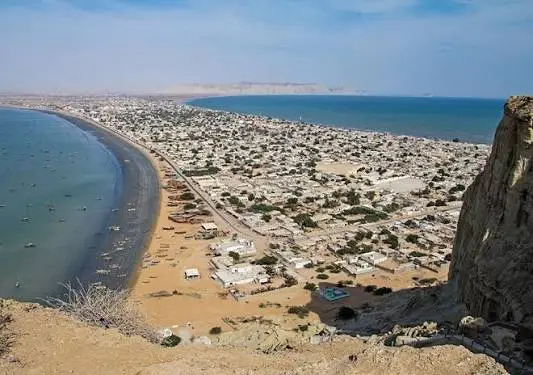
It aims to make sure that a child in a rural area of Khyber Pakhtunkhwa or a town on the coast of Balochistan will have equal access to a FIFA-quality coach as a child in London or Paris would. When children begin playing outdoors in an organized setting with what Wenger referred to as creativity and freedom, the outcome is unpredictable excellence.
The Road Ahead: 2026 and Beyond
It is a marathon, not a sprint, towards the summit of Asian football. Pakistan still faces challenges, a domestic league that needs commercial viability, a need for more AFC-licensed local coaches, and the continuous requirement for government-federation synergy. Nevertheless, the world is looking at Pakistan with anticipation, rather than pity, for the first time in history. Pakistani raw talent has caught the attention of FIFA officials, with the new generation of Futsal players supplying the talent; thus, Pakistan is set to rewrite its sporting history. The magic instrument, as Infantino called the football at Davos, is now in Pakistan’s court.

Our Editorial Desk is the intellectual engine of Digital Debate, responsible for the rigorous research that anchors every conversation. Our team deep-dives into data, checks every source, and consults academic literature to move beyond headlines and identify the questions behind the questions.