The war in the Gulf has created a strategic test for Pakistan. Islamabad is being asked to do something more difficult than simply “take a position.” It must preserve access to Washington, maintain working channels with Tehran, reassure Riyadh and other Gulf capitals, and avoid being dragged into a conflict whose costs would not remain confined to the Middle East.
This is why Pakistan’s mediation matters. It is mediation by a state that sits at the intersection of several overlapping vulnerabilities: a long border with Iran, deep defense and economic ties with Saudi Arabia and the Gulf Cooperation Council (GCC) states, a large expatriate population in the Gulf, improving ties with President Trump, and chronic energy insecurity. For Pakistan, the Gulf war is not a distant geopolitical event. It is a crisis unfolding at the edge of its own strategic geography.
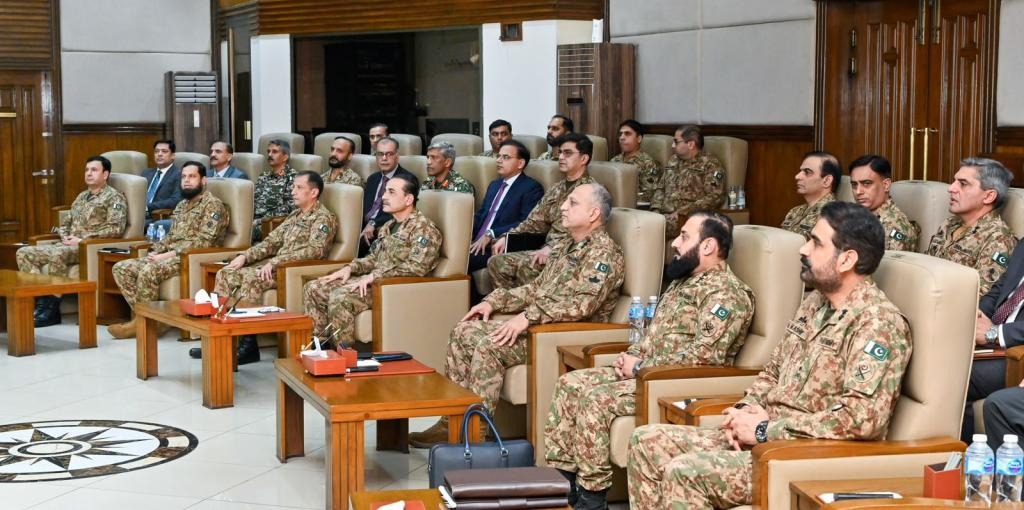
Recent diplomatic activity has reflected this urgency. Pakistan has positioned itself as a facilitator of dialogue between Tehran and Washington, with high-level political and military engagements demonstrating Islamabad’s interest in regional de-escalation. The key sticking points remain familiar but dangerous: Iran’s nuclear program, the future of sanctions, control and access around the Strait of Hormuz, and guarantees against future attacks.
The question is not whether Pakistan can “solve” the Gulf war. It cannot. No mediator can impose a settlement on parties that still believe coercion may produce better outcomes than compromise. The more serious question is whether Pakistan can help create diplomatic space before the war hardens into a new regional order built entirely around militarized containment, maritime coercion, and retaliatory strikes.
Islamabad’s Comparative Advantage
Pakistan’s comparative advantage lies in access, not leverage. It cannot dictate terms to Tehran or Washington, nor can it speak on behalf of the GCC. What it does have is the ability to remain in conversation with all of them in ways that few other actors can. Pakistan has a functional relationship with Iran despite recurring border tensions. It has long-standing defense, labor, religious, and financial ties with Saudi Arabia and the wider Gulf. It retains military and diplomatic channels with the United States. It also has a strategic relationship with China, which has become increasingly relevant in Gulf diplomacy. This does not make Pakistan a perfect mediator but a useful one.
Mediation in crises is rarely about moral purity. It is about whether a state has the channels, credibility, and strategic literacy to carry messages others cannot. Pakistan’s history matters here. Islamabad has previously acted as a quiet channel in major diplomatic openings, most famously in the U.S.–China rapprochement of the early 1970s. That history cannot simply be reproduced today, but it offers an important diplomatic memory: Pakistan has often been most relevant when it has been able to communicate across rival camps without fully belonging to any one diplomatic script.
In the current Gulf crisis, Pakistan can tell Tehran what many may hesitate to say directly, that escalation in the Gulf will not produce strategic security for Iran. It will deepen isolation, harden GCC threat perceptions, increase militarization, and further complicate any future political settlement. At the same time, Pakistan can tell Washington and Gulf capitals that no sustainable regional order can be built solely through punishment, deterrence, and military pressure.
The GCC Dimension
Pakistan’s mediation cannot be understood outside of its GCC relationships. For decades, Pakistan’s Gulf policy has rested on a delicate bargain. The Gulf has provided employment, remittances, energy, investment, and financial support during moments of Pakistani economic stress. Islamabad, in turn, has provided military training, manpower, strategic reassurance, and political solidarity. This relationship is especially deep with Saudi Arabia, but it extends across the Gulf in different forms.
The 2025 Saudi-Pakistan Strategic Mutual Defense Agreement formalized a security relationship that had long existed in practice. The pact deepened decades of defense cooperation, building on earlier military arrangements and Pakistani deployments to the kingdom. The agreement has also created new expectations. In a direct Iran–Saudi confrontation, Pakistan would face far sharper pressure than in previous crises to demonstrate that its security commitments have substance.
This is where Pakistan’s balancing act becomes most difficult. Islamabad cannot afford to alienate Riyadh, but it also cannot risk open hostility with Tehran. Iran is not only a regional actor; it is Pakistan’s neighbor. The Pakistan–Iran border has its own security challenges, including militancy, smuggling, refugee flows, and cross-border mistrust. A prolonged rupture with Iran would have direct consequences for Pakistan’s western frontier, exacerbating existing instability linked to Afghanistan. Therefore, Pakistan’s Gulf policy is not a simple choice between Iran and the GCC. It is an attempt to prevent that choice from becoming unavoidable.
This is also why Pakistan must be careful in how it frames its mediation. If Islamabad appears too close to Tehran, it risks unsettling Gulf partners who already view Iran as a systemic threat following attacks on infrastructure, maritime routes, and civilian areas. If it appears too closely aligned with the GCC and Washington, it loses whatever credibility it has in Tehran. Its diplomatic utility depends on remaining trusted enough by all sides.
The Strait of Hormuz and the Limits of Crisis Management
The Strait of Hormuz has turned the Gulf war into a global economic crisis. The Strait is a strategic artery through which energy security, food imports, shipping insurance, and global inflation all pass. Iran’s proposals to manage or toll passage through the Strait have generated strong opposition from Gulf states and the United States, while Gulf officials have warned against politicizing the waterway.
For Pakistan, any disruption to the Strait affects oil prices, import bills, inflation, and the economic stability of a country already operating under severe fiscal constraints. A prolonged Gulf war would affect Pakistan through higher energy costs, remittance vulnerabilities, shipping risks, and the safety of millions of Pakistanis living and working in GCC countries. This is why Islamabad’s mediation is driven as much by economic realism as by diplomatic ambition.
What Pakistan Can Realistically Do
Pakistan should not oversell its role. The worst mistake for Islamabad would be to confuse facilitation with authorship. If a ceasefire emerges, Pakistan may have helped create the channel, but the durability of that ceasefire will depend on whether the principal actors are willing to accept restraint as strategy. Pakistan can realistically do four things. First, it can keep communication open when formal diplomacy stalls. In crises, the absence of communication can be more dangerous than disagreement. Pakistan can serve as a conduit for clarifying intentions, testing proposals, and reducing the risk of miscalculation.
Second, it can encourage a distinction between ceasefire and settlement. A ceasefire may stop immediate violence, but it cannot resolve the deeper drivers of conflict: Iran’s nuclear program, Gulf security fears, Israeli military action, sanctions, proxy networks, and the future of U.S. force posture in the region.
Third, Pakistan can urge that Gulf states be treated as central stakeholders, not as collateral participants. Any arrangement that discusses Gulf security without Gulf buy-in will remain fragile. The GCC states have paid direct costs in this war and will not accept a diplomatic framework that treats their infrastructure, airspace, and maritime security as bargaining chips.
Fourth, Pakistan can help widen the diplomatic table without making it unmanageable. A durable political process will require some combination of U.S.-Iran engagement, Gulf participation, and support from influential external actors, including China. Pakistan’s value lies in helping these tracks speak to each other.
A Narrow Path Forward
Pakistan’s role in the Gulf war should be understood through the language of strategic necessity. Escalation threatens Pakistan’s economic stability, risks destabilizing its western frontier, and places Islamabad in the difficult position of managing ties with Iran, the GCC states, China, and the United States simultaneously. Its meditation reflects an attempt to prevent those competing pressures from becoming strategically unmanageable.
The danger is that the war may be pushing the region toward a harder security architecture in which mediation is tolerated only as a temporary pause before the next military round. If that happens, Pakistan’s space will shrink. Gulf states will prioritize deterrence, Iran will deepen its siege mentality, the United States will remain militarily embedded in the region, and Israel will continue to shape the regional battlefield. Pakistan will be left managing the spillover of a conflict it did not create but cannot escape.
The opportunity, however, is that Pakistan’s mediation can still help prevent the region from sliding into permanent confrontation. Islamabad cannot deliver peace by itself, but it can help keep diplomacy alive long enough for others to recognize that the alternative is not victory. It is a wider war, a fractured Gulf, and a regional order built on perpetual crisis. For Pakistan, the stakes could not be clearer. A stable Gulf is not a foreign policy preference. It is a national security imperative.

Dr. Rabia Akhtar is a leading Pakistani security analyst, author, and Dean of Social Sciences at the University of Lahore. She is the author of the definitive book The Blind Eye: U.S. Non-proliferation Policy Towards Pakistan from Ford to Clinton. An expert on nuclear risk reduction and non-proliferation, she maintains fellowships at Harvard's Belfer Center and the Atlantic Council, and advises global security forums on strategic stability in Southern Asia.