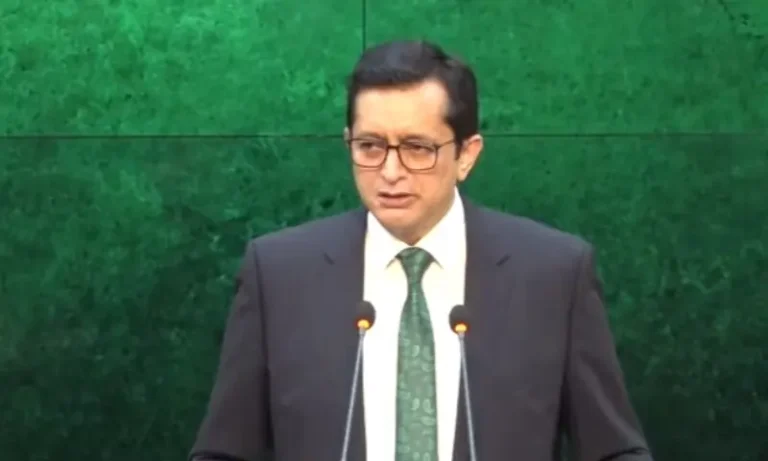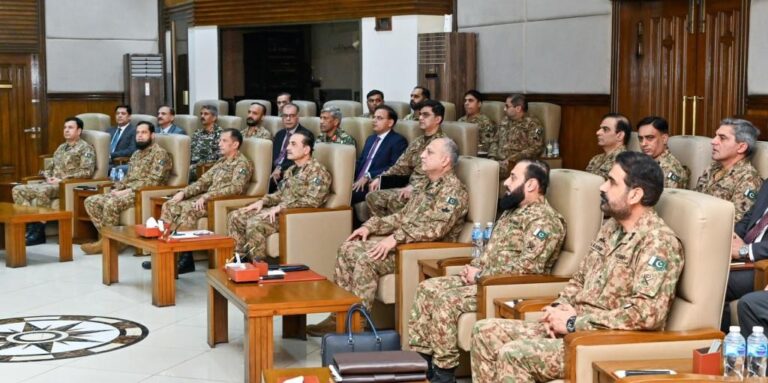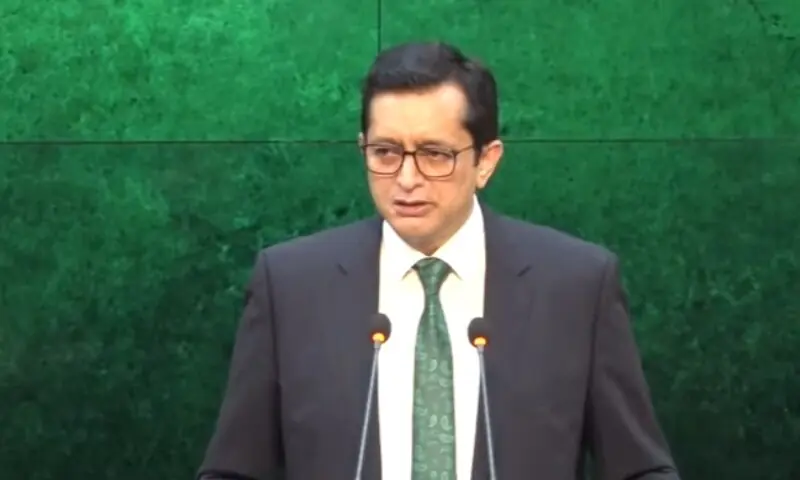
On April 22, 2026, the China Manned Space Agency made an announcement that had never been made before. Two Pakistani candidates had been chosen to be the first foreign astronauts to train on China Space Station missions, one of whom would become the first Pakistani to launch into orbit. The announcement was not just a milestone for Pakistan. It was a statement about how China intends to use its space programme as an instrument of strategic partnership, and about which country it chose to make that statement with first.
The China Manned Space Agency called the choice of Pakistani astronauts as a breakthrough in the Chinese history of the space industry. That is not routine diplomatic language. China has a disciplined and planned space programme. When Beijing calls something a landmark, it means the decision carries weight beyond the immediate announcement. The fact that Pakistan was selected as the first foreign ally in the astronaut programme of China indicates that the bilateral relationship between the two has gone far beyond infrastructure financing and trade routes to the point of something more sustainable.
The partnership is founded upon an Astronaut Cooperation Agreement signed in February 2025, according to which two Pakistani astronauts would have been trained in China. China selected Pakistan as the first foreign collaborator in its astronaut programme. The selection process was rigorous. Both candidates went through several processes of selection and will be going to China to undergo training in spaceflight as backup astronauts. One of them will be a payload specialist on a Shenzhou mission, where they will perform scientific work in microgravity, and the mission is scheduled to launch by the end of 2026.
The scientific agenda for the mission is specific and practical. The selected astronaut will carry out experiments covering material science, fluid physics, life sciences, and biotechnology, with potential applications in climate resilience, food security, and industrial innovation. These are not abstract research categories. To a nation that must cope with the twin pressures of climate stress and food insecurity, information generated by microgravity experiments in these arenas has direct national implications.
The Architecture of a Deeper Partnership
This mission does not stand alone. It sits at the top of a cooperation structure that Pakistan and China have been building for years. In 2023, Pakistan became a part of the International Lunar Research Station project led by China. In 2024, a Pakistani CubeSat was launched alongside the Chang’e-6 mission and performed lunar reconnaissance. Pakistan is also expected to take part in the future Chang’e-8 mission. The selection of astronauts signifies a transition in which cooperation was no longer based on satellite and lunar missions, but on human spaceflight. That is a massive increase in the scope and intricacy of the partnership.
The Tiangong space station is the first platform of this type that China has opened to all member states of the United Nations. China has selected scientists from 17 countries, including Switzerland, Poland, Germany, and Italy, to conduct experiments onboard. But conducting experiments remotely is different from sending a human being. The Pakistani candidate will embark on a flight mission as a payload specialist and be the first foreign astronaut to visit the China Space Station. That distinction matters enormously, both symbolically and strategically.
According to the human spaceflight programme of China, it will keep its doors open to allow active involvement of all nations in scientific experiments, technological testing, and astronaut selection and training to share with humanity the knowledge of the universe. That framing places Pakistan’s participation within a broader vision of multilateral space cooperation centered on Beijing.
According to SUPARCO, the development was a big stride in the space exploration process in Pakistan and placed the country in the same bracket as countries that actively participate in the human spaceflight programmes. That group is small for a reason. Human spaceflight requires political trust, technical capacity, and a partner willing to invest in your participation. Pakistan now possesses the three. This late-2026 mission, assuming that it is operational at the right time, will place Pakistan in a highly exclusive group of developing countries to have a national serve as a crew member of a crewed space station mission as part of the host country programme.

Our Editorial Desk is the intellectual engine of Digital Debate, responsible for the rigorous research that anchors every conversation. Our team deep-dives into data, checks every source, and consults academic literature to move beyond headlines and identify the questions behind the questions.