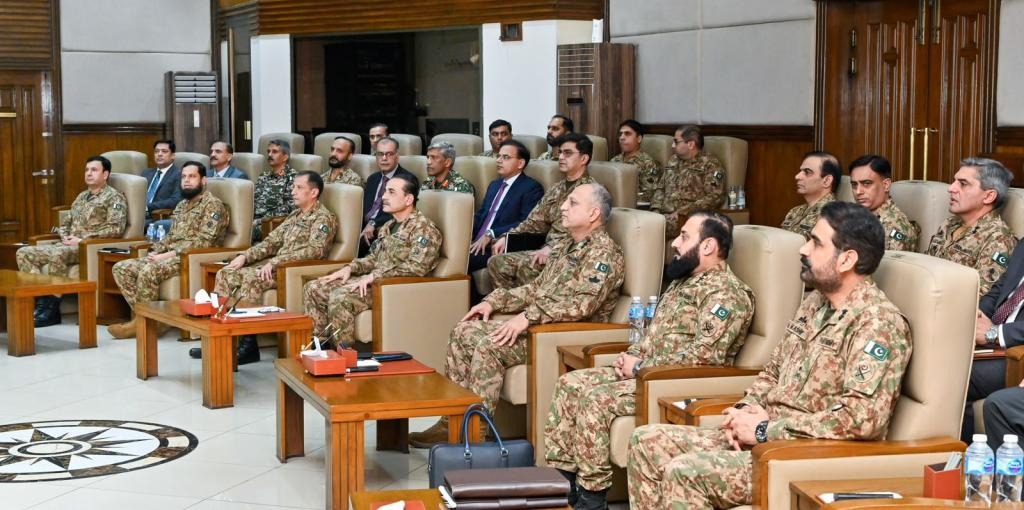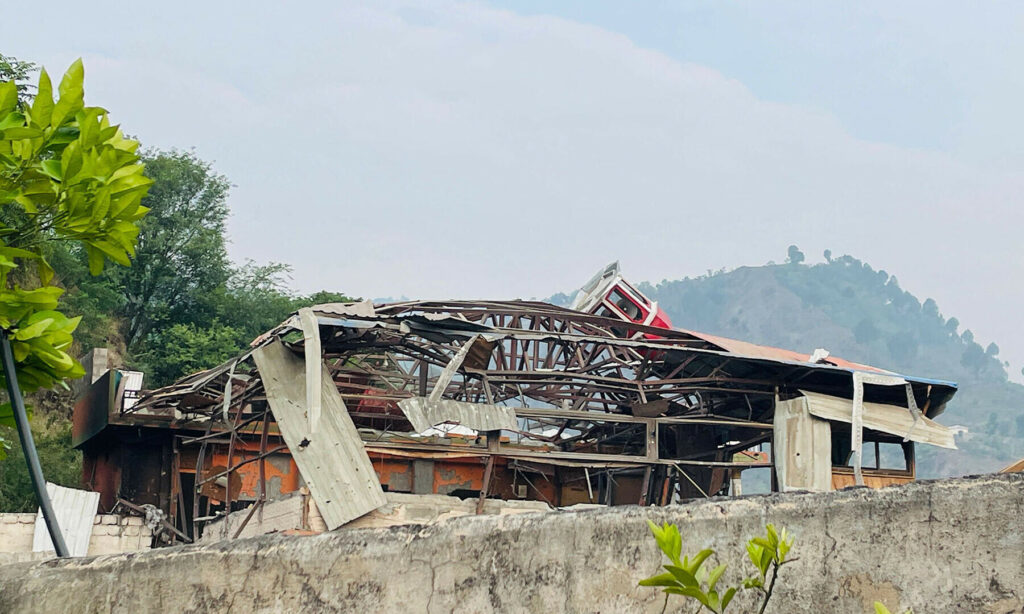
The recent string of suicide bombings shattering the peace in Islamabad, Bajaur, and Bannu marks a ruthless escalation of violence that the state can no longer ignore. These attacks have taken the lives of innocent people and pushed Pakistan to the limit, from the quiet corners of the capital to the volatile lands of the border areas. The incidents are a sad reminder that the danger is neither latent nor distant; it is a moving, organized, and widespread threat across the western border.
Pakistan has found itself at a very crucial crossroads with the conclusive evidence that these atrocious actions were carried out by the Khwarij, a term that is used by the state as an official term describing people who have lost their way due to Islamic extremism and the murder of fellow Muslims. These militants are acting on command of a leadership and handler network rooted in Afghanistan. The claims of responsibility by the Afghanistan-based Pakistani Taliban, recently designated as Fitna al Khwarij (FAK), their various affiliates, and the Islamic State of Khorasan Province (ISKP), leave no room for ambiguity. The Afghan soil has once again become a sanctuary of global and regional jihad.
The Failure of the Kabul Regime
Pakistan has been adhering to a policy of maximum restraint for over two years, engaging in diplomatic talks and top-level dialogue with the Interim Afghan Government (IAG). These strikes are the logical continuation of dozens of demarches and innumerable diplomatic protests that have been raised by the Ministry of Foreign Affairs (MoFA) of Pakistan to the Taliban. In the same manner, numerous border flag meetings were conducted to discuss security issues, but the Taliban never agreed to change their policy, destroy sanctuaries, and recognize the magnitude of violence across borders.
The government of Kabul resolved to permanently shut the border with Pakistan following the border conflicts last year, but the export of terrorists saw no halt. When the ultimate duty of a state, which is the safety and security of the country, is under threat by external actors shielded by a neighboring state that refuses to engage in good faith, the transition from diplomacy to kinetic action becomes an inevitable necessity of national defense.
The Retributive Response
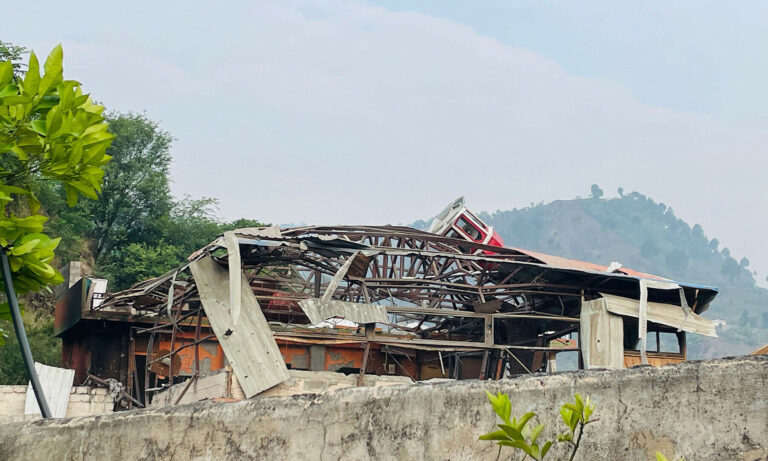
Pakistan has just undertaken targeted punitive air strikes on the hideouts of Khwarij in Afghanistan, Paktika and Birmal, responding in a calibrated and retributive manner to the heinous terrorist attacks in Bajaur and Bannu. These targeted and accurate strikes were not an aggression towards the state of Afghanistan or its citizens. Instead, they were a surgical excision of cancerous lumps that had been causing terror in Pakistani cities.
By hitting these particular hideouts, Pakistan has delivered a clear message that it is working towards regional peace and stability, but its sovereignty is not part of the bargain. The sanctuary that the Khwarij has been enjoying is no longer viable. The accuracy of such attacks highlights the high intelligence capacity level and the reluctance to cause collateral damage, but maximum damage to terrorist facilities.
Al-Qaeda and the Multipolar Jihad
The tragedy of the current situation is that it does not exist in a vacuum. Recent news, such as warnings by United Nations monitoring teams, indicates that the Taliban patronage is beyond the FAK and ISKP. The IAG still promotes the reconstitution of its operational capabilities under the protective umbrella of Al-Qaeda, the predecessor of modern global jihad, and the Taliban leadership.
This multipolar global jihad is a nightmare for regional security. A report by the UN 1267 Committee points to a terrifying fact that the Taliban are not only not preventing terrorism, but they are overseeing a resurgence of extremist organizations. This places the plight of Pakistan as the frontline of a far greater battle on a global scale.
Safety First and Foremost
The position of Pakistan is still anchored on the principles of peaceful coexistence, but Afghanistan should learn that patience has a limit. Islamabad’s message is now clear-cut that the safety and security of the people of Pakistan come first. The interim Afghan government should understand that the road it is taking will result in complete isolation. They would not only be assisting Pakistan by refusing to allow the use of their soil to the Khwarij and Al-Qaeda, but they would be protecting their own future, too.
Until then, Pakistan is ready to protect its borders. The precision of the Birmal strikes was a warning. The Khwarij must find no quarter, and their handlers must realize that the cost of their proxy war has just become prohibitively high.

Our Editorial Desk is the intellectual engine of Digital Debate, responsible for the rigorous research that anchors every conversation. Our team deep-dives into data, checks every source, and consults academic literature to move beyond headlines and identify the questions behind the questions.