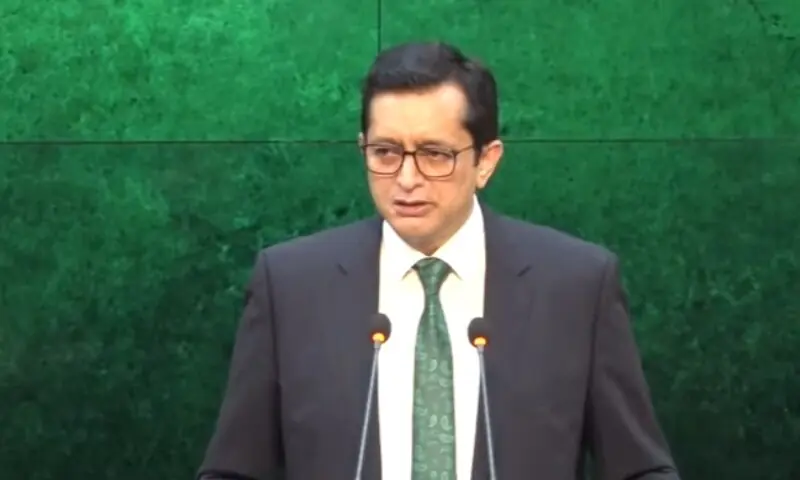
On June 1, 2026, the European Union’s High Representative for Foreign Affairs, Kaja Kallas, arrived in Islamabad to co-chair the 8th Round of the EU-Pakistan Strategic Dialogue with Pakistan’s Deputy Prime Minister and Foreign Minister. The visit was the most senior from the European Union in years and comes at a time when Islamabad’s diplomatic influence has risen significantly in decades. The outcome of the dialogue was a joint communique that discussed bilateral trade and cooperation on climate change and human rights. It also discussed Kashmir, Palestine and Afghanistan.
On Kashmir, the joint communique noted that Pakistan briefed the EU on the issue of Jammu and Kashmir, and both sides reiterated their commitment to solving conflicts through dialogue and diplomacy in line with the principles of the UN Charter. The framing matters. Kashmir was placed in the same sentence as Russia’s war against Ukraine, with both described as conflicts requiring peaceful resolution. For Pakistan, that parallelism is a diplomatic win. It elevates Kashmir to a status of international conflict and not a bilateral escalation. For India, it was intolerable.
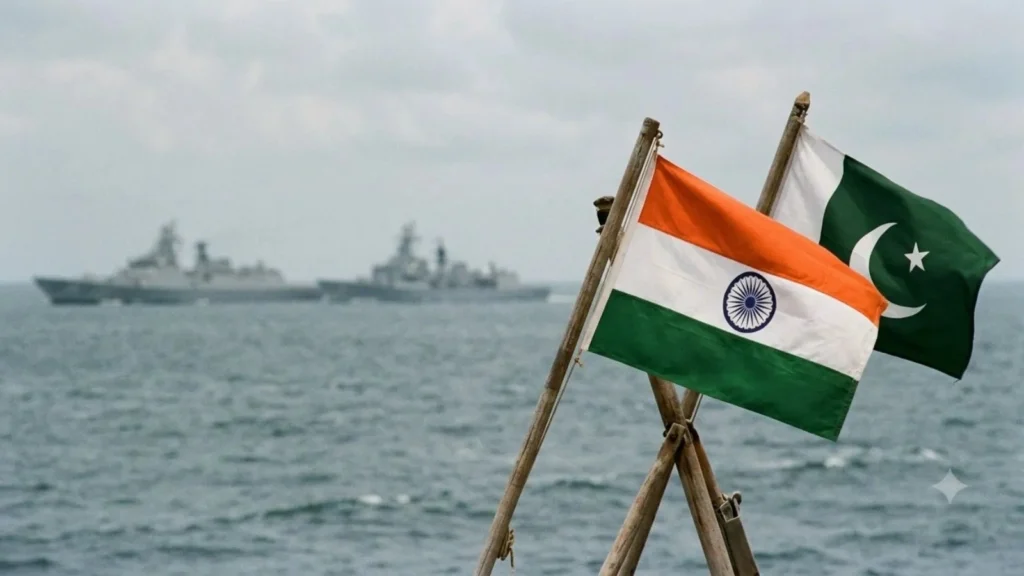
India’s Ministry of External Affairs rejected the communique’s Kashmir references as “unwarranted,” asserting that Jammu and Kashmir and Ladakh are integral and inalienable parts of India and that neither Pakistan nor the EU has any locus standi to comment on India’s internal matters. That is standard New Delhi language, used whenever any other nation’s joint statement references Kashmir. What makes the June 1 instance different is that it came from the European Union, not from China or Turkey. The EU is one of India’s most important trade partners and a strategic partner it has been courting for years. The fact that a Brussels communique has included Kashmir in the same paragraph as Ukraine as a “conflict which should be resolved according to the UN Charter” is a qualitatively different diplomatic blow, when compared to Beijing.
Palestine, Afghanistan, and What Europe Said to Both
The communique reiterated support for a two-state solution based on international law, urged the cessation of illegal settlement construction in the West Bank and called for unhindered humanitarian access to Gaza on Palestine. This is consistent EU language on Gaza, but its inclusion in a Pakistan-EU communique gives it an additional weight, placing the EU and Pakistan on the same side of a position that both India and Israel formally resist. The mentioning of Palestine holds the same importance for Pakistan’s foreign policy messaging as the mentioning of Kashmir. It puts Pakistan’s claims on both disputes in a co-signed European context rather than just as a unilateral Pakistani claim.
The communique also expressed serious concern over the presence of terrorist entities in Afghanistan, reiterated that Afghan territory must not be used to threaten or attack other countries, and called on the Afghan de facto authorities to take effective and verifiable action against all terrorist groups operating in or from Afghanistan. The language is explicit and pointed.
Pakistan’s Special Envoy for Afghanistan met EU officials on the same day to discuss specifically the threat posed by the Tehrik-i-Taliban Pakistan, which Islamabad accuses of operating from Afghan soil with Taliban acquiescence. Both sides also noted concern over the deteriorating situation of human rights in Afghanistan, particularly restrictions on women and girls. The communique warned the Taliban simultaneously on security and human rights and used the language of the European institutional powers.
The Taliban has not responded directly to the June 1 communique. It typically denies calls to label Afghanistan a place of terrorism. In February of 2026, the EU had made a statement previously after the Pakistani airstrikes on Afghan soil, repeating that Afghan land must not be seen for the purpose of attacking other countries, and all parties must respect the international law. The June communique builds on that position and intensifies it. A joint EU-Pakistan call for verifiable counterterrorism efforts is more difficult to ignore for the Taliban than a one-sided Pakistani demand.
What Kallas’s visit to Islamabad says is the diplomatic standing of the country. The EU’s foreign policy chief doesn’t travel to ‘peripheral capitals. It came to Islamabad because Pakistan brokered the Iran ceasefire, hosted the US-Iran talks, and is running the most active mediation process in the region. The Kashmir, Palestine and Afghanistan sections of the communique suggest that the Europeans have decided Pakistan is now a player that they can work with in some of the most sensitive diplomatic documents. India’s reaction reflects exactly how much that calculation costs New Delhi.

Our Editorial Desk is the intellectual engine of Digital Debate, responsible for the rigorous research that anchors every conversation. Our team deep-dives into data, checks every source, and consults academic literature to move beyond headlines and identify the questions behind the questions.