Pakistan’s ethno-nationalist challenge is not, as many assume, merely about identity politics or cultural grievances. It is fundamentally about an incomplete project of nation-building that prioritized symbolic unity over substantive integration. For 78 years, we have asked our diverse populations to embrace a singular identity while failing to build the roads, railways, and institutions that physically and economically bind nations together. We demanded ideological cohesion while tolerating structural inequality. The result is not surprising because when people cannot see themselves reflected in national development, they retreat into ethnic and regional identities that at least acknowledge their existence.
The Material Foundations of Unity
National integration has two sources: ideological and material. Pakistan’s founding narrative was a Muslim homeland carved from colonial India, which provided powerful ideological cohesion. Before 1971, Islam served as the binding force between East and West Pakistan. It was necessary, meaningful, and largely successful in creating initial cohesion. But ideology alone cannot sustain a nation. When the material foundations crumble, when infrastructure development becomes lopsided, when economic opportunities concentrate in specific regions, when entire provinces feel excluded from national progress, ideological unity becomes a hollow promise.
The fall of Dhaka in 1971 should have taught us this lesson definitively. Yet even after that trauma, development remained imbalanced. Punjab received disproportionate infrastructure investment while Balochistan and interior Sindh languished. The national highway network, though now among South Asia’s most extensive, came too late for generations who grew up feeling disconnected from the Pakistani mainstream. The grievances that fuel contemporary movements like the Pashtun Tahafuz Movement (PTM) and Baloch Yakjehti Council (BYC) are rooted in this historical imbalance.
But here is the uncomfortable truth that material underdevelopment exists throughout South Asia, yet Pakistan’s ethno-nationalist challenge is uniquely intense. Bangladesh, despite comparable poverty, has not experienced the same fracturing. The difference lies in Pakistan’s extraordinary ethnic diversity, consisting of dozens of distinct groups with their own languages, cultures, and historical grievances. This diversity is not a weakness; properly managed, it is a source of richness and resilience. But managing diversity requires political skill, consistent democratic practice, and genuine representation. These are precisely the areas where Pakistan has stumbled.
The Crisis of Political Representation
When young activists from PTM or BYC are asked why they do not enter mainstream politics, their answer is that they have lost faith in traditional political parties. The Awami National Party once channeled Pashtun nationalism into democratic politics, but today, that role has been usurped by PTM. Similarly, traditional Baloch political parties no longer monopolize Baloch grievances. This transfer of nationalist sentiment from established parties to street movements reflects a deeper malaise: the ossification of Pakistan’s political mainstream.
Hereditary politics has turned major parties into family enterprises disconnected from youth aspirations. Leadership passes from dynasty to dynasty, while an entire generation of young Pakistanis, comprising 60% of the population, searches desperately for voices that speak their language. The leaders of PTM, BYC, and Ethno-Nationalists in Azad Kashmir are overwhelmingly young. They may lack long-term vision or governance experience, but they possess something establishment politicians have lost: the ability to communicate in the idiom, diction, and medium that resonates with their generation.
Traditional political parties still approach constituencies through television appearances and newspaper interviews. Meanwhile, young Pakistanis live on their mobile screens, consuming content through social media platforms that traditional politicians barely understand. This communication gap is not trivial, but it represents a fundamental disconnect between Pakistan’s political class and its demographic reality. When political representation fails, the vacuum fills with more dangerous alternatives such as radicalization, separatism, or manipulation by external actors eager to exploit internal fissures.
The Digital Battlefield
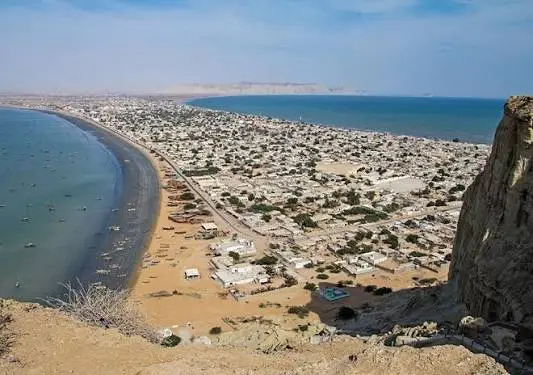
The emergence of digital media has transformed ethno-nationalist mobilization in ways the state struggles to comprehend. When information dissemination was limited to state-controlled television and mainstream newspapers, managing narratives was relatively straightforward. Today, content produced in India, Norway, or anywhere else reaches Pakistani audiences instantaneously. A young person in Gwadar or Waziristan can access alternative narratives, conspiracy theories, and separatist propaganda with equal ease.
This digital revolution is neither inherently positive nor negative; it is simply reality. The state cannot control it through traditional censorship or heavy-handed action. The solution lies not in suppression but in engagement, not in controlling the medium but in providing compelling counter-narratives that address legitimate grievances while exposing the hollowness of extremist positions.
Yet this engagement is precisely what Pakistan’s media ecosystem fails to provide. Mainstream media remains dominated by a narrow range of voices and perspectives, largely disconnected from the concerns of peripheral regions. Meanwhile, digital spaces have become echo chambers where ethno-nationalist narratives circulate unchallenged. There is no cross-fertilization of ideas, no genuine dialogue between state institutions and disaffected communities, no space for the kind of honest conversation that might reveal common ground.
The Myth of the “Action” Solution
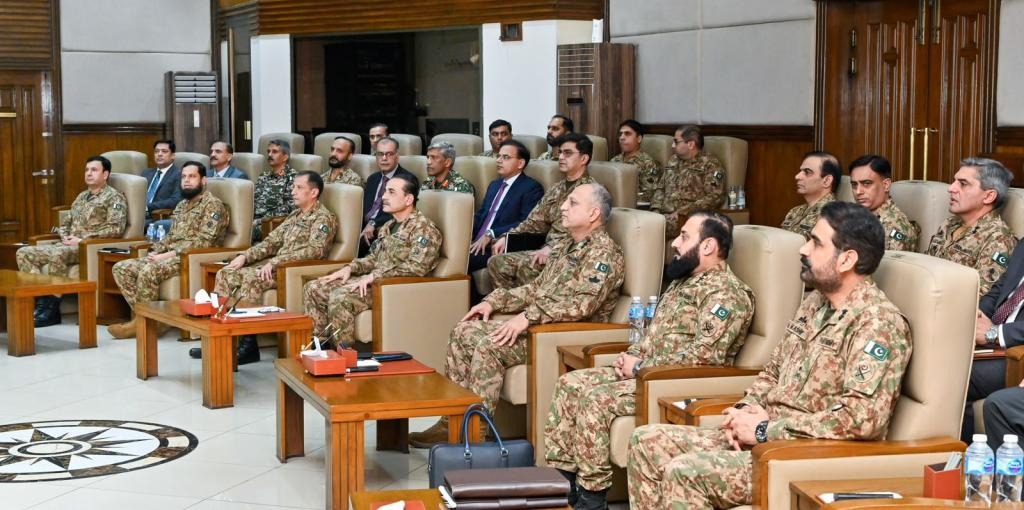
Government officials and security establishments frequently speak of having “proof” that ethno-nationalist leaders receive foreign funding and should face “action.” This framing reveals a fundamental misunderstanding that political problems require political solutions. The language of “action,” a euphemism for arrest, suppression, or worse, belongs to a generation that fears competing with young voices on a level playing field, a generation that has lost popular appeal and seeks to compensate through coercion.
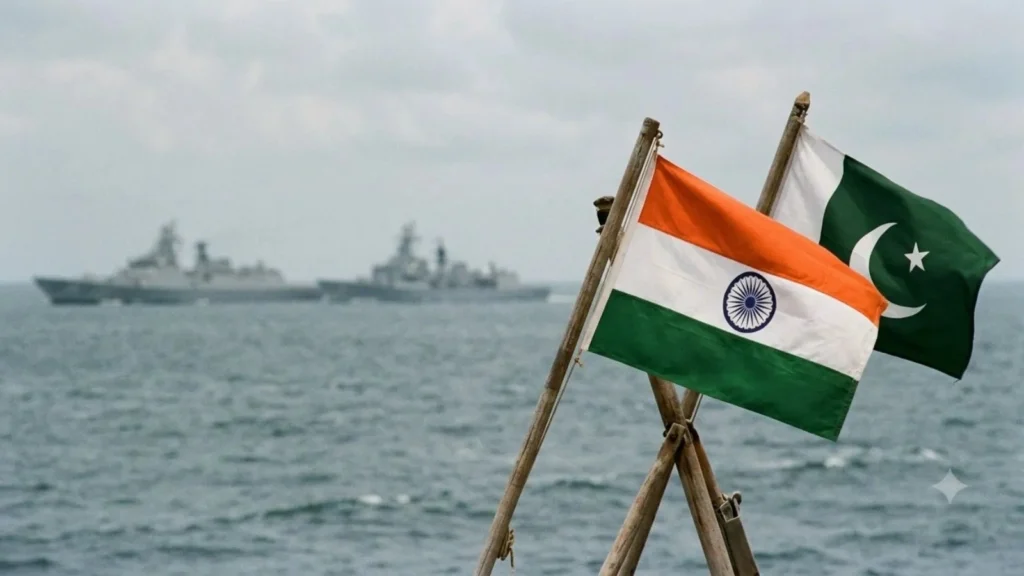
External actors, particularly India, opportunistically exploit Pakistan’s internal divisions. They fish in our troubled waters, amplify grievances, and support separatist elements. India can only exploit fissures that already exist. The first responsibility lies with Pakistan to put its own house in order, to provide good governance, to address legitimate grievances, and to create genuine pathways for political representation.
Senator Hidayatullah Rehman’s trajectory illustrates the viable alternative. His movement in Gwadar contained anti-state elements and articulated serious grievances. Rather than arrest him, authorities allowed him to contest elections. Today, he sits in parliament, representing his constituency through legitimate channels. This transition from street agitation to parliamentary politics should be the model, not the exception, because when resentment gains representation in democratic institutions, the appeal of separatism diminishes.
The Establishment Question
A disturbing pattern has emerged in Pakistani politics that whichever party enters opposition immediately adopts an anti-establishment narrative. This phenomenon, while common in democracies worldwide, takes particularly destructive forms in Pakistan. The establishment, shorthand for military and intelligence institutions, becomes the target of all criticism from both mainstream opposition parties and ethno-nationalist movements. This convergence of attacks threatens national cohesion in dangerous ways.
Every nation requires certain consensus institutions, figures, or entities that remain beyond the daily churn of politics. In Pakistan, the constant demonization of establishment institutions undermines these necessary foundations. One can critique specific policies or decisions without delegitimizing the institutions themselves.
The rigidity that has infected Pakistan’s political culture makes dialogue nearly impossible. When political leaders cultivate messiah complexes, comparing themselves to Nelson Mandela or positioning themselves as uniquely indispensable, the space for compromise collapses. When parties raise slogans of revolutionary change without concrete plans or organizational capacity for mass mobilization, they offer nothing but chaos masquerading as transformation. As the old wisdom reminds us, the worst order is better than chaos and anarchy.
Afghanistan’s Shadow
Pakistan’s ethno-nationalist challenges are compounded by Afghanistan’s hostile posture. The Taliban government, having failed spectacularly at governance and development, externalizes its failures by declaring rhetorical jihad against Pakistan. When infrastructure crumbles, inflation soars, and women remain excluded from public life, the Afghan Taliban compensate through grandiose threats about flying white flags over Lahore or destroying Islamabad. These are not serious military ambitions; they are propaganda designed to preempt domestic dissent within Afghanistan.
But Afghan propaganda gains dangerous traction inside Pakistan because trust between the state and society has eroded. The narrative warfare works only because it finds receptive audiences, communities that feel alienated from their own government and therefore sympathize with external critics. The misunderstanding and distrust between federal institutions and the Khyber Pakhtunkhwa government create perfect conditions for Afghan manipulation.
Pakistan must prepare for a prolonged confrontation with an Afghan Taliban government that cannot and will not deliver for its own people. But this confrontation must be managed through strengthening internal cohesion, not through military responses that further alienate border communities.
The Media’s Unfinished Business
Pakistan’s media ecosystem underwent a significant transformation after 2001, when foreign actors’ embassies, international NGOs, and external institutions heavily patronized certain outlets and journalists. WikiLeaks revelations confirmed that some journalists and media houses operated on foreign payrolls, constructing narratives that served external interests under the guise of promoting democracy, human rights, and freedom.
Recent governmental efforts to manage this influence have been necessary but incomplete. Critics frame any regulation as censorship or control, yet no country surrenders its media, digital or traditional, to external manipulation. The challenge lies in distinguishing legitimate oversight from authoritarian suppression, in protecting genuine press freedom while preventing foreign-directed propaganda.
The media’s role in Pakistan’s recent conflicts with India and Afghanistan has been telling. Indian media’s hysterical coverage during recent tensions exposed its immaturity to the world. During the Pakistan-Afghanistan border incidents, wild claims circulated about captured tanks and soldiers, disinformation that found audiences because Pakistanis have learned to distrust official narratives. When prominent journalists later admit they deliberately exaggerated crowd sizes for favored politicians, why should citizens believe anything the media reports?
Rebuilding media credibility requires creating genuine spaces for dialogue where ethno-nationalist voices, state perspectives, and independent analysts can engage substantively. The current situation, where mainstream media ignores peripheral regions while digital spaces amplify extremist narratives, serves no one. Cross-fertilization of ideas, honest debate about grievances and responses, and acknowledgment of both state failures and progress are the conversations Pakistan needs.
A Path Forward
Pakistan’s ethno-nationalist challenge will not be solved through military operations, digital censorship, or ideological speeches. It requires patient, sustained commitment to material integration, expanding infrastructure, creating economic opportunities, ensuring political representation, and fostering the kind of everyday interactions that build national consciousness.
But these material foundations must be accompanied by political rhetoric making space for young leaders who speak the language of their generation, allowing grievances to find expression in democratic institutions rather than street movements, and engaging in genuine dialogue rather than resorting to “action” against dissenters.
We must also recognize an uncomfortable reality that some degree of ethnic and regional identity politics is natural, even healthy, in a diverse society. The goal is not to eliminate these identities but to ensure they coexist peacefully within an overarching Pakistani nationalism.
National integration is not a destination but a journey, one that requires constant renewal, adaptation, and recommitment. But progress is not enough when entire communities remain alienated, when young people see no future within the system, when external actors easily exploit internal divisions.
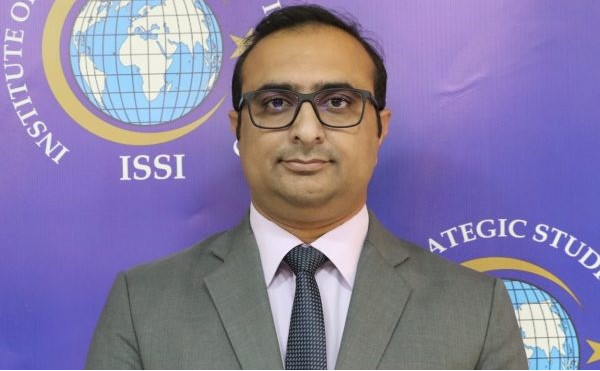
Dr Khurram Abbas is the director of the India Study Center (ISC) at the Institute of Strategic Studies, Islamabad (ISSI).