February 19, 2026, might become a day when future historians will mark that the conventional post-WWII multilateral order has finally changed its direction. The first meeting of the Board of Peace (BoP) was held in Washington, D.C., at the newly renamed Trump Institute of Peace, with US President Donald Trump as chairman of the inaugural meeting. Although the meeting was essentially dedicated to the rebuilding of the Gaza Strip, its larger ramifications indicate the development of a new form of diplomacy that is transactional in nature, that seeks to bypass the perceived inertia of the United Nations.
A New Financial and Security Blueprint
The first success of the summit was the development of a massive relief and stabilization package in Gaza. President Trump revealed an astonishing contribution of 10 billion dollars to the Board, which, by far, exceeds the US annual spending on the conventional international organizations. This was complemented by another 7 billion dollars promised by a coalition of nine countries, which included Saudi Arabia, the UAE, Qatar, Bahrain, Kazakhstan, Kuwait, Morocco, Azerbaijan, and Uzbekistan.
In addition to the financial investment, the meeting described a tangible security transition. The deployment of an International Stabilization Force (ISF) under the command of Maj. Gen. Jasper Jeffers represents a departure from traditional Blue Helmet peacekeeping. Indonesia has become the cornerstone of this force, committing 8,000 soldiers, and additional troop contributions were made by Morocco, Kazakhstan, Kosovo, and Albania.
Shehbaz Sharif’s Balancing Act
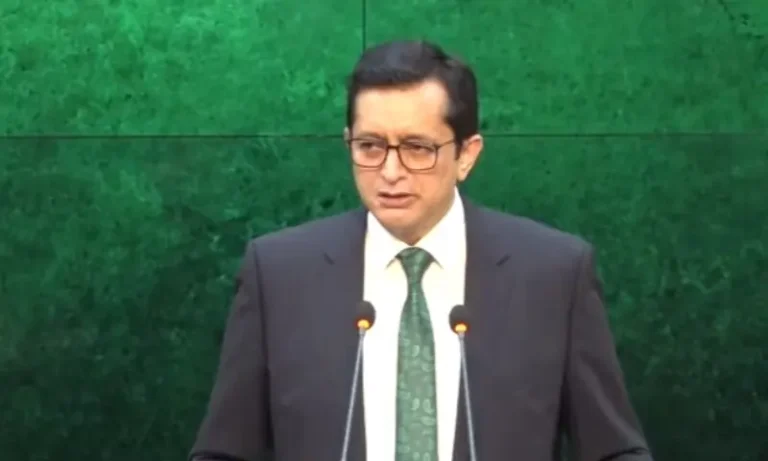
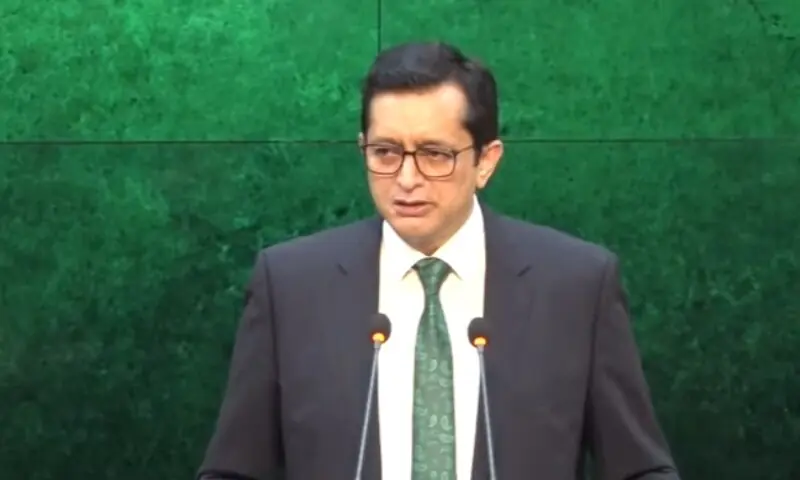
To Pakistan, being invited to be a founding member of the Board of Peace is a major diplomatic break. A high-level delegation led by Prime Minister Shehbaz Sharif, comprising the Deputy PM Ishaq Dar and the Finance Minister Muhammad Aurangzeb, visited Washington and received a warm welcome that emphasized the strategic importance that Pakistan can play in the security setup of the Muslim world.
The role of Prime Minister Sharif at the meeting was twofold: humanitarian advocacy and bilateral stabilization. PM Sharif, in his speech to the Board, reiterated that the Board of Peace must deliver on its name by ensuring that there would be no more violations of the ceasefire and that rebuilding of Gaza would be pegged on the establishment of a sovereign Palestinian state within the borders of 1967.
On the sidelines, PM Sharif’s engagement with US Secretary of State Marco Rubio highlighted the pragmatic nature of current Pak-US relations. Although the BoP was the focus, the bilateral talks soon turned to critical minerals and investment in its energy sector, a sign that Pakistan is using its position in the Peace Board to secure much-needed economic lifelines. The presence of PM Sharif made sure that Pakistan would not be a mere bystander but a founding architect of the new Middle Eastern security system.
The Board vs The United Nations
The opponents of the BoP, including Senator Chris Murphy and some international observers, have raised worries that the Board is a neocolonialist initiative designed to replace the UN with a body that the US executive can control without Congressional oversight. The unilateral ratification of the charter of the Board by the US President, and the fact that the United States has not paid mandatory dues to the UN, but has committed billions of dollars to the BoP, point to an international institution’s zero-sum game.
But to the leaders of the Arab states, the Board provides what the UN has been missing for decades, i.e., enforceability. The proposal to create a 5,000-strong local Palestinian police force over the next 60 days under the management of technocrat Ali Shaath gives some granularity of operational detail that past peace processes did not have.
A Fragile Peace
The February 19th meeting showcased the peace through strength doctrine. The Board of Peace has made history by assembling close to 50 countries and raising billions of dollars in commitments, which puts it as the new center of gravity in Middle East policy.
There are, however, formidable challenges. The disarmament of Hamas has been a pending sticking point that may halt the reconstruction process. Besides, the fact that official Palestinian Authority representatives are not part of the core board has also cast doubt on the long-term legitimacy of the governance models being suggested.
The involvement of Prime Minister Shehbaz Sharif has managed to reintegrate Pakistan into the inner circle of the US foreign policy. But the real test will be whether this board can lead to the delivery of a peace as glorious and lasting as its chairman promises, or it will be just a high-stakes rebranding of an old conflict.

Our Editorial Desk is the intellectual engine of Digital Debate, responsible for the rigorous research that anchors every conversation. Our team deep-dives into data, checks every source, and consults academic literature to move beyond headlines and identify the questions behind the questions.