International Women’s Day, on March 8, is the time the whole world talks about how far we have come as women. This conversation has a different level of intensity in Pakistan, where it goes beyond celebration to the realms of endurance and institutional change. As much as Pakistani women are more and more represented in both tech hubs and other technology-driven areas, they have to negotiate a maze of social demands, the pressure to be a superwoman, and the archaic organizational system, which tends to undermine their potential.
This Women’s Day, Digital Debate conducted a special segment, “Beyond the Cape”, where Fajar Rabia Pasha, CEO of the Dr. Sadiq Foundation, and Areeba Tipu Khan, First Officer at Pakistan International Airlines (PIA), discussed the barriers facing Pakistani women.
The Architecture of Agency with Fajar Rabia Pasha
In the first session, host Batool Rajpoot interviewed Fajer Rabia Pasha about her role in women’s empowerment and her experiences. Pasha shared that her journey began at the young age of 15, influenced by her mother’s work in national trusts. By age 18, she had registered her first social enterprise, “Inspired Sisters”, in Manchester, specifically to help women from the Pakistani and Bangladeshi diaspora overcome language barriers and cultural restrictions.
The Superwoman Narrative
According to Fajer Rabia Pasha, the label of Superwoman is sometimes a two-sided sword. Although it also recognizes the possibility of a woman to juggle between work life and home life, it also sets a standard of perfection that is unrealistic and without institutional reinforcement. She added that several women are under tremendous pressure to abandon their careers upon marrying, which can lead to a huge drain of trained talent in the nation. Pasha pointed out that in many cases, empowered women are the most self-sacrificing but are labeled as self-centered when they want to gain independence.
Pasha also talked of the empowerment of working motherhood. Being a single mother herself, she feels that the career of a mother teaches a lesson of a strong, independent life to her children. To her, parenting is a joint effort, and she observed that our culture and not religion usually weighs the whole household on the woman.
The Hope Gap in Education
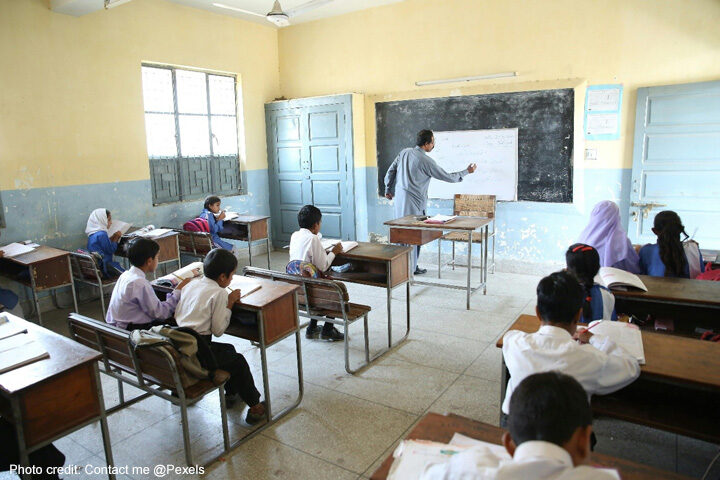
In reference to the educational sector, Pasha highlighted the gap of hope in the rural areas. She unveiled a shocking truth: almost 90 percent of fifth-grade girls in certain suburbs of even large cities such as Islamabad are already betrothed. The result is a pull-out of investment by the parents and teachers who do not see a future for the girl other than being a housewife. Pasha emphasized that there must be visible role models to trigger the hope that a professional future is possible, as many girls merely accept; they have no choice but to accept this cycle.
Necessary Structural Reforms
Pasha ended with a call to modern HR policies. She claimed that the 9-to-5 model was traditionally developed to suit men, by men, and cannot fit the multidimensional lives of women. To solve this, she promoted output-based flexibility in which targets and results are the priority and not a fixed desk time to ensure that women can handle domestic chores without feeling guilty.
She also pointed to the necessity of a more rigorous compliance with maternity, noting how even large private companies are dismissing pregnant workers to save on benefits, and demanded that the already existing labor laws be enforced effectively. Additionally, she proposed comprehensive safety strategies, like the introduction of adaptive policies enabling employees on the female front to have chaperones to travel to conservative regions so that parents can have the confidence that their daughters are safe in the profession.
Navigating the Skies with Areeba Tipu Khan
In the second session, Areeba Tipu Khan discusses her life journey and how she became what she is because of the desire to be a role model for her daughter. As a first officer, she has been flying with Pakistan International Airlines (PIA) for more than 10 years. Although she always aspired to be an aviator, her career has led her to an opportunity to defy the social pressures of Pakistani women. Fueled by the wish to be a role model to her daughter, Khan tries to legitimize the concept of discipline and independence for the upcoming generation.
Representation and Motherhood
Balancing between high-level ambition and strong family expectations is a balance that Areeba has been trying to maintain all the time. She explained the intense emotional stress of abandoning her seven-year-old son for a few days at a time, which is the most difficult aspect of her job. It is a torturous role-switching on the spot when she lands; she has to shift instantly between the control and accuracy of a pilot and the motherly and spouse-like care. This change occurs in the face of extreme exhaustion and sleep deprivation due to the irregular flight schedules. She underlined that it is extremely tough, but if one is devoted to living fully in all aspects of their life, it is possible.
Changing Perceptions
Aviation has changed so much over the years. Khan observed that during her early career days, women would be forced to work twice as hard just in order to demonstrate that they are worthy resources. The industry is now starting to see that the high levels of emotional intelligence and multitasking that are offered by women in high-stakes situations are actually selling points. Nevertheless, there is still a major awareness gap. In 2026, she still tends to meet people who are always amazed to know that there are commercial female pilots in Pakistan. This is a sign of a larger societal belief that technical and high-stakes jobs such as hers are male-only areas.
Advocacy for Support
Looking back at her beginning in 2010, Areeba remarked that she did not have mentors and had to figure out the advantages and disadvantages of her profession on her own – both in terms of its effect on health and on her life in general. She uses social media to offer the career advice she had not received in order to make sure that the next generation does not experience the same isolation that she did. She inspires young women to have faith in themselves and strive to enhance their talents until they can become unnecessary to their companies.
Her final point is the significance of a good support system and the need to prioritize yourself to avoid burnout. To Khan, her biggest win is not the position she has attained, but that her daughter, nieces, and the little girls in her village are now able to grow up believing a female pilot is an ordinary aspect of their life and not a special exception.

Our Editorial Desk is the intellectual engine of Digital Debate, responsible for the rigorous research that anchors every conversation. Our team deep-dives into data, checks every source, and consults academic literature to move beyond headlines and identify the questions behind the questions.