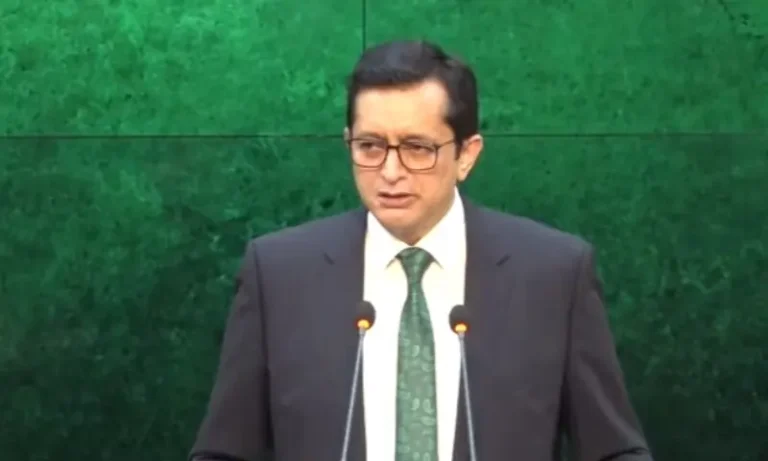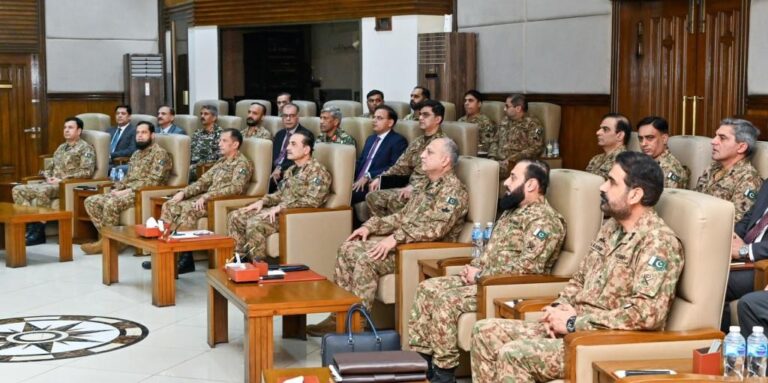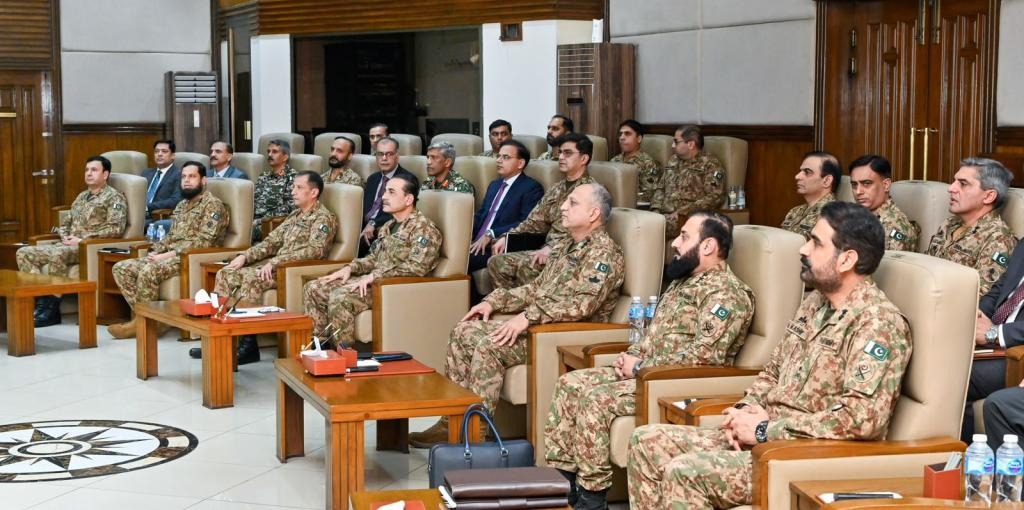
In this Campus Talk hosted at the University of Peshawar’s Shaikh Zayed Islamic Centre, a panel of experts explores one of Pakistan’s most pressing questions: How can the country balance religion and nationalism to build an inclusive national identity? The discussion presents in-depth arguments from Dr. Qibla Ayaz, Dr. Rasheed Ahmed, Dr. Aamer Raza, and Dr. Farooq Khan on the ideological basis of Pakistan’s identity and the centrality of religion in its civic and cultural life. Moderated by Abdul Saboor Kazmi, these scholars motivate students to be more than passive consumers of information and to become active, critical thinkers. The talk explores the notion of civic nationalism as a response to exclusionary identities, examining how Pakistan can remain united, just, and socially cohesive despite the pressures of globalization and cross-cultural interactions, without compromising its religious and national values.
Religion vs Nationalism
The key question asked during the session was whether Pakistan has been able to achieve a balance between religion and nationalism, or the two are in an endless battle. The speakers contended that religious and nationalistic feelings are not mutually exclusive. Rather, the perceived conflict is usually created when people go beyond the norms of moderation.
Nationalism, as the identification with a certain nation and nationality, is an indivisible constituent of human history and psychology. It is a positive and dynamic force when exercised within the confines of moderation. In the same way, religious identity offers a moral and spiritual system. The problem here is to treat these two references not as antagonistic fronts, but as a state of diversity, which can be reconciled to the greater good of the country. Dr. Amir Raza observed that we need to stand on two fronts and fight; however, the real goal is to find a meeting point between these values that will put the nation on the path of development.
The Islamic Perspective on the Nation-State
Another critical point in the debate was whether Islam denounces nationalism. Dr. Qibla Ayaz and the panel clarified that Islam does not necessarily conflict with patriotism. As a matter of fact, belonging to a community (the Ummah) and a land is a natural human tendency known in the history of Islam. Nonetheless, Islam sets a moral restraint on this feeling to ensure that it does not degenerate into partisan blind faith or tribalism that results in the oppression of the other.
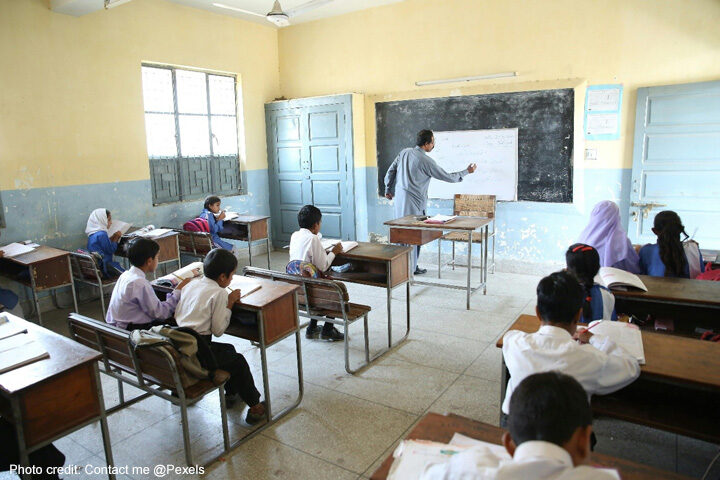
The speakers emphasized that the only viable solution to fragmentation in society is the classroom revolution. Education enables the younger generation to incorporate faith and nationality into a unitary identity that benefits the sovereignty of the state, unlike violent revolutions that are usually short-lived and devastating. They stressed that a real Islamic state is not the state characterized by certain slogans, but the establishment of justice, equality, and security of all inhabitants, no matter what particular segment of identity they belong to.
Civic Nationalism and Social Cohesion
Dr. Farooq Khan and Dr. Amir Raza explored Civic Nationalism to the depths. A country as diverse as Pakistan, where different ethnicities, languages, and cultural backgrounds co-exist, cannot possibly afford a one-size-fits-all definition of identity without resulting in some exclusion. Civic nationalism provides a system in which the Social Contract (the Constitution) is the main source of connection between the citizen and the state.
The speakers claimed that once the state guarantees the rule of law, the conflict between sub-national identities (that is, non-Pakistani identities, i.e., Pashtun, Baloch, or Punjabi) and the super-national Pakistani identity would vanish. When someone believes the law is on their side and is affording equal opportunity, they are likely to be loyal to the state as a byproduct of the experience they are having. The panel observed that this blueprint was already contained in the 1973 Constitution, which recognizes the Islamic nature of Pakistan but ensures equal citizenship. The challenge is now to reconcile the gap between constitutional theory and ground reality.
The Threat of Extremism and the Information War.
The discussion became quite sober when it came to commenting on contemporary dangers to national cohesion. The speakers cautioned against the severity of sectarianism perpetrated by the contents of the Internet and foreign lobbies. They mentioned conclusions drawn by the EU DisinfoLab that revealed hundreds of websites that served to promote sectarian and ethnic conflict in Pakistan.
The guest speakers highlighted the fact that extremist lobbies tend to hijack narratives to hold innocent minds at ransom. Here, the idea of Fitnat al-Khawarij or modern sedition comes into play. Students were encouraged to be careful with the content they post and consume. In the age of globalization, the Information War is being waged in the palm of our hands. Critical questions must be asked before every share, before every comment: Is this in the interest of my nation, my country, my religion?
Sovereignty, Ideology, and the Role of Universities
A nation is not merely a geographic line; it is an expression of an ideology. The speakers remembered the early times of the Pakistani nation, when the nation did not even have a single gun salute at the beginning of 1947; however, today it is a nuclear nation. They, however, identified a very vital gap, that whereas physical scientists have been able to furnish the nation with defensive equipment, social scientists have not been able to offer a workable governing structure to make society prosperous and peaceful.
This system needs to be born in universities. It was made clear during the session that European societies were the resultant products of their universities, and Pakistan must do the same. In pursuit of truth in all its manifestations, scientific, social, and spiritual, universities can beget leaders not merely skilled workers, but priceless visionaries. According to Farooq Khan, the absence of research and intellectual engines is the reason that most welfare states work where others may fail. Even the best systems cannot establish themselves without a polished thought process.
The Foundation of Balance and Global Engagement
In their concluding statements, the speakers reiterate that they wanted the program to make these hard subjects’ part of the everyday discussion of students in their drawing rooms, classrooms, and homes. The idea is to develop a society in which the pursuit of well-being (the Western) and the continuation of spiritual and cultural traditions (the Eastern) are integrated.
Globalization is a challenge of cross-cultural interaction. Pakistanis need to have a sense of self in their interaction with the world. When the pillar of balance is solid, global forces can be viewed as a means of enrichment and not an identity threat. The panel urged students to adopt an attitude of moderation in everything, thought, economy, and politics.
A Call to Intellectual Labor
The speakers at the end of the session thanked the travelers and workers of knowledge. They left the audience with the understanding that the future holds better standards of living only if the youth know today what the fundamental principles of their lives will be tomorrow. Education must not only impart degrees, but consciousness. If one lacks this awareness, he will be reduced to being a laborer in an industry of chaos instead of a nation-builder.
The students can take the leading role by putting the interest of the country first before sectarian and tribal loyalties to make sure that Pakistan can be a great and credible representative to the global community. Balance as the foundation of nations is not merely an expression; it is a necessity for survival, and a warning to the unsuspecting young minds of the next generation against the subversion of divisiveness.

Our Editorial Desk is the intellectual engine of Digital Debate, responsible for the rigorous research that anchors every conversation. Our team deep-dives into data, checks every source, and consults academic literature to move beyond headlines and identify the questions behind the questions.