With the dust still settling on the devastation of a two-year bombardment, the global community is at cross-roads between conventional multilateralism and a new, transactional form of diplomacy. The initiation of the second phase of his 20-point peace plan takes place with the announcement of the Board of Peace in Gaza by United States President Donald Trump. Although packaged as a roadmap to reconstruction and prosperity, the body structure of this board indicates something more ambitious and dangerous, i.e., the establishment of a parallel international order which, in effect, marginalizes the United Nations.
The Rise of Commercial Trusteeship
The Board of Peace is composed more of an executive suite than of a diplomatic council. Appointing billionaires like Yakir Gabay, financial titans like World Bank President Ajay Banga, and personal confidants like Jared Kushner and Steve Witkoff, Trump is turning the rebuilding of Gaza into a real estate and infrastructure turnaround project. Analysts have noted that this three-tier governing structure, led by US-appointed billionaires and figures close to the administration, resembles a commercial trusteeship rather than a sovereign peace process.
Most importantly, Trump has positioned himself as the Chair of the Board. This is not symbolic; it is an embodiment of a kind of commercial trusteeship in which the United States and its chosen allies possess the power of absolute veto over the future of Gaza. In the view of analysts, this kind of structure pushes the Palestinians to municipal responsibilities with the high-level economic and security parameters set by the Board.
A Rival to the United Nations?
The most compelling element of the charter of the Board is that the organization does not refer to Gaza directly, but rather it refers to itself as an international organization in conflict resolution. This sends a definite warning to the UN. The vision of Trump seems to be the substitution of the bureaucratic and ineffective systems of the UN with the US-led, fast-tracked one.
By going around the UN-established agencies, which have been offering education and healthcare to Palestinians over the decades, Trump stands to disenfranchise the peace process of its global legitimacy and legal basis. This board has been created to outlive its purpose in Gaza, and this could be used as a permanent counterpart to the UN Security Council in future international disasters. The move is already being considered by diplomats as the basis of a “Trump United Nations” that does not work under the traditional UN Charter.
Pakistan’s Strategic Ambivalence
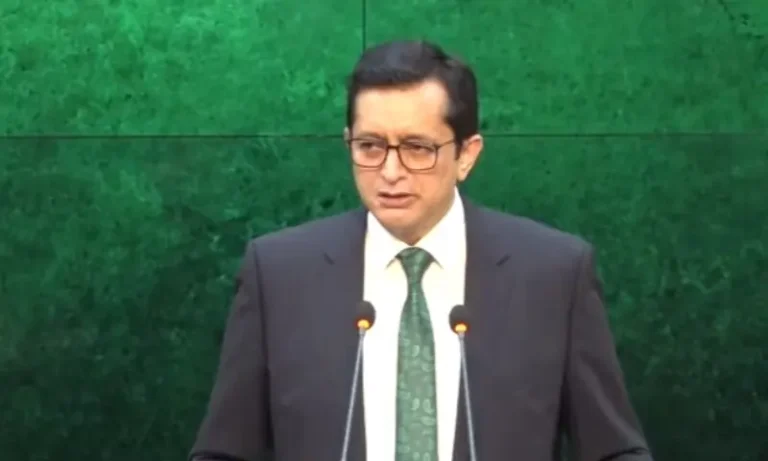
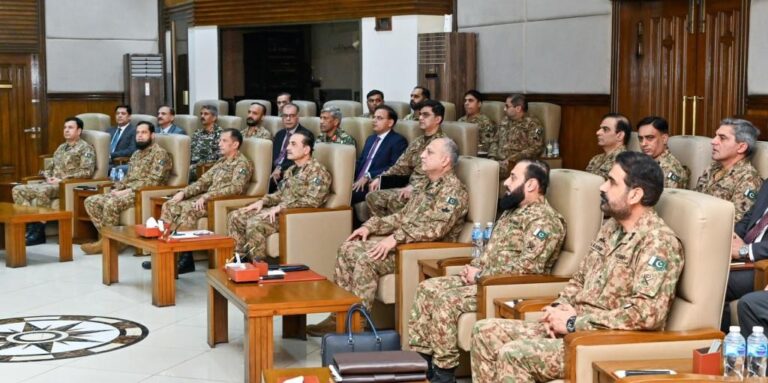
The move by Pakistan to accept the invitation to participate in the Board, expressed by the Pakistani Foreign Office, is a classic hedging move. Islamabad cannot risk turning its back on a US-led initiative that incorporates 60 other countries, including such allies as Turkiye, Egypt, and Saudi Arabia. The global political landscape is shifting rapidly, from Gaza to Ukraine, Yemen to Venezuela. Crises today are interconnected, not isolated, and silence no longer equals neutrality. President Trump’s proposed Board of Peace for Gaza reflects a new power architecture shaping post-conflict narratives. Such forums will influence outcomes regardless of who attends; those absent simply lose the ability to shape decisions. For Pakistan, the issue is not endorsement but relevance. In international politics, it is always better to be at the table than off it, especially when national security and core principles are under discussion
The official response of Pakistan was, however, cautious in its participation in United Nations resolutions. This is a significant difference. By appealing to the UN, Pakistan is sending the message that although it will share a table with Trump, it will not agree to a scheme that disregards the inherent right of Palestinian self-determination or the two-state solution. Pakistan has never belonged to rigid bloc politics; history shows our foreign policy has consistently rejected the either-or approach. Pakistan believes in keeping balanced engagements, positive relations with the United States, revitalized ties with Russia, and an iron-clad partnership with China can coexist. Its participation in global platforms does not reflect dependence, but strategic maturity and diplomatic confidence. Pakistan’s role in international peacekeeping under the United Nations has been among the strongest in the world, earning credibility through action, not rhetoric.
The role of Pakistan will be a stabilizer, pushing to include the Palestinian voices into a room that is dominated by Western billionaires and pro-Israel hawks. Engagement in emerging peace initiatives does not mean compromise; it ensures Pakistan’s principles are defended where decisions are actually made. Pakistan’s stance on Gaza has remained clear and consistent, no recognition of Israel, no policy reversal, despite persistent rumors. Pakistan continues to support a viable, independent Palestinian state with Al-Quds as its capital, rooted in international law and moral responsibility.
The Project Sunrise
The economic scheme behind it, named Project Sunrise, proposes a 112-billion-dollar development of Gaza as a smart city or a Mediterranean Riviera. Although the likelihood of reconstruction of destroyed infrastructure is beckoning, regional analysts indicate that the plan is conditional on complete demilitarization and a change of mindset amongst the Palestinians. Ali Shaath, a former official and technocrat of the Palestinian Authority, who is the head of the technocratic committee in Cairo, has suggested some bold moves, such as pushing debris of war in the Mediterranean to reclaim land, though the success of such proposals remains bound to the political whims of the Board.
The Board of Peace is a high-stakes game. Should it succeed in providing immediate humanitarian aid and recovery, it will be touted as a success of practical compromise. But as long as it is a closed-door club of elites, which does not pay attention to the political ambitions of the Palestinian people, it will be a gilded cage. In a world where power tables are being redrawn daily, Pakistan’s presence is not optional, it is a strategic necessity. For Pakistan and its regional peers, the ultimate test will be navigating this architecture to ensure the Board functions as a genuine vehicle for Palestinian recovery rather than a theater for the personal ambitions of its leadership.

Our Editorial Desk is the intellectual engine of Digital Debate, responsible for the rigorous research that anchors every conversation. Our team deep-dives into data, checks every source, and consults academic literature to move beyond headlines and identify the questions behind the questions.