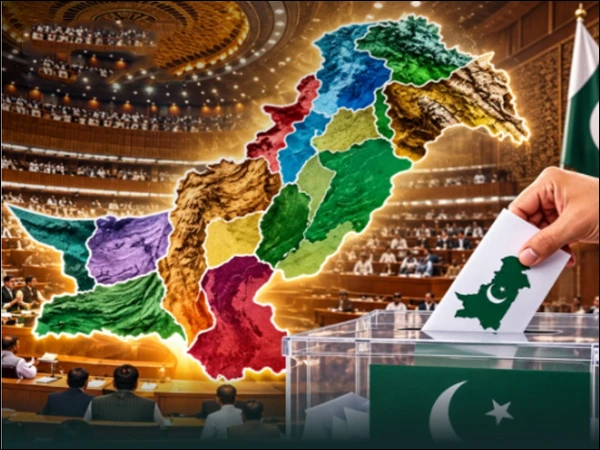
Smaller provinces could improve representation and access to government. Their credibility depends on a fiscal settlement that protects services, distributes liabilities fairly and transfers power beyond new capitals.
Pakistan’s debate over new provinces has reached the question that should accompany every promise of better government: who will finance it?
Attaullah Tarar’s defence of a referendum and Bilawal Bhutto-Zardari’s opposition to that route have sharpened the political contest. Their positions are set out in the latest exchange over the proposal. Yet citizens need more than competing assurances. They need to know which boundaries would change, what institutions would emerge, and how much money would remain for services.
A referendum can establish political preference. It cannot establish fiscal viability.
What costs emerge?
PRIME’s October 2026 study estimates additional annual recurring expenditure of Rs46.9-56.2 billion if Punjab becomes three provinces. Converting 30 divisions into provinces raises the estimate to Rs609.2-730.3 billion.
These are modelled scenarios, not approved budgets. They exclude establishment expenditure and some recurring structures, including separate police headquarters and full departmental duplication. PRIME also preserves existing provincial shares before distributing resources among successor units-an analytical assumption, not an agreed settlement.
The estimates establish a continuing institutional cost. They neither capture the complete bill nor prove that every proposed province would be unaffordable.
Count existing failures
Reform costs must be weighed against administrative distance and deprivation.
Digital Debate’s September study, drawing on the 2023 census, identifies a fundamental imbalance: Punjab contains approximately 52.9 per cent of Pakistan’s population, while Balochistan holds around 6.2 per cent across 44 per cent of its land.
Punjab faces population pressure; Balochistan faces distance and dispersion. Identical restructuring cannot automatically solve both.
The study reports literacy of 66.3 per cent in Punjab against 42 per cent in Balochistan. It also places the approximate Gwadar-Quetta road journey at 910 kilometres. These findings demonstrate unequal access and development, although they do not establish provincial size as the sole cause.
A credible appraisal must compare new institutional expenditure with potential gains from faster decisions, stronger oversight and reduced travel.
Whose money?
The FY2026-27 Budget in Brief allocates approximately Rs8.635 trillion to provinces from divisible-pool taxes. This is the provincial allocation, not the entire pool. Including straight transfers, budgeted provincial transfers reach approximately Rs8.848 trillion. These are estimates, not completed disbursements.
New provinces do not automatically generate new revenue. Additional expenditure requires higher collections, identifiable savings, federal assistance or reduced room for existing programmes.
Each option assigns a payer. Financing new institutions from existing allocations reduces resources available elsewhere. Federal transition grants shift the burden towards federal taxpayers and competing priorities. Promised savings count only when redundant expenditure actually disappears.
Every new obligation needs a named funding source.
Accounting must also distinguish transferred expenditure from additional expenditure. Existing teachers and hospitals do not become wholly new costs when boundaries change. Additional political offices and coordination systems may do so.
Divide the liabilities
Revenue is only half the settlement. Successor provinces need rules for pensions, debt, guarantees, public enterprises and unfinished projects.
Hospitals, universities and irrigation systems may serve populations across proposed boundaries. Ownership and service responsibility cannot always follow the same dividing line.
An audited register of assets and liabilities, agreed valuation methods and shared-service arrangements should precede implementation. Water allocation and Senate representation also require advance agreement. Otherwise, restructuring risks creating permanent intergovernmental disputes.
Consent has rules
Article 48(6) provides for a referendum following approval in a joint parliamentary sitting. Article 239 requires two-thirds of each House’s total membership for constitutional amendments, alongside two-thirds of the affected provincial assembly where provincial limits change. A referendum cannot independently redraw those limits.
Consultation must support constitutional negotiation. Approval of better governance is not approval of a particular map or revenue settlement. Voters need published alternatives and clear financial consequences.
Karachi’s harder question
Mustafa Kamal’s argument linking transfers to Sindh with deprivation in Karachi raises a legitimate question: how much money reaches communities? His headline figures should remain attributed claims until their coverage and official basis are established.
Accounts must distinguish provincial spending within Karachi, municipal transfers and projects benefiting several districts. Large allocations do not necessarily give local institutions adequate resources or authority.
Moving power to a new capital could improve access. It could also reproduce centralisation on a smaller map.
Fund local power
Provincial restructuring should be assessed alongside enforceable local-government reform. Districts and municipalities need predictable funding, clear functions and accountable procurement.
The government should publish a five-year appraisal covering establishment costs, recurring expenditure, liabilities, realistic savings and measurable service improvements. Transition grants need defined purposes and expiry dates.
Digital Debate’s evidence makes complacency difficult to defend. PRIME’s estimates make uncosted expansion equally difficult to justify.
Before citizens approve new boundaries, they should see how those boundaries will improve government, and whose budget will pay for the promise.
Read More: Can New Provinces Actually Cost Less?
Mohsin Naqvi’s Referendum Plan: New Provinces, Lawful Route

Our News Desk represents a rapidly expanding frontier in contemporary journalism, focusing on the intersection of technological advancement, geopolitical narratives, and the shifting dynamics of public information.